Air quality monitoring
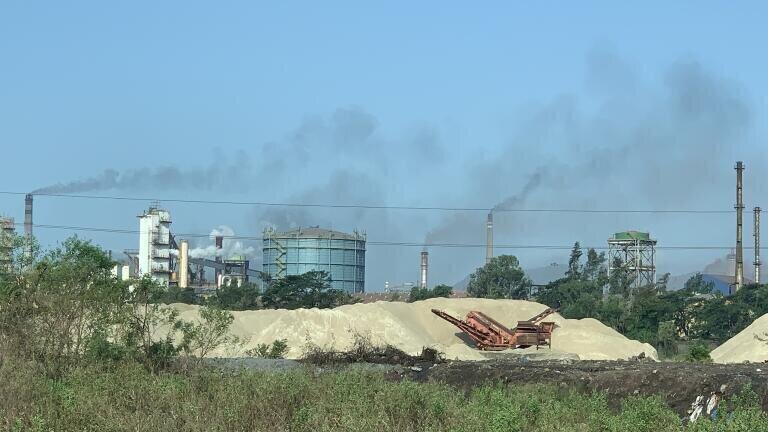
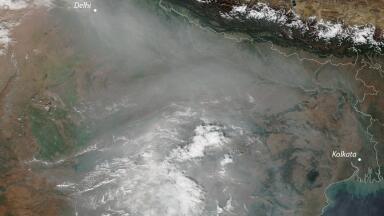
Hazy skies and stinging eyes are routine now. In Delhi and beyond, millions wake up and check the air quality index (AQI) like they would the weather.
But that number, so critical to daily life, is systematically obscured: India’s official AQI maxes out at 500.
On paper, that's already 'severe' pollution.
Yet private platforms like IQAir routinely report numbers well beyond that threshold: 600, 700, even over 1,000.
The discrepancy has sparked annual confusion. Why does the government stop counting when the air keeps getting worse?
The answer begins with the instruments.
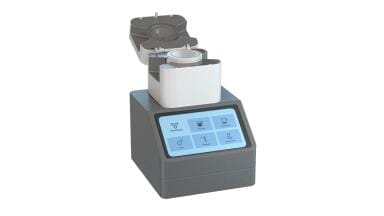
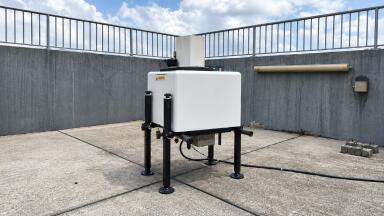
India’s pollution control authorities rely on Beta Attenuation Monitors (BAMs) for official data.
These are precise machines that use beta radiation to measure how much particulate matter (like PM2.5) is in the air.
As particles collect on a filter tape, beta rays pass through and are absorbed in proportion to their mass.
The result: a highly accurate reading of airborne pollutants, refreshed hourly.
But these machines are expensive and high maintenance.
Each costs tens of thousands of dollars to install and operate. Even then, they aren’t immune to downtime.
During high-stakes events like Diwali, when air pollution spikes dramatically, several BAMs have gone offline, leaving critical data gaps.
Maintenance backlogs and mechanical strain during severe episodes often render parts of the network silent.
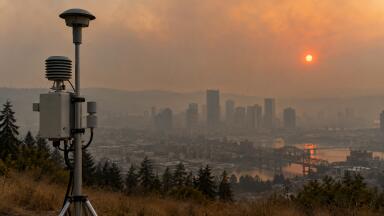
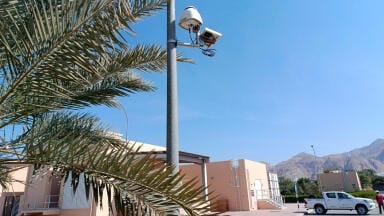
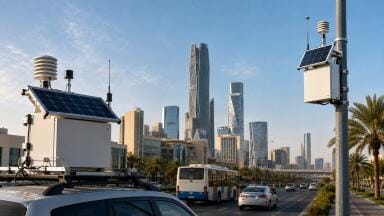
In contrast, low-cost sensors used by platforms like IQAir are agile and scalable.
These devices use lasers and tiny detectors to estimate particle concentrations by observing how particles scatter light.
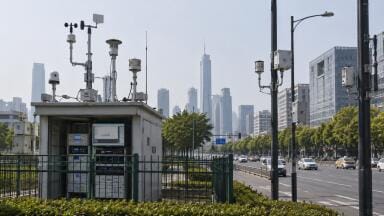
They can be placed on rooftops or street poles. They cost a fraction of BAMs and can report data every few minutes.
That makes them ideal for capturing real-time, hyperlocal pollution trends.
Yet, for all their convenience, these sensors face scepticism.
Their readings can be skewed by humidity or particle composition.
They infer rather than measure, relying on assumptions about particle behaviour that don’t always hold true.
Government scientists argue that unless these devices are constantly calibrated against BAMs, their accuracy remains questionable.
That’s why India has not officially approved them for regulatory use.
But this position is starting to look outdated.
Experts point out that even BAMs aren’t infallible, especially when the network is sparse or offline.
What’s needed, they argue, is a hybrid system: use BAMs as calibration anchors and surround them with dense networks of sensors.
This would offer broad coverage without sacrificing too much precision.
The AQI ceiling of 500 was set more than a decade ago.
Back then, it was assumed that anything above that level posed uniformly severe health risks.
Going beyond it, officials feared, would only create panic. But science has since moved on.
Health effects don’t plateau at 500, they worsen.
Private platforms, unbound by that logic, continue counting.
Their AQI scores soar as pollution climbs, offering a truer sense of danger, albeit with their own calibration caveats.
But when official sources freeze at 500 and private ones show 800, who should people believe? The gap erodes public trust.
Beyond the technicalities lies a more human problem: health.
Under-reporting the severity of pollution delays urgent actions like school closures or emergency advisories.
It misleads the public about the real risks. A capped AQI may spare alarm, but it doesn’t spare lungs.
Public health communication suffers further when monitors fail during peak events, as happened recently in Delhi.
Residents are left with partial data, fuelling suspicion that the worst is being hidden.
Surveys suggest that most people no longer trust official readings. That breakdown in trust makes it harder for authorities to rally cooperation for clean-air initiatives.
To fix this, scientists and activists are urging a modernisation of India’s monitoring system.
That includes integrating calibrated sensors and expanding the network beyond urban centres.
It means treating air quality data not just as a regulatory tool but as a public health imperative.
Accurate, real-time data is the first step in protecting public health.
IET 36.5 Sept/Oct 2026


 Product directory




.jpg)
















.jpg)