Industrial emissions
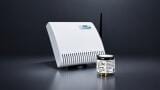
Accurate total mercury emissions monitoring is essential as environmental regulations become increasingly stringent worldwide. The OPSIS System 400HG offers a robust, TÜV-certified solution that combines innovative mercury catalyst technology with the proven accuracy of OPSIS UV-DOAS optical gas analysis.
Mercury can occur in several forms because of industrial and combustion processes. While elemental mercury (Hg⁰) can be measured directly, the mercury in compounds such as mercury chloride (HgCl2) must first be converted back to its elemental form. Traditional wet chemistry methods are unsuitable for continuous monitoring, while high-temperature conversion systems often present reliability challenges.
The OPSIS System 400HG overcomes these limitations with a temperature-controlled converter operating at moderate temperatures. Using a specifically developed catalyst material, the system efficiently converts mercury compounds into elemental mercury, providing stable performance continuously, with low maintenance.
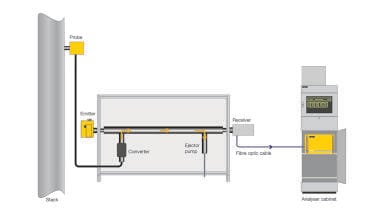
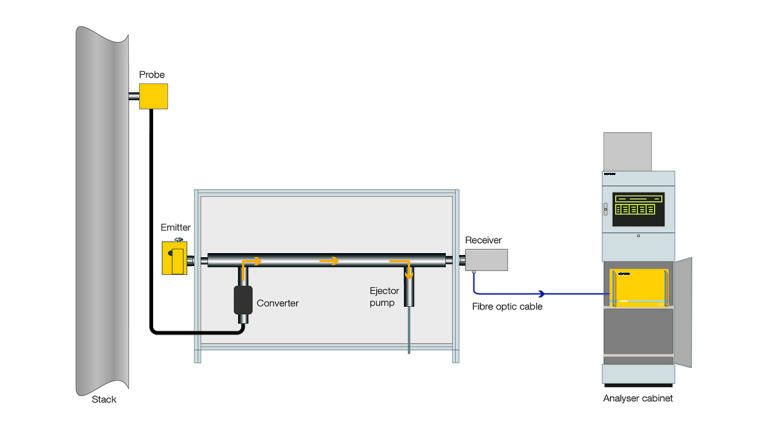
Sample gas is extracted through a heated probe and dust filter before passing through the converter into a temperature-controlled stainless-steel measurement cell. Here, the OPSIS UV-DOAS analyser performs optical measurement using a xenon light source and high-resolution spectrometer. The analyser never comes into direct contact with the process gas, ensuring reliability and long-term durability.
Designed for unattended operation, the system continuously analyses and presents precise monitoring data to the plant operators and environmental reporting systems. Its combination of reliable performance, low maintenance requirements, and certified monitoring accuracy makes it an ideal choice for power generation, waste incineration, and other industrial applications.
For operators seeking total mercury monitoring and confidence in environmental compliance, the OPSIS System 400HG delivers state-of-the-art performance where it matters most.
IET 36.5 Sept/Oct 2026



 Product directory


















.jpg)