Industrial emissions
None of it removes compliance obligations outright but the calendar operators need to work to has shifted.
Operators tracking federal methane and air toxics requirements for oil and gas have had several deadlines move in 2026.
None of the underlying obligations under the 2024 Clean Air Act rule for the sector, known as OOOOb for new and modified sources and OOOOc for existing sources, have been eliminated.
But EPA has finalised technical revisions and extended several compliance dates, and process monitoring teams should treat 2026 as a year to reset planning rather than a year of reduced obligation.

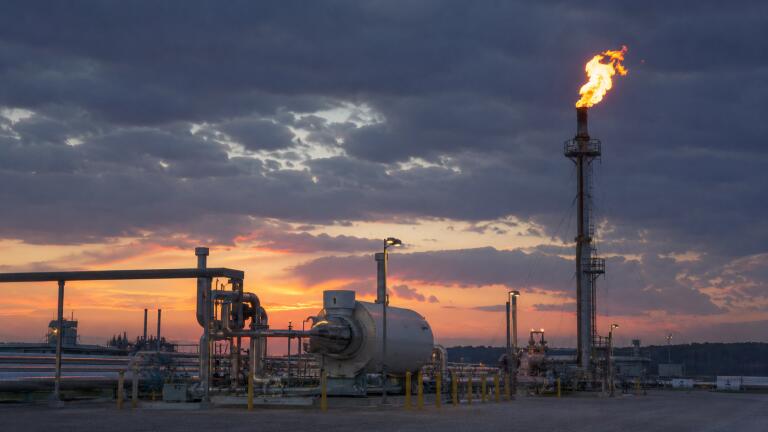
On Thursday, 9 April 2026, EPA finalised revisions to two narrow technical aspects of the 2024 rule: temporary flaring provisions for associated gas and continuous monitoring of the net heating value (NHV) of vent gas from flares and enclosed combustion devices, including the alternative performance test option.
EPA estimates the changes will save the industry $2.5 billion between 2024 and 2038.
Under the revised rule, the allowable duration for temporary flaring of associated gas during troubleshooting or repairs has been extended from 24 hours to up to 72 hours, with a further "exigent circumstances" provision allowing additional time where site access is limited.
On NHV monitoring, EPA has expanded the categories of gas streams exempt from monitoring due to high heating-value content, while retaining monitoring requirements, via continuous monitoring or an alternative sampling demonstration, for streams that do not qualify for exemption.
This means NHV compliance is now a site-specific exercise: operators need to reassess which flares and enclosed combustion devices still require continuous monitoring, grab sampling or an alternative performance test, rather than applying a single blanket requirement.
Compliance dates have also moved. Following an earlier extension, the deadline for NHV continuous monitoring requirements is now Monday, 1 June 2026, or 180 days after start-up, whichever is later.
Initial annual NSPS OOOOb reports are not due before Monday, 30 November 2026. EPA has indicated it is developing further proposed amendments to address additional issues raised by industry, so operators should expect this is not the final word on flare and vent-gas requirements this year.
Distinct from the flare and NHV revisions, EPA proposed changes on Friday, 17 April 2026 to the National Emission Standards for Hazardous Air Pollutants (NESHAP) covering crude oil and natural gas production, and natural gas transmission and storage facilities.
This proposal is the outcome of a technology review required every eight years under the Clean Air Act.
Based on that review, EPA is not proposing new control technology requirements for existing facilities.
It is proposing to add methanol as a regulated hazardous air pollutant (HAP), to meet obligations arising from prior court decisions, and to clarify the definition of "associated equipment" used in determining major source status.
Comments on this proposal are due by Monday, 22 June 2026.
For process analyser vendors and compliance teams, the practical takeaway is that flexibility has increased in specific, narrow areas, principally flaring duration and NHV monitoring scope, without any change to the broader leak detection, monitoring and recordkeeping obligations under OOOOb that remain in force.
Facilities should not read "reconsideration" as "relief" across the board.
The NHV compliance date of 1 June 2026 has already passed by the time some operators are reading this, which underlines how quickly the compliance calendar has been moving through 2026.
Operators still working through which flares and enclosed combustion devices qualify for the newly expanded high-NHV exemption should prioritise that assessment, since it determines whether continuous monitoring hardware, grab sampling programmes or an alternative performance test are the applicable path forward at each unit.

With EPA signalling further amendments are still under development, the sensible approach for refiners and upstream operators is to treat 2026 as a transition year: finalise hardware and monitoring-system decisions for units affected by the April revisions, keep documentation aligned with the November 2026 annual reporting deadline, and stay engaged with both the flare and NHV rulemaking and the separate NESHAP comment process, since either could shift requirements again before facilities have fully adjusted to the current changes.
IET 36.5 Sept/Oct 2026


 Product directory




















.jpg)






.jpg)