Leak detection
Esso Petroleum Company Limited has been fined £1 million following a major liquefied petroleum gas (LPG) release at the Fawley Refinery in Hampshire. An investigation by the Health and Safety Executive (HSE) found that long-standing corrosion issues led to structural failure and a significant loss of containment.
The incident, which occurred on 8 November 2022, highlights the importance of asset integrity management, leak detection systems and industrial gas monitoring in preventing potentially catastrophic events at facilities handling hazardous substances.
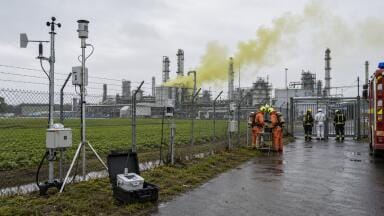
According to the HSE, a large steel tower at the refinery partially collapsed after years of corrosion-related deterioration. The collapse ruptured connected pipework, releasing approximately 2,400kg of highly flammable LPG over a 33-hour period, including around 400kg in the first 30 minutes.
Workers nearby faced risks from falling debris and the possible ignition of the gas cloud, although no injuries were reported.
Emergency measures, including water curtains to suppress vapour dispersion, were deployed while engineers isolated the affected process. The refinery required around 33 hours to fully secure the installation and safely vent remaining materials through its flare system.
The HSE investigation found corrosion had been identified as early as 2010, but adequate action was not taken to manage the deterioration or reduce associated risks.
The case highlights the challenges of maintaining ageing infrastructure across refining, petrochemical and energy sectors. Corrosion remains a leading cause of equipment degradation and loss-of-containment incidents, making proactive inspection and maintenance essential for process safety and environmental protection.
For environmental technology professionals, the incident demonstrates the value of combining asset integrity programmes with continuous monitoring systems to identify emerging hazards before they escalate.
Although corrosion caused the structural failure, the incident also underlines the importance of gas detection technologies in managing accidental releases.
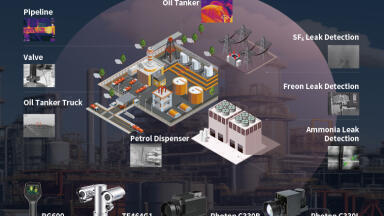
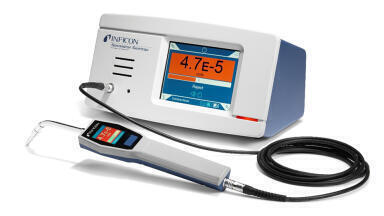
Modern fixed and portable gas detection systems provide early warning of leaks involving flammable gases such as LPG, allowing operators to trigger emergency procedures, protect personnel and reduce ignition risk. Technologies including infrared sensing, open-path detection, laser-based monitoring and wireless sensor networks are helping improve both worker safety and environmental performance.
Continuous gas monitoring also supports emergency response by improving visibility of vapour cloud movement and enabling more effective mitigation.
At the same time, digital monitoring platforms, predictive maintenance and condition-based inspection programmes are helping operators detect deterioration earlier and reduce the likelihood of infrastructure failures.
The HSE requires major hazard operators to maintain plant integrity, conduct rigorous inspections and manage degradation risks such as corrosion throughout equipment life.
At Southampton Magistrates’ Court on 12 June 2026, Esso pleaded guilty to breaching Section 3(1) of the Health and Safety at Work etc. Act 1974. The company was fined £1 million and ordered to pay £12,277 in costs.
The Fawley incident serves as a reminder that protecting workers, communities and the environment depends on strong asset integrity programmes, continuous gas detection and proactive risk management.
IET Guide 2026

 Product directory