Environmental laboratory
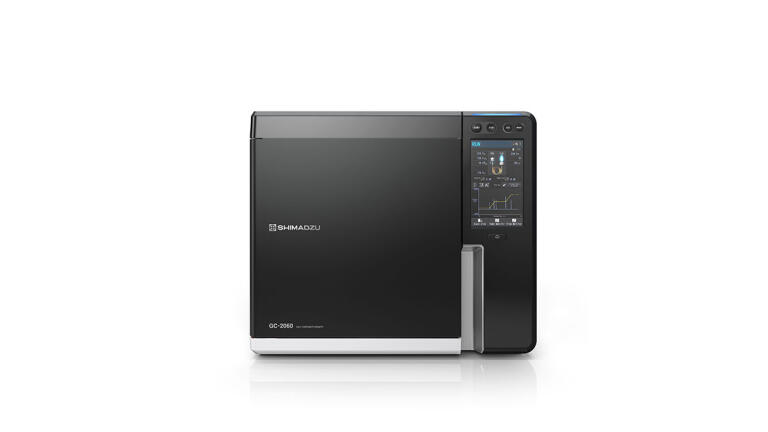
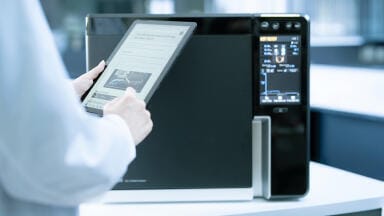
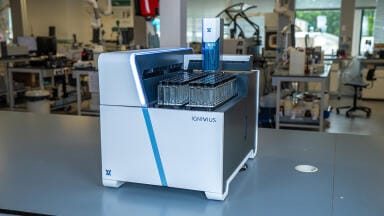
Shimadzu Scientific Instruments has launched the Nexis GC-2060, the latest version of its flagship gas chromatograph, bringing a range of practical improvements designed to help laboratories work more efficiently while maintaining high analytical performance.
The new system arrives in the same year that Shimadzu celebrates 70 years since developing Japan’s first gas chromatograph. Building on that heritage, the Nexis GC-2060 has been developed to address the day-to-day challenges faced by modern laboratories, from reducing downtime and simplifying maintenance to supporting a wider variety of analytical applications.
Suitable for research, development and quality control work, the instrument can be used across sectors including environmental testing, energy, chemicals, food analysis and pharmaceuticals. Shimadzu says the focus has been on creating a system that is easier to operate while offering greater flexibility for changing analytical demands.
Among the performance improvements is an upgraded Flame Ionisation Detector (FID), which delivers around 20% greater sensitivity than previous models. The detector is also claimed to be the world's first multi-mode FID, giving laboratories the option to switch between Hy/Ox and Hy/Air operating modes depending on their requirements.
The Thermal Conductivity Detector (TCD) has also been redesigned, providing a 25% improvement in detection limits. By using single-filament technology, the detector reaches a stable operating condition more quickly, helping analysts obtain reliable results sooner while reducing waiting times at start-up.
Flexibility has been another key design goal. The Nexis GC-2060 incorporates a Multimode Injection unit that supports five different injection techniques within a single module. This allows laboratories to tackle a broad range of applications without needing multiple dedicated systems.
Recognising the growing importance of sustainability, Shimadzu has also introduced an intelligent eco-operation function that learns how the instrument is typically used. During periods of inactivity, the GC automatically enters an energy-saving mode and provides users with information on gas consumption, power savings, estimated carbon reductions and operating cost savings.
Although the instrument occupies the same footprint as previous models, it offers greater scope for expansion. Additional pretreatment units, injection ports and detectors can be incorporated, enabling laboratories to configure the system around their specific analytical needs and future requirements.
Practical usability features are found throughout the design, including one-touch access to injection units, tool-free column installation and automated start-up, shutdown and column conditioning procedures. Combined with intuitive software and built-in support functions, these enhancements are intended to help laboratories maximise uptime and make routine operation easier for users of all experience levels.
IET 36.5 Sept/Oct 2026


 Product directory




.jpg)

















.jpg)