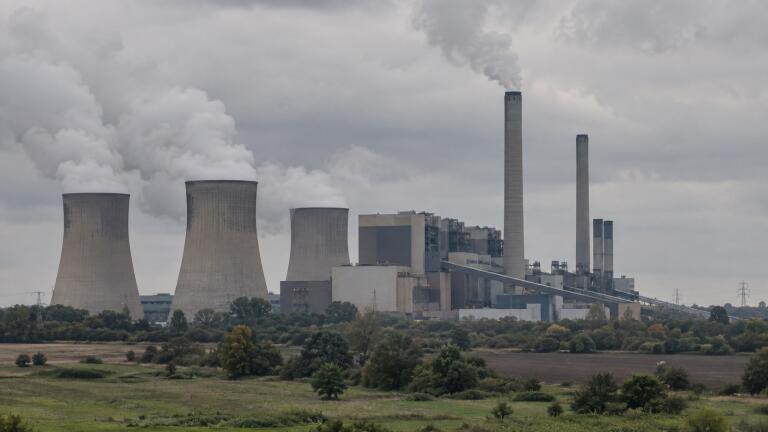
Industrial emissions
In a concurrent action, EPA has also proposed eliminating its own Clean Air Act authority to regulate power plant GHG emissions at all.
Administrator Lee Zeldin announced the final repeal on 14 September 2026 at the G20 Energy Abundance Ministerial in Houston.
Both the final rule and the proposal were published in the Federal Register on 17 September 2026.
EPA projects the repeal will deliver around 310 billion US dollars in savings. A further 370 million US dollars in direct compliance-cost savings is projected should the new proposal be finalised.

The proposal rests on EPA's assertion that Clean Air Act Section 111 does not give it authority to regulate power plant emissions on climate change grounds.
The agency cites the Supreme Court decisions in West Virginia v EPA, Utility Air Regulatory Group v EPA, Michigan v EPA and Loper Bright Enterprises v Raimondo in support.
If finalised, EPA states this would remove the legal basis for all prior Section 111 actions taken to regulate power plant GHG emissions in response to climate change.
This is a broader outcome than the standards repeal alone.
EPA is not proposing alternative GHG requirements in place of what it removes. Its position is that the agency lacks jurisdiction over the emissions altogether.
A virtual public hearing is scheduled for 1 October 2026, and the comment period on the proposal closes on 2 November 2026.
The rescission proposal follows EPA's earlier repeal of the 2009 Endangerment Finding, the scientific determination that underpinned federal GHG regulation across multiple sectors.
EPA argues that, combined with the Supreme Court's major-questions reasoning in West Virginia v EPA and its narrowing of agency deference in Loper Bright, Section 111 does not extend to climate-driven regulation.
The agency's position is that power plant GHG emissions fall outside its statutory reach entirely.
The agency further argues that power sector emissions are global in character, and that any public health harm attributable specifically to US plants is too diffuse to regulate under the statute.
EPA's regulatory impact analysis identifies twenty-five small entities as potentially affected by the proposal.
It projects compliance-cost savings of 6.8 million US dollars for that group in 2035, the year of peak projected savings. The agency estimates no additional costs on small entities from the proposed rule itself.
For monitoring and instrumentation suppliers, the practical question is what happens to the federal driver for GHG-specific continuous emissions monitoring (CEMS) at power plants if Section 111 authority over these emissions disappears entirely.
The 2024 Carbon Pollution Standards had underpinned monitoring, reporting and verification requirements tied to plant-level GHG compliance.
Removing the underlying statutory authority would not necessarily eliminate every monitoring obligation overnight. Other Clean Air Act provisions, state-level rules and voluntary reporting programmes could continue to drive some demand.

But it would remove the specific federal compliance driver that the 2024 rule created for GHG CEMS and related verification work at fossil fuel-fired plants.
Suppliers serving the US utility sector should treat this as a live regulatory risk rather than a settled outcome.
The proposal has not been finalised, is subject to a forty-five day comment period, and is likely to face legal challenge given its scope.
EPA's public messaging frames the changes around cost savings and baseload reliability rather than monitoring policy specifically.
The agency argues that GHG emissions from the US power sector have no material, individually attributable climate impact.
This position is likely to be contested during the comment period by environmental groups and some state regulators.
IET 36.5 Sept/Oct 2026


 Product directory


















.jpg)






.jpg)