Wastewater analysis
It has replaced the assessment with a shorter, non‑binding draft guidance document that sets no binding federal limit.
The original draft risk assessment was released by the Biden administration’s EPA on 14 January 2025.
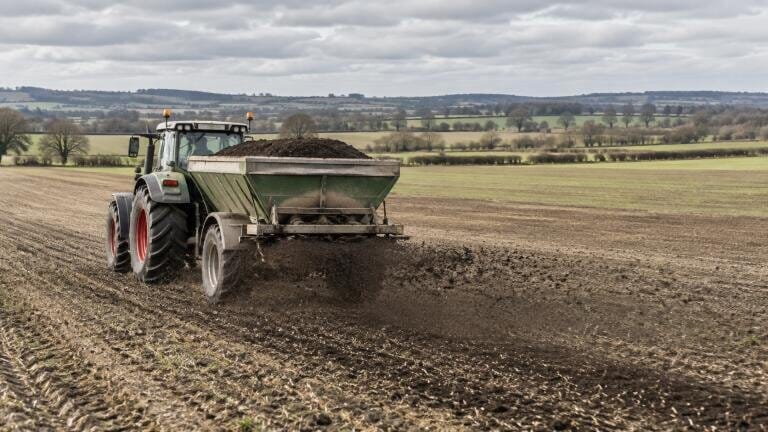
It ran to 272 pages and modelled the potential health risks of applying PFAS‑contaminated sewage sludge to farmland as fertiliser.
The document that has replaced it, made available on 6 July 2026, is nine pages long.

In the notice announcing the new guidance, EPA said the earlier assessment had “caused confusion among the public and the regulated community”, and identified three specific flaws.
First, the agency said it departed from typical practice by not conducting a national occurrence survey. Such a survey would have established how much PFOA and PFOS are actually present in biosolids nationally.
Second, it said the assessment modelled only higher‑risk hypothetical management scenarios. These do not reflect the majority of land application in the United States, and the assessment did not estimate how often they occur.
Third, it said the assessment’s use of one part per billion as a modelled starting concentration had been misread as a proposed safe threshold.
EPA said the figure was chosen only to test whether any unacceptable risk existed under the hypothetical scenarios presented.
Biosolids management in the United States splits three ways, according to EPA. Around 60 per cent of sewage sludge is land applied as fertiliser or soil conditioner.
Of that, roughly 32 per cent goes on agricultural land and 28 per cent on other land such as reclamation sites, lawns and golf courses.
A further 25 per cent goes to landfill or monofill, and 14 per cent is incinerated.
The agency has encouraged land application for decades as a cost‑effective disposal route, particularly where landfill and incinerator capacity is limited.
The new draft guidance does not abandon risk‑reduction advice altogether.
It continues to recommend avoiding land application of biosolids near waterways, on land where children play, and on crops with a higher potential for human exposure.
What it does not do is set a numeric limit. EPA has been explicit that the document “does not have the force and effect of law, nor does it bind the public in any way”.
Public comment on the draft guidance was originally scheduled to close after 60 days, on 4 September 2026. EPA has since extended the window to 5 October 2026.
That gives stakeholders, including wastewater utilities weighing testing and disposal decisions, further time to respond before any final guidance or subsequent regulatory step is taken.
The withdrawal has drawn criticism from environmental groups.
Jean Zhuang, senior attorney at the Southern Environmental Law Center, said the original draft assessment had synthesised decades of research and identified serious risks to farming families and rural communities.
She said abandoning it removes a scientific basis states could otherwise have used to strengthen their own protections.
EPA has rejected the characterisation that it is weakening protections.
The agency told reporters it has “not concluded there’s no risk”, but rather that the previous document’s quantitative findings “weren’t reliable enough to serve as the basis for regulation”.

For laboratories and instrument suppliers serving the water sector, the immediate practical effect is limited.
No new binding testing or monitoring obligation has been created, and none has been removed, since the underlying 2025 assessment was itself non‑binding.
The more significant question is what EPA does after the comment period closes. It remains to be seen whether the agency revisits the underlying risk‑assessment framework, rather than simply replacing one non‑binding document with another.
IET 36.5 Sept/Oct 2026


 Product directory

























.jpg)