PFAS in water
It also offers new evidence for how the chemicals travel to catchments with no obvious industrial source nearby.
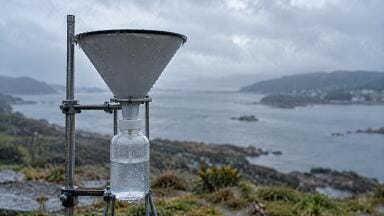
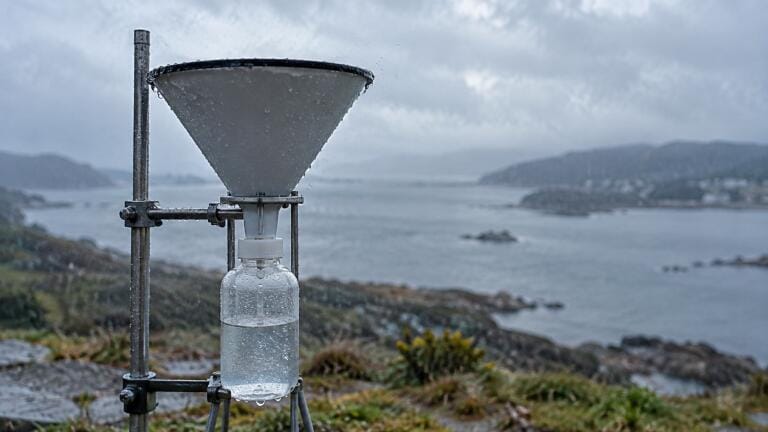
Researchers from RMIT University and EPA Victoria collected rainwater samples in Melbourne between 2024 and 2025.
They tested them for 30 PFAS compounds using an analytical method developed for very low-volume samples.
Eight compounds were detected, generally at concentrations measured in nanograms per litre, equivalent to parts per trillion.
Concentrations of PFOS and PFOA, the two most studied PFAS compounds, were below the National Health and Medical Research Council's (NHMRC) Australian Drinking Water Guidelines values.

Professor Oliver Jones, the study's lead researcher at RMIT's School of Science, said detecting a chemical does not automatically indicate a health risk.
He said the more useful question is whether a concentration is high enough to actually cause harm.
PhD student and lead author Nav Singh said the work contributes new understanding of how PFAS move through the environment.
Using rainfall volumes and the concentrations measured in the study, the researchers estimated that rainfall alone delivers around 10.6 kilograms of PFAS directly to Port Phillip Bay each year.
That is equivalent to about 5.5 grams per square kilometre across the bay's 1,930 square kilometre surface area.
That estimate positions rainfall as a previously unquantified input pathway alongside better-established sources such as wastewater discharge, urban run-off and landfill leachate.
EPA Victoria contributed atmospheric modelling data that allowed the team to trace the likely origin of air masses associated with each rainfall event.
Rain linked to air that had travelled over land carried higher PFAS concentrations than rain linked to air that had travelled over the ocean.
That pattern suggests urban and industrial areas are a source of airborne PFAS that is subsequently deposited elsewhere through rainfall.
EPA Victoria Deputy Chief Environmental Scientist Caroline Martino said the findings offer valuable insight into how PFAS move through the environment.
Martino added that robust, peer-reviewed evidence of this kind is essential for effective regulation, risk assessment and management.
Jones also cautioned against the term 'forever chemicals' itself, saying it can mislead by implying the compounds never break down.
He described PFAS instead as highly persistent, or lingering, compounds that can remain in the environment for a long time.
Understanding that behaviour, he said, is why the research matters.

The study is based on rainwater collected on three occasions, a small sample size that the researchers present as a proof-of-concept for a new analytical method.
It is not intended as a comprehensive national dataset.
The team is calling for broader, ongoing monitoring of PFAS in rainfall across Australia to build on these initial findings.
Such monitoring would help clarify how atmospheric transport contributes to PFAS loads in waterways and catchments already being managed under existing monitoring and remediation programmes.
The paper, 'Concentrations of per- and polyfluoroalkyl substances in the rainwater of South-Eastern Australia', is published in the journal Environmental Chemistry and Toxicology.
IET 36.5 Sept/Oct 2026



 Product directory