Water quality monitoring
Measuring dinitrogen gas made of two heavy nitrogen atoms could help separate microbial denitrification from atmospheric background in lakes, aquifers and sediments.
Measurements of an extremely rare form of nitrogen gas could provide a more direct estimate of how much nitrate is lost through denitrification in aquatic systems.
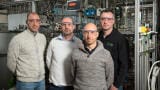
The study, published in Science, was led by Jiarui Liu, who carried out the work as a postdoctoral fellow at the University of California, Santa Barbara (UCSB) and the University of California, Los Angeles (UCLA), with David Valentine of UCSB’s Marine Science Institute and Edward Young of UCLA. Collaborators collected samples from lakes, aquifers, coastal basins and marine sediments.
Denitrification, the microbial conversion of nitrate into dinitrogen gas, naturally removes nitrate from water. Current methods of quantifying it rely on indirect proxies, and mixing with atmospheric dinitrogen can obscure how much gas was actually produced from nitrate.
The new approach measures 15N15N, a ‘clumped’ form of dinitrogen in which both atoms are the heavier nitrogen-15 isotope. It makes up 0.0016 per cent of atmospheric dinitrogen.
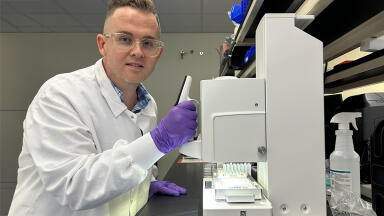
Among the collaborators was Professor Elizabeth Swanner of Iowa State University, whose group sampled dissolved gas from Deming Lake in Itasca State Park and Brownie Lake in Minneapolis, Minnesota, in summer 2025. Both lakes are meromictic: permanently stratified, with surface and bottom waters that never mix and low-oxygen conditions at depth. Swanner said this makes processes in the lakes easier to observe.
She said: “There are many ways to measure denitrification, but this clumped-isotope method seems to be able to see through other issues and arrive at a more tightly constrained estimate.”
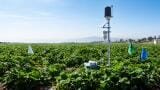
The work has practical relevance in agricultural regions. In Iowa, some nitrogen fertiliser applied to fields leaks into streams and can raise nitrate in drinking water sources. Swanner said better quantification of natural denitrification could help refine best management practices.
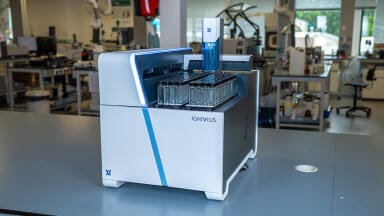
The method currently depends on the Panorama mass spectrometer at UCLA, a specialised instrument designed to measure rare clumped isotopes. As a result, widespread testing is not yet possible.
IET 36.5 Sept/Oct 2026
 Product directory