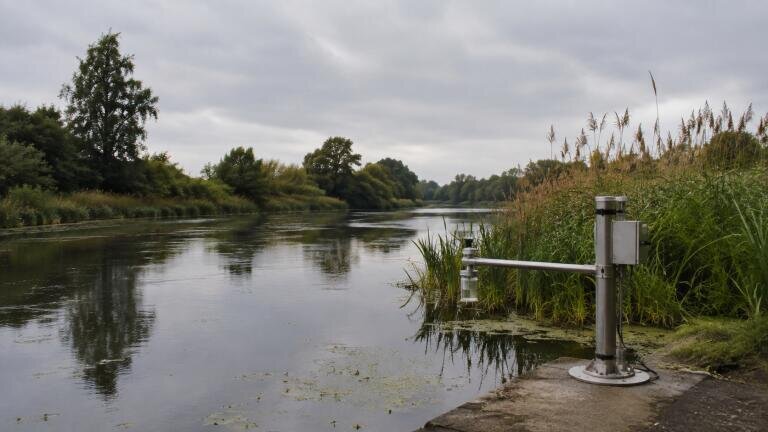
Water quality monitoring
But the watchdog’s specific criticism is aimed less at the pollution figures themselves and more at whether the monitoring regime behind them is fit for purpose.
The Environment Agency published its updated water body quality classifications on 6 August 2026, showing that no surface waters in England currently meet chemical status.
That headline figure has already been widely reported across the general and trade press.
What has drawn less attention is the OEP’s parallel argument, set out in its 6 August statement, that the classification system itself has structural weaknesses that go beyond the pollution levels it records.

Helen Venn, the OEP’s Chief Regulatory Officer, said the update was “very worrying given the already poor state of our country’s precious waterways.”
That much has been widely quoted.
The more substantive part of the OEP’s statement concerns the Water Framework Directive Regulations, which require individual water body management plans setting out environmental objectives and the measures needed to meet them.
According to the OEP, its review found that these plans “didn’t address specific issues at individual sites.”
This is a gap that, if accurate, would mean the monitoring and planning framework is not translating national-level data into site-specific action.
It's a distinction that matters for any laboratory or monitoring provider working at the individual water body level rather than the national aggregate.
The OEP has an existing, separate investigation open into whether Defra and the Environment Agency are complying with environmental law, focused on failures to improve water quality.
The regulator said it is “continuing to engage with Defra and the EA” on the latest classification update and is considering “further enforcement action.”
Water Magazine reported on 7 August that the Rivers Trust has separately questioned aspects of the EA’s classification approach, adding to scrutiny of the methodology rather than only the results.
For laboratories, monitoring networks and environmental data providers, the significance of this story lies in what a critique of methodology implies for future requirements.
If regulators conclude that current monitoring – in terms of sampling coverage, the range of chemicals analysed, or the transparency of how classifications are derived – is inadequate to detect or evidence site-specific problems, that has direct implications for what analytical scope, frequency and data reporting standards will be expected of monitoring programmes going forward.
A finding that pollution is worse than reported would change enforcement priorities.
A finding that the measurement system itself cannot properly evidence the problem would change what gets measured and how – a distinction with very different consequences for the laboratories and monitoring networks that would need to respond.

The Environment Agency’s classification methodology already accounts for a wide range of chemical and ecological parameters.
Any formal review of its adequacy would likely need to weigh laboratory capacity, cost and existing statutory obligations under the Water Framework Directive against calls for broader or more frequent testing.
No timetable for such a review has yet been made public, and it remains to be seen whether the OEP’s criticism translates into a formal requirement for changes to sampling coverage, chemical scope or reporting transparency, or remains at the level of regulatory pressure and engagement.
IET 36.5 Sept/Oct 2026



 Product directory