Air monitoring
Fugitive and process emissions of methane and propane are a growing compliance and safety concern across oil & gas production, wastewater treatment, animal husbandry, and HVAC/indoor air quality applications. Undetected component-level leaks from valves, flanges, and piping fittings contribute significantly to greenhouse gas inventories, while accumulation of CH₄/C₃H₈ in confined or Ex-classified zones creates an explosion risk.
Contemporary regulatory approach increasingly prescribes the ppm Lower Detection Limit (LDL) as a primary performance criterion, not merely an auxiliary outcome of lower-explosive-limit (LEL) monitoring. Across Europe and globally, a consolidated set of standards explicitly requires ppm-capable, drift-stable, Ex-certified detection:
This is precisely where ultra-low power MIPEX NDIR ppm sensors from MGS Technology set a new benchmark!
MIPEX sensors are based on the Non-Dispersive Infrared (NDIR) principle, measuring gas concentration via a selective infrared absorption and dual-wavelength method that resolves both trace-level (ppm) and near-explosive (%LEL) concentrations.
This is a critical advantage of the technology because it achieves what no alternative can, breaking the historical paradigm where ppm-level leak detection and %LEL explosion monitoring required separate sensing architectures. It compelled gas analyser manufacturers to integrate multiple principles within one device, inevitably escalating design complexity and costs.
Other advantages of NDIR over competing technologies:
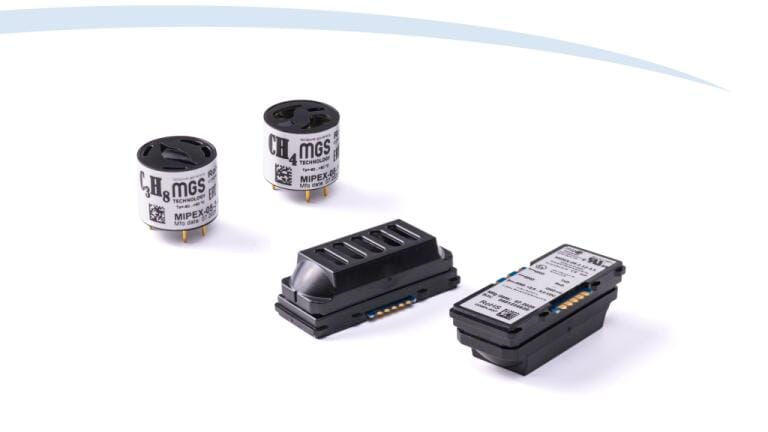
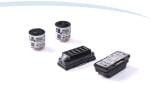
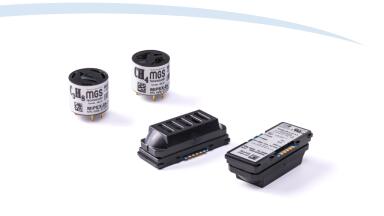
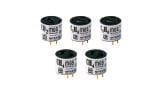
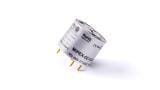
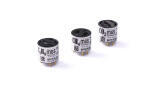
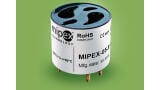
Cutting-edge NDIR sensors MIPEX-04 ppm (52×24×18 mm) and MIPEX-05 ppm (in standard Series 4 size - ⌀20.1×16.6 mm) are developed for automatic continuous hydrocarbon measurement in hazardous areas covering both ppm and %LEL concentrations!
Performance-related:
Metrology-related:
● Linearised, temperature-compensated signal processing
● Measurement stability up to 20 years
This satisfies EN 15446 fugitive-emission and EN 16723-2 biomethane monitoring while replacing multiple sensor technologies with a single measurement core.
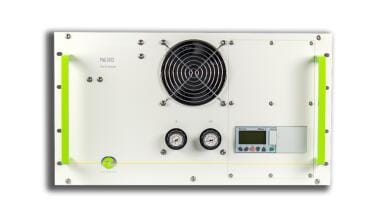
For gas analyser manufacturers, installation of MIPEX sensors means fewer components, longer service intervals, and unified emission-safety compliance from one field-proven platform.
For more information, visit the website or contact the team today.
IET 36.5 Sept/Oct 2026


 Product directory





















.jpg)