Ambient air quality
A new Swiss study suggests the atmosphere delivers roughly twice as much.
Researchers from Empa, Eawag and Agroscope, supported by the Federal Office for the Environment (FOEN), carried out the first systematic year-long investigation of atmospheric microplastic deposition across Switzerland.
The study, published in Atmospheric Chemistry and Physics, estimates that around 219 tonnes of microplastics settle annually across Swiss areas below 2,000 metres in elevation.
That total includes approximately 78 tonnes deposited on agricultural land and around 10 tonnes deposited directly into water bodies each year.

A parallel Eawag study estimated that Swiss wastewater treatment plants release around five tonnes of microplastics into the environment each year.
Atmospheric input to water bodies alone, at around 10 tonnes, is therefore roughly double the wastewater-treatment figure, even though wastewater has traditionally received far more monitoring attention.
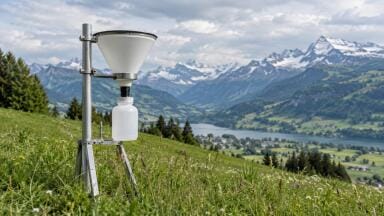
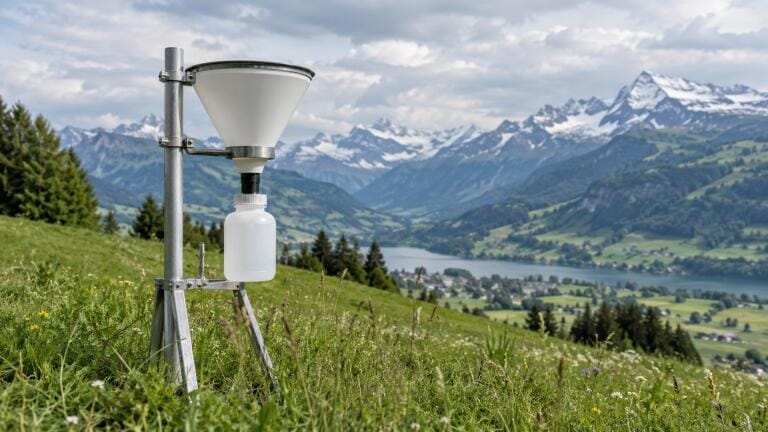
The team collected monthly samples of wet and dry deposition over a full year at five sites spanning urban, suburban, rural and mountain conditions.
Sites included Zurich, Dübendorf, Magadino, Payerne and Mount Chaumont in the Jura mountains, giving the study genuine geographic spread rather than a single urban snapshot.
Samples were prepared and analysed using imaging infrared microspectroscopy, covering particles ranging from 20 to 215 micrometres.
Tyre wear particles were excluded and are being addressed in a separate ongoing study.
Rather than examining only visually suspicious particles, researchers developed a method to automatically scan randomly selected filter areas point by point.
This confirmed which particles were genuinely plastic and identified polymer type.
Zurich recorded the highest average deposition, at 881 particles per square metre per day, more than double the 249 to 331 particles per square metre per day measured at the other four sites.
The research team, led by Empa researcher Christoph Hüglin, said the similarity across the non-urban sites was unexpected.
Hüglin noted that although Dübendorf, Magadino, Payerne and Chaumont produced comparable readings to one another, deposition did not fall as sharply with distance from dense urban areas as the team had anticipated.
That pattern indicates atmospheric microplastic transport is not solely an urban phenomenon, reaching rural and agricultural sites at levels closer to cities than expected.
Polyethylene terephthalate (PET) was the most frequently identified polymer, accounting for 31 per cent of particles, followed by polyethylene (26 per cent) and polypropylene (21 per cent).
The researchers noted that the high proportion of PET, more commonly associated with beverage bottles, suggests polyester textile fibres could be a significant contributor to airborne microplastic pollution.
The study could not trace individual particles back to specific products, so this remains a plausible source rather than a confirmed one.
Dry deposition accounted for around 60 per cent of the total mass, with precipitation described by Hüglin as a highly efficient mechanism for clearing the atmosphere of particles the rest of the time.
Set against the total mass of all airborne particles, including desert dust, soot and biological material, microplastics represent a small proportion: between 0.02 and 0.12 per cent.
The researchers note that sustained deposition over large areas nonetheless leads to substantial cumulative quantities of material that degrades slowly, or not at all.

For environmental laboratories and monitoring networks assessing microplastic loads in water and soil, the findings point to atmospheric deposition as an under-monitored source.
Existing wastewater-focused monitoring regimes do not capture this pathway, and it appears to reach rural and agricultural areas as readily as cities.
IET 36.5 Sept/Oct 2026



 Product directory