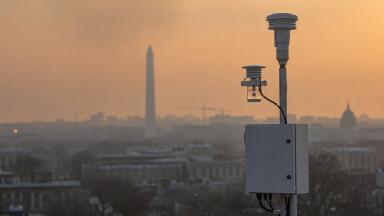
Ambient air quality
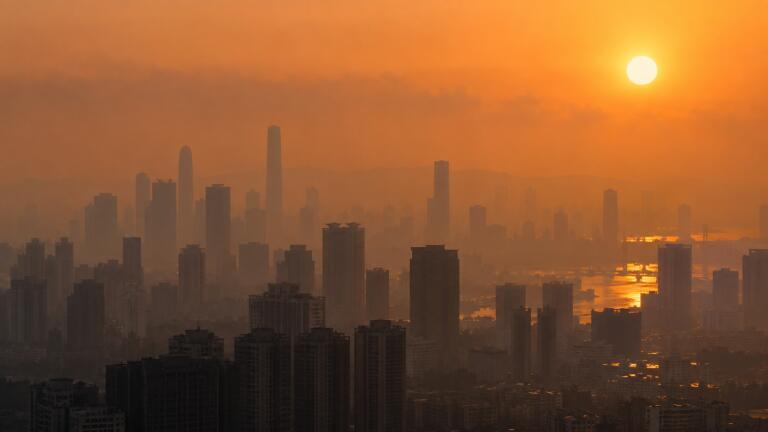
Compound heatwave–air pollution events pose substantially greater health risks than either hazard alone, and have become a growing environmental concern as global warming intensifies.
India has been at the forefront of the trend: temperatures exceeded 46°C across much of the country during the 2026 pre‑monsoon season, alongside an increasing frequency of compound heat–PM2.5 pollution episodes.

The research team, led by Professor Meng Gao, analysed pre‑monsoon heat–PM2.5 compound extremes across India between 2017 and 2024 using ground observations, satellite measurements and atmospheric chemistry simulations.
It found that the frequency of compound events increased markedly after 2020; during April 2022, more than 70 per cent of severe PM2.5 pollution episodes across northern India coincided with heatwaves.
The study identifies an anomalous anticyclonic circulation over northern India as a key mechanism, simultaneously intensifying heat conditions and generating southeasterly winds that carry additional pollution precursors into the region.
These conditions accelerate atmospheric chemical processes, and simulations showed that production of secondary organic aerosols – a major component of PM2.5 – increased by around 2.3 times during compound events.
"Most studies have focused on heatwaves and air pollution separately," said lead author Huibin Dai. "This study shows that large‑scale atmospheric circulation can simultaneously intensify heat and promote secondary aerosol formation, creating favourable conditions for compound heat–PM2.5 extremes. It highlights an important pathway through which climate variability can influence both weather extremes and air quality."
The researchers say understanding future air quality will require accounting for climate‑driven changes in atmospheric circulation and chemistry, alongside emissions, as climate warming is expected to increase the frequency of compound events in densely populated regions.
IET 36.5 Sept/Oct 2026


 Product directory















.jpg)