Ambient air quality
When we talk about emissions, black carbon usually steals the limelight but there is another actor in the shadows.
Brown carbon (BrC), the mix of organic molecules that gives smoke its distinctive hue, is a poorly quantified climate driver whose monitoring sits in a grey area between scientific curiosity and regulatory blind spot.
Recent experiments show that BrC can survive in the atmosphere for months under cold, dry conditions, doubling its warming effect in some models.
As wildfires intensify and demand for granular air quality data grows, failing to account for BrC could undermine climate forecasts and leave communities invisible to monitoring regimes.
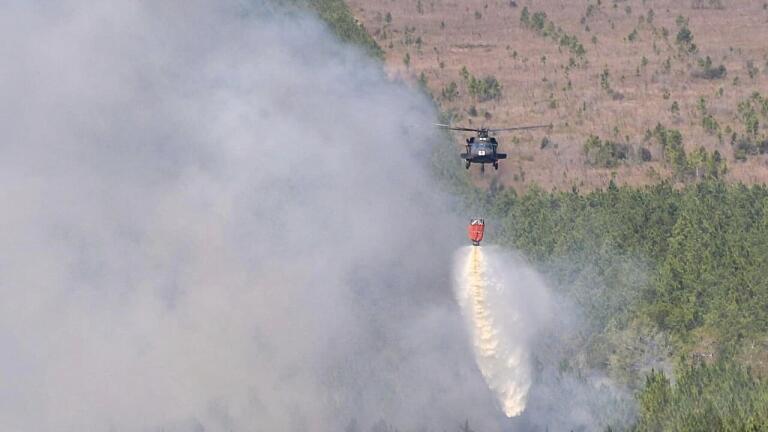
BrC is produced when organic matter burns inefficiently; think smouldering forest fires or peatland drainage.
While black carbon absorbs light across the visible spectrum, BrC absorbs predominantly in the ultraviolet and blue wavelengths, converting sunlight into heat.
Over time, reactions with ozone and other oxidants bleach BrC into colourless species, but this process depends on humidity and temperature.
Laboratory studies have shown that under dry, cold conditions BrC particulates become viscous, trapping oxidants and delaying bleaching for a year or more.
This challenges earlier assumptions that BrC’s climate influence was fleeting and reinforces the need for long-term, altitude-sensitive observations.
Despite its significance, BrC sits on the periphery of routine air monitoring.
The Interagency Monitoring of Protected Visual Environments (IMPROVE) network in the United States only began quantifying BrC absorption in 2016, and it still operates on a third-day sampling schedule.
European and Asian networks rarely distinguish BrC from total organic carbon.
Sun-photometer networks like AERONET offer some aerosol information, but retrievals rest on assumptions about aerosol types and have limited spatial coverage.
The result is an incomplete picture: BrC is abundant during wildfire seasons, yet its temporal variability and contribution to warming remain poorly constrained.
Part of the problem lies in instrumentation.
Multi-wavelength aethalometers (such as the AE33) can infer BrC by measuring light absorption at seven wavelengths but they cost tens of thousands of dollars and require expert maintenance.
The U.S. Environmental Protection Agency noted in 2024 that there is no accepted reference material for carbonaceous aerosols and that instrument varies widely.
Low-cost optical sensors have begun to appear, but they need rigorous intercomparison with reference monitors and are not yet trusted for regulatory use.
There are signs of progress.
A consortium led by the US EPA and academic partners launched the Atmospheric Science and Chemistry Measurement Network (ASCENT), installing advanced instruments including aethalometers and aerosol speciation monitors at twelve sites across the United States.
ASCENT’s mission is to deliver minute-by-minute data on aerosol composition and properties, including BrC. This high-resolution, open-access approach could fill some of the temporal gaps in existing networks.
Instrumentation manufacturers are also updating their tools.
The latest aethalometer, the AE36, adds ultraviolet wavelengths to improve sensitivity to BrC and features humidity control to reduce artefacts.
At the other end of the price spectrum, researchers have developed low-cost devices such as Carbon Scan, which uses colour sensors and machine learning to estimate BrC and black carbon for under US$1,500.
Berkeley Lab has reported a prototype sensor capable of measuring BrC, BC, organic carbon and CO₂ simultaneously using low power and minimal maintenance.
Yet these solutions are small steps on a long road.
ASCENT’s twelve locations cannot capture regional diversity; the network covers only a fraction of the United States and nothing beyond.
Low-cost sensors must be calibrated against high-quality instruments, which remain expensive and geographically clustered.
Meanwhile, the World Meteorological Organisation cautions that many regions, especially in the global south, lack the ground-based networks needed to validate satellite data.
As climate models increasingly rely on remote sensing, this absence could skew assessments of BrC’s global impact.
BrC’s shadowy role in climate does not mean its monitoring is optional; rather, its invisibility makes it more urgent.
Here are four reasons environmental monitoring professionals should care.
Firstly, model studies indicate that BrC can contribute up to half of absorbing carbon’s radiative forcing. Without accurate BrC measurements, Net Zero strategies could underestimate near-term warming.
Secondly, BrC is part of the fine particulate matter that affects respiratory and cardiovascular health.
Communities near biomass-burning facilities or exposed to wildfire smoke may suffer disproportionate exposure.
Yet they are often under-monitored, especially in rural and low-income areas.
Monitoring justice demands that we understand who bears the burden of BrC exposure and ensure these data inform public health interventions.
Thirdly, as carbon markets expand and regulatory frameworks evolve, there is growing interest in quantifying all climate-warming agents.
If BrC’s warming influence is significant, policymakers might create incentives or penalties for activities that emit it. Instruments capable of distinguishing BrC from other particles could help verify emissions for compliance or trading.
Lastly, advances in sensor technology create new possibilities.
Portable, low-maintenance BrC monitors could be deployed on drones to map vertical profiles, on vehicles to track household emissions, or integrated into citizen science networks.
Monitoring networks that once required static, centralised infrastructure could become dynamic, responsive and ubiquitous.
So, what aren’t we measuring that we should be?
To begin with, we lack vertical and high-latitude observations. BrC bleaching slows dramatically in cold, dry conditions, yet most monitors sit near the surface.
Satellite instruments are not yet equipped to distinguish BrC from other aerosols, and balloon or aircraft campaigns are sporadic.
Moreover, monitoring networks rarely overlap with Indigenous territories or biodiverse regions, leaving gaps in our understanding of how fire management practices influence BrC emissions.
Filter-based methods that sample every third day may no longer suffice for a world where smoke events can shift within hours.
Similarly, instruments that assume fixed optical properties for organic aerosols risk mischaracterising BrC’s dynamic behaviour.
What rules might change? As regulators sharpen their focus on short-lived climate pollutants, BrC could enter the policy arena.
Should household wood burners face new restrictions? Could credits be awarded for upgrading cookstoves in developing nations to reduce BrC emissions?
Without robust monitoring, such policies will be built on uncertain foundations.
What could institutions do differently? National networks can expand through partnerships with community groups, Indigenous organisations and universities.
Data-sharing platforms can make measurements accessible and actionable, enabling local responses to smoke events and global integration into climate models.
Governments might support research into reference materials and calibration standards, reducing measurement uncertainty and lowering barriers to entry.
The environmental monitoring sector stands at a fork in the road. One path continues to treat brown carbon as an optional extra, a complexity best ignored.
The other recognises that BrC’s hazy profile masks a substantial warming effect and a hidden public-health issue.
To follow the second path, agencies should invest in expanding high-resolution networks like ASCENT; develop international calibration standards; deploy low-cost sensors to underserved regions; and integrate BrC into air quality and climate strategies.
Brown carbon might be invisible to the naked eye, but with the right instruments and policies, it need not remain invisible to science, regulation or public awareness.
For environmental monitoring professionals, the message is clear: embrace the complexity or risk being blindsided by what you cannot see.
IET Guide 2026

 Product directory
















.jpg)