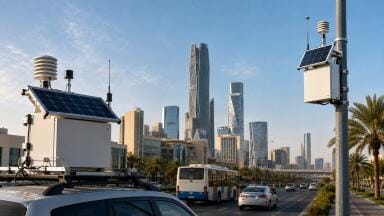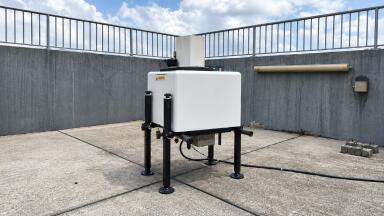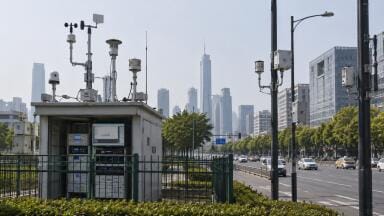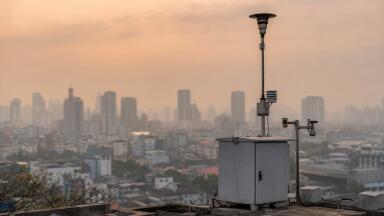
Air quality monitoring
The Uttar Pradesh Clean Air Management Program (UPCAMP) accounts for US$299.66m, and the Haryana Clean Air Project for Sustainable Development Operation accounts for US$300m.
Both fall under the World Bank's Regional Air Quality Management Program in the Indo-Gangetic Plains and Himalayan Foothills, with additional grant co-financing from the Resilient Asia Program and the Energy Sector Management Assistance Program (ESMAP).
The World Bank states the programmes aim to improve air quality for an estimated 270 million people, with benefits expected to spill over into neighbouring states.
The Uttar Pradesh loan carries a ten-year maturity with a two-year grace period; the Haryana loan carries a 23.5-year maturity with a six-year grace period.
The two state programmes build on India's national air quality framework rather than drawing directly from it.
Uttar Pradesh's own Clean Air Plan and Haryana's newly established special purpose vehicle, ARJUN, deliver the state-level work, which the World Bank describes as complementary to, rather than directly funded through, the National Clean Air Programme (NCAP).

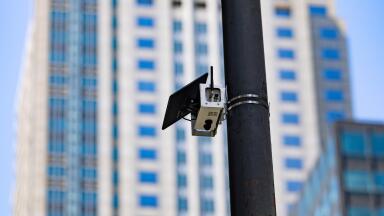
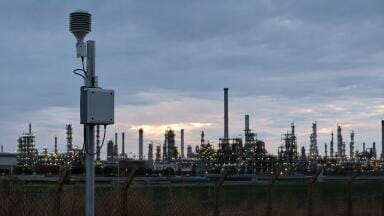
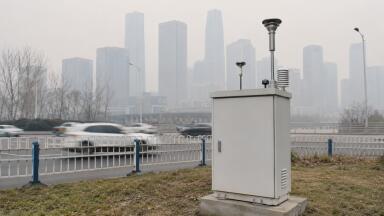
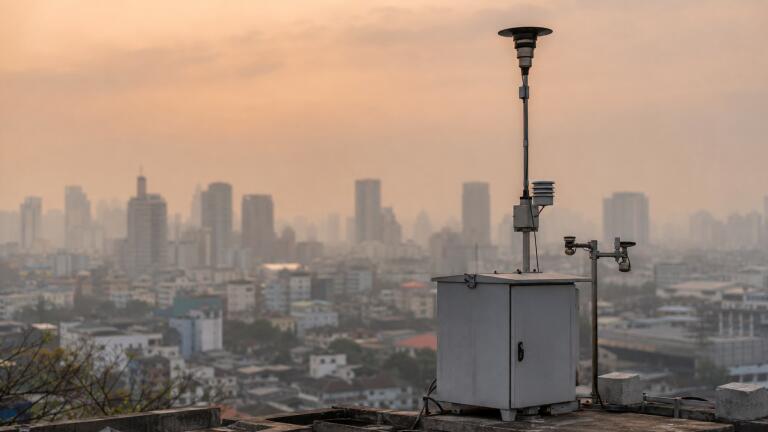
The scale of financing implies a substantial expansion of air quality monitoring infrastructure across both states, alongside emissions reduction measures.
Programmes of this kind typically combine continuous ambient air quality monitoring stations, dust and industrial emissions monitoring, and data systems capable of tracking progress against the World Bank's funding conditions over more than two decades in Haryana's case.
That monitoring requirement echoes, at a different scale, the approach credited with reducing particulate pollution in China.
Data from the Air Quality Life Index (AQLI), compiled by the University of Chicago's Energy Policy Institute (EPIC), show PM2.5 concentrations in China falling by around 41% between 2013 and 2022, a period in which the country's national air quality monitoring network, run by its Ministry of Ecology and Environment, expanded to more than 2,000 stations.
For technology suppliers, the financing signals sustained demand for ambient air quality monitoring equipment, sensor networks and data management systems across two of India's most populous states over the coming decade.
The multi-year loan terms, particularly Haryana's 23.5-year maturity, suggest the World Bank expects monitoring and reporting infrastructure to remain in place well beyond the initial construction phase, rather than being a short-term compliance exercise.

Whether India's state-level build-out follows China's dense, centrally coordinated monitoring-network model, or a more devolved approach split between Uttar Pradesh's Clean Air Plan and Haryana's ARJUN vehicle, will shape how uniform the resulting data infrastructure becomes across the wider Indo-Gangetic Plain.
IET Guide 2026


 Product directory