Air quality monitoring
Air quality monitoring typically reveals what is happening at ground level. Researchers at Nanyang Technological University (NTU) in Singapore are taking a different approach, looking upwards to understand how pollution moves through the atmosphere.
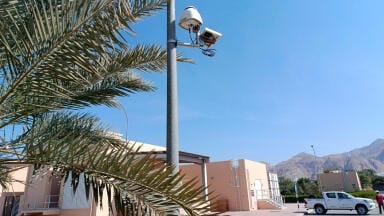
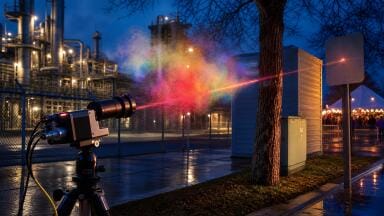
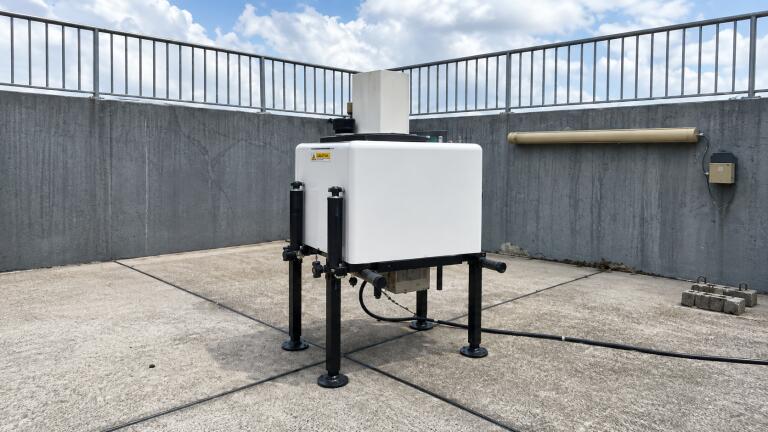
The university’s Earth Observatory of Singapore is establishing a network of three monitoring stations called 3DREAMS@SG. Each station employs Doppler LiDAR to measure aerosols and wind in the atmosphere, creating a three-dimensional map of particle movement above Singapore.
The system can take readings every second and, subject to operating conditions, can observe atmospheric features up to 12 km above ground.
The idea is particularly relevant to Singapore, where haze can arrive from regional sources but can also be affected by local weather conditions. In March 2025, for example, Singapore experienced hazy conditions as PM2.5 levels increased. Data from 3DREAMS@SG showed that unusually calm winds in the lower atmosphere were preventing pollutants from dispersing, helping researchers distinguish the effects of local atmospheric conditions from the transboundary haze that often attracts attention.
That ability to see what is happening above the ground is one of the system's main advantages. Conventional monitoring stations provide valuable information about air quality at specific locations, while satellites offer a much broader view. LiDAR adds another dimension, allowing researchers to examine the relationship between particles and the wind carrying them through different layers of the atmosphere.
The first 3DREAMS@SG station was installed at NTU in 2023, followed by a second at Raffles Girls’ School. A third station is planned for northern Singapore, creating a network capable of providing a more detailed picture of atmospheric conditions across the city. The system is intended to improve the understanding and forecasting of haze and other air-quality events.
For environmental monitoring, its importance extends beyond merely collecting additional measurements. Understanding how pollutants disperse in the atmosphere can help researchers identify their sources, determine how weather influences their levels, and predict when episodes of poor air quality are likely to happen. NTU is also undertaking research that integrates atmospheric measurements with modelling and AI to enhance air quality forecasting and environmental health assessments.
IET 36.5 Sept/Oct 2026


 Product directory