Gas detection
When designing a gas detection system, detector and control equipment costs are only part of the overall investment. Cabling, installation labour, commissioning and future system expansions can also represent a significant proportion of the total project cost. This is particularly true in laboratories, universities, research facilities, hospitals and industrial sites, where dozens of gas detectors may be distributed across multiple floors or buildings.
Traditionally, gas detection systems have relied on 4–20 mA analogue signals or star-wired architectures. In these configurations, each detector must be individually connected to the control panel. As the number of detectors increases, so does the cabling required, resulting in higher material costs, longer installation times, and greater complexity.
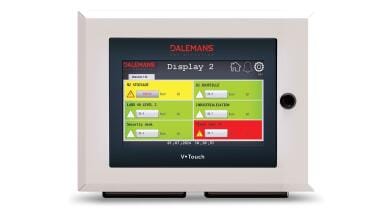
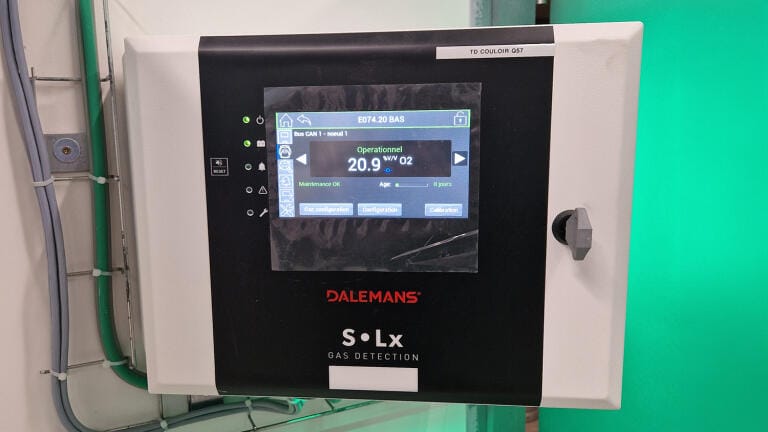
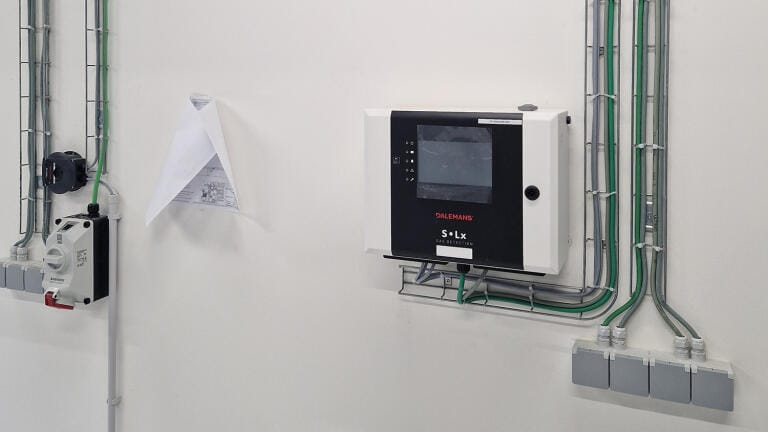
Dalemans' bus-based gas detection solutions offer an alternative to traditional wiring methods. Instead of running a dedicated cable from every detector back to the control panel, devices connect through a shared communication bus.
The bus runs from the controller to each detector in sequence, creating a network architecture that reduces total cable length while simplifying installation and maintenance.
For electrical contractors and system integrators, this can mean fewer cables to install, fewer connection points, simpler cable routing and a shorter installation process. The resulting system can also be easier to troubleshoot and maintain throughout its operational life.
The approach follows principles already widely used in industrial automation and building management systems, where shared communication networks can offer greater flexibility while reducing installation complexity.
The benefits of a bus architecture are not merely theoretical. One example comes from a Belgian university that evaluated different gas detection configurations during the design phase of a large-scale installation.
The comparison found that a bus-based solution could reduce total cabling-related costs by approximately €15,000 compared with a traditional system. The savings extended beyond the cost of cables themselves, also taking into account cable trays, installation labour and commissioning.
For projects where construction and renovation budgets are under increasing scrutiny, savings of this scale can influence technology selection and overall project feasibility.
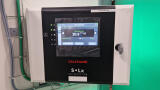
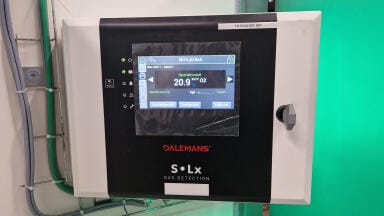
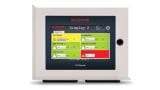
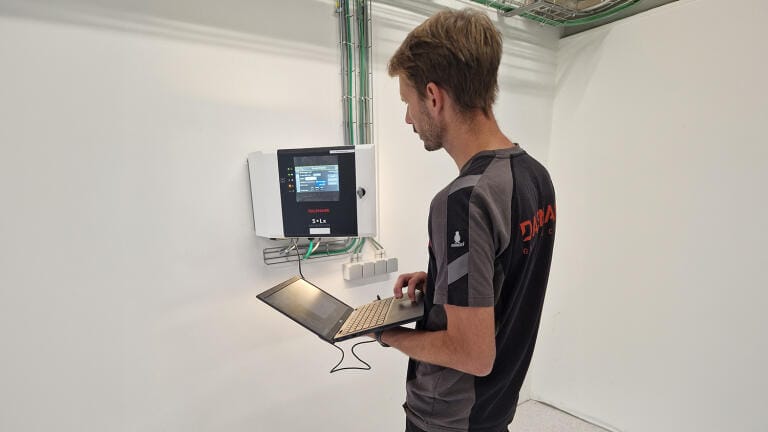
Further detail comes from the University of Liège. According to Yves Smeers, of the university’s Technical Installations – Studies department, the “cabling and connection” item typically ranges between 35 and 40 per cent. By contrast, for the B36 building – which has a similar configuration, 31 detectors and a new-generation S.Line control panel with bus-based detectors – the equivalent figure was 18 per cent.
Smeers believes the gains go beyond materials alone. “In existing buildings, I believe the benefit lies not only in the reduction of total cable length, but perhaps even more significantly in the time saved during installation,” he says.
Alongside the potential initial cost savings, bus-based gas detection systems offer another important advantage: scalability.
Laboratories evolve, research facilities expand, and new technical rooms are added as monitoring requirements change. With a traditional star-wired system, installing additional detectors can require new cabling runs back to the control panel.
With a bus architecture, new detectors can typically be integrated into the existing network, subject to the system's capacity and installation requirements. This can minimise disruption and reduce the additional labour and materials needed.
This flexibility allows facility managers and operators to adapt their gas detection infrastructure as requirements change, while keeping future modification costs under control.
When selecting a gas detection solution, focusing solely on equipment prices can give an incomplete picture. Total cost of ownership also includes installation, maintenance, future modifications, and the ability to accommodate additional detection points.
A bus-based architecture can offer savings during initial installation, as well as longer-term benefits through simplified maintenance and easier expansion. For larger installations with numerous detection points, the financial and operational advantages can be considerable.
Dalemans' bus-based gas detection solutions offer consulting engineers, system integrators, and end users an alternative approach to system design. For complex environments such as laboratories, universities, research centres and industrial facilities, bus technology is worth considering alongside traditional 4–20 mA and star-wired systems when assessing installation costs and long-term flexibility.
IET 36.5 Sept/Oct 2026

 Product directory