Portable & field testing
This is according to a Perspective article published in the journal Artificial Intelligence & Environment, led by corresponding author Dawei Lu.
The article examines the concepts, architecture, applications and current limitations of what the authors term AI-enabled environmental digital twins: continuously updated virtual representations of real-world environmental systems.

The authors draw a distinction that is central to their argument.
A digital model has no automatic exchange of data with the physical system it represents. A digital shadow receives data from the physical system in one direction only.
A true digital twin requires recurring two-way interaction, in which virtual predictions or decisions inform real-world actions, and the resulting real-world response updates the virtual system in turn.
"Environmental systems are dynamic, uncertain, and often difficult or even impossible to study through conventional trial-and-error experiments," Lu said.
"AI-enabled digital twins provide a promising way to combine observations, models, prediction and feedback so that we can explore environmental change virtually while remaining connected to what is happening in the real world."
The Perspective sets out a five-layer framework spanning the physical environmental system itself, sensing and connectivity, data integration, virtual modelling, and AI-enabled prediction and feedback.
Within this framework, the authors argue AI can contribute by integrating heterogeneous observation types, detecting abnormal conditions, accelerating complex simulations, forecasting future states, quantifying uncertainty and optimising decisions.
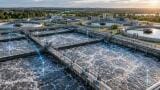
Potential applications identified include process optimisation and predictive maintenance in wastewater treatment, and flood forecasting in urban drainage and watersheds.
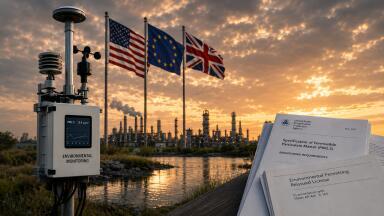
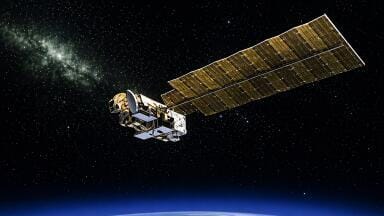
Atmospheric and coastal applications include air-quality forecasting, flood warning and environmental risk assessment, combining sensor, satellite and modelling data.
The authors are notably cautious about how much of this is currently realised in practice.
They state that many systems already described as digital twins are not, by their own definition, fully bidirectional.
Most remain digital shadows, offline models, or human-supervised decision-support tools rather than genuine two-way coupled systems.
They identify three specific barriers holding the field back: limited physical–virtual feedback, difficulty representing microscale and extreme-condition processes, and the absence of standardised architectures, benchmark datasets and evaluation frameworks.
The Perspective argues that future systems should adapt continuously as new data arrive, explicitly quantify uncertainty rather than presenting single-point forecasts, and undergo ongoing validation rather than one-off testing.
In high-risk settings such as nuclear safety, pollution emergencies and extreme climate events, the authors argue digital twins should support human experts rather than replace them.
This caveat runs through much of the more cautious language in the piece.
The authors also point to two more speculative extensions of the concept: using virtual experimentation to help optimise environmental monitoring instrument design, and predictive digital toxicology, connecting environmental exposure data with biological or health effects.
As with any Perspective piece, this is a position paper by its authors rather than a report of new experimental data.
Its claims about the future trajectory of the field reflect the authors' own reading of where AI-environmental modelling is heading, rather than a consensus position or an empirical result.
Readers working on environmental sensing, monitoring networks or modelling should treat the applications discussed as illustrative of a research direction.

They should not be read as evidence that fully bidirectional environmental digital twins are currently operational at scale.
The distinction the authors draw between digital models, digital shadows and true digital twins is itself a useful diagnostic.
It offers a way for readers to assess a vendor's own 'digital twin' claims against what their system actually exchanges with the physical process it monitors.
IET 36.5 Sept/Oct 2026



 Product directory