Gas detection
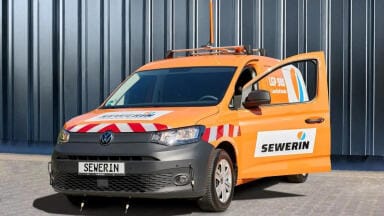
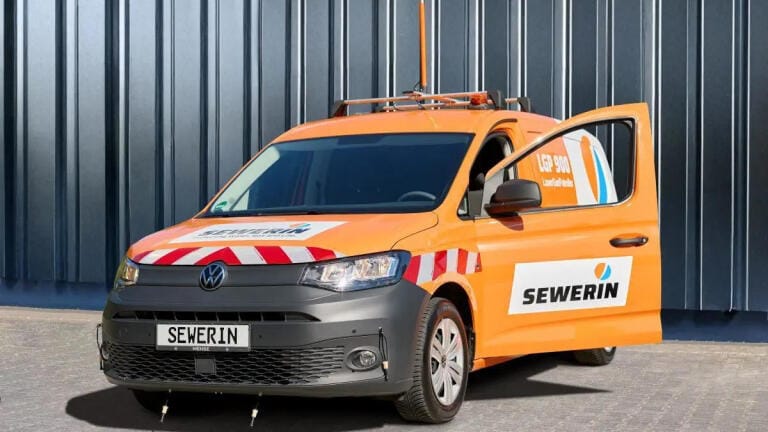
A vehicle-based methane detection system from Sewerin has passed a German suitability test for use in gas network inspections under the EU Methane Regulation.
The LaserGasPatroller LGP 900 was certified in July 2026 after completing testing carried out by the DVGW research centre at the Engler-Bunte Institute in Karlsruhe, in cooperation with Open Grid Europe (OGE).
The testing follows the incorporation of the EU Methane Regulation into the technical rules of the German Technical and Scientific Association for Gas and Water (DVGW). In Germany, these rules have official status and are recognised as technical evidence of compliance.
The regulation requires operators of gas infrastructure to inspect buried pipelines more frequently and to quantify and document methane emissions for annual reporting.
The revised DVGW rules allow leak detection using vehicle-based systems that measure methane concentration together with local wind conditions. This means survey vehicles do not necessarily have to follow the route of the buried pipeline and can instead operate off-track in the surrounding area.
Before such systems can be used for gas network inspections, they must demonstrate that they can reliably detect gas releases. The DVGW suitability test included several days of driving on a dedicated test field, followed by trials in Regensburg under different atmospheric conditions.
Systems were required to detect at least 90 per cent of the gas releases during the test. Four of the six systems assessed reached this threshold.
The LaserGasPatroller uses laser-based detection to measure methane selectively, with a stated resolution of 0.01 ppm (10 ppb). The measured concentration is displayed as a gas indication.
The system also measures local wind conditions to help identify the source area of a suspected leak. GNSS provides positioning, with inertial measurement sensors and real-time correction signals supporting location accuracy.
Survey and inspection records are handled by Sewerin’s SeCuRi® SAT 7 software, which automatically generates the documentation required for regulatory purposes. According to Sewerin, the resulting data remains under the control of the system operator.
The company says the combination of vehicle-based detection, wind measurement and automated documentation provides operators with a practical way of carrying out the inspections required under the EU Methane Regulation.
IET 36.5 Sept/Oct 2026

 Product directory