Portable & field testing
Yet the climate models policymakers and regulators rely on to track this dangerous threshold are still running on input data frozen in time more than a decade ago.
The bottleneck lies in forcings data sets; the backbone of Earth system models.
These files quantify the natural and human drivers of climate change: greenhouse gases and aerosols, volcanic eruptions, solar radiation, land use, sea surface temperatures and sea ice.
Every major Earth system model in use today depends on them.
But they are formally updated only once every five to seven years through the Coupled Model Intercomparison Project (CMIP).
“So it turns out there are some, kind of systematic issues, in the way that we have built all these model runs, that are problematic,” one researcher admitted. “The fact is we did not update [real-world GHGs and aerosols since 2014].”
For policymakers and compliance officers, this lag poses a problem: the simulations underpinning climate-risk assessments, emissions budgeting and adaptation strategies are running on stale inputs.
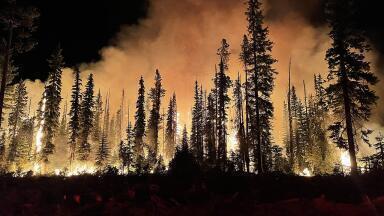
In the meantime, the atmosphere has seen surges in wildfire aerosols and rapid drops in aerosols from maritime fuel in national policy, none of which are fully represented in the models used to justify billion-dollar decisions.
Climate models are not simply academic tools. Their projections feed into emissions inventories and regulatory frameworks.
If models fail to capture the latest changes, attribution studies may misdiagnose the drivers of extreme events, and carbon budget calculations may underestimate risks.
This could leave regulators behind the curve, companies misaligned with compliance expectations, and communities underprepared for escalating impacts.
Annual updates to forcing data sets, scientists argue, would help models move in step with observations.
That would mean more credible near-real-time analyses of climate extremes and more accurate baselines for emissions accounting.
The scientific machinery to accelerate this process is already in place.
Forcings data were once assembled piecemeal by individual centres; since CMIP6, specialist teams and the CMIP Forcings Task Team (established in 2022) have coordinated production.
With CMIP7 nearing completion, researchers say the next step is to move from static five-to-seven-year cycles to a rolling, tiered update system.
The plan rests on four pillars.
Firstly, robust observations. A sustained stream of high-quality measurements — greenhouse gases, aerosols, radiation, land-use change — supported by global cooperation and reliable funding.
Secondly, tiered releases. Annual interim updates, extending existing data sets with vetted methods, alongside longer-term reprocessing every CMIP cycle to integrate new science.
Thirdly, evaluation tools. Dashboards and simplified climate models to rapidly test the implications of new data before release, ensuring quality control without delay.
Lastly, permanent governance. A dedicated Earth System Forcings Panel to manage updates and secure resources for the long haul.
This approach balances the scientific need for accuracy with the policy demand for timeliness. Interim updates may lack the latest refinements, but they would provide continuity and prevent decision-makers from working with inputs a decade out of date.
For environmental monitoring practitioners, this debate signals a deeper shift.
Faster model updates could:
Without reform, the credibility gap between lived climate extremes and model projections will continue to widen, undermining the policy and compliance frameworks that depend on climate science.
The next CMIP Community Workshop in Kyoto, March 2026, will be the key forum for agreeing these changes.
But the message from the modelling community is clear: if climate models are to remain fit for purpose, the shift to more frequent updates must begin now.
IET Guide 2026

 Product directory














_-_DPLA_-_8e999bde09706920af593c74dca.jpg)







.jpg)