Portable & field testing
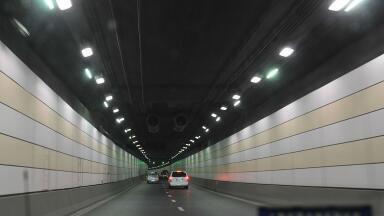
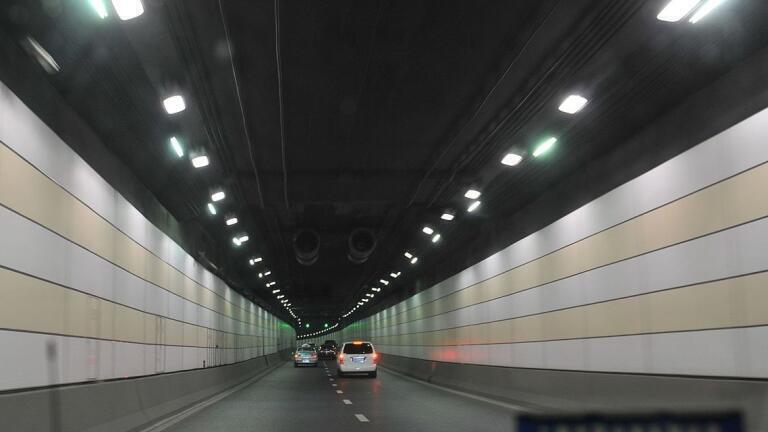
The team tested their approach in the Shanghai Outer Ring Tunnel, which passes beneath the Huangpu River as part of the city’s expressway network.
Parts of the tunnel are surrounded by mucky soil and silty clay, making long-term monitoring difficult.
By placing a portable muon detector inside the tunnel, the researchers were able to measure changes in muon flux — a novel way of identifying where sediment is accumulating.
Around the world, more than 200 underwater bridge tunnels carry vehicles between cities.
Once built, however, they are notoriously difficult to inspect and maintain.
Conventional methods often require closures or invasive procedures that put structural integrity at risk.
Muography offers a non-invasive alternative.
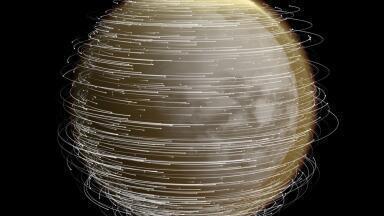
The technique relies on high-energy cosmic particles known as muons, which can penetrate hundreds of metres underground.
Denser materials, such as sediment deposits, block more muons than water alone, creating a measurable signal.
“Muons lose energy primarily through ionisation, where they electromagnetically interact with and eject electrons from atoms — denser materials lead to a higher energy loss, effectively blocking more muons,” said author Kim Siang Khaw.
“The granular or clay composition of sediment intensifies this effect.”
By scanning along the tunnel at 50-metre intervals, collecting 10 minutes of data at each point, and running simulations on a simplified tunnel model, the researchers were able to map sediment thickness.
For real-world use, they plan to install multiple detectors permanently inside the tunnel to enable continuous, real-time monitoring.
The group intends to expand the study to additional tunnels across Shanghai and stresses that other cities could readily adopt the method.
The requirements are minimal: knowledge of a tunnel’s geometry and materials, environmental data, and baseline muon flux measurements.
“No complex models are necessary upfront — the method works with simplified inputs, validated through simulations in this study,” said Khaw.
“This technique can also identify dangerous underground cavities, such as those formed when a burst pipe washes away soil, creating a hidden collapse hazard.”
While muography has already been used in archaeology, mining and other fields, using it to track changes in infrastructure over time is a fresh step.
“We are now in a truly exciting era for muography,” said Khaw. “We hope to collaborate with more researchers to apply these advancements in fundamental science to solving pressing societal challenges.”
IET Guide 2026

 Product directory