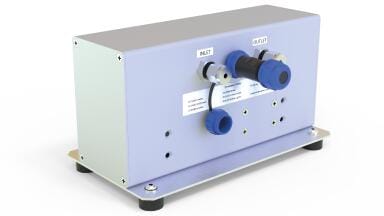
Groundwater monitoring
Arsenic contamination in groundwater remains one of India’s most entrenched public health crises, particularly in West Bengal, Bihar, Assam, and parts of Uttar Pradesh.
Tens of millions of people are potentially exposed, with the health effects (skin lesions, cancers, cardiovascular disease) often emerging only after years of consumption.
Existing mitigation relies on periodic government sampling and lab analysis, a process too slow and infrequent to protect households in real time.
In January 2025, researchers at the Indian Institute of Technology (IIT) Guwahati announced a development that could change the monitoring equation: an optical fibre, based arsenic sensor capable of detecting the toxin at 0.09 µg/L, orders of magnitude below the World Health Organization’s safe limit of 10 µg/L.
At this level of sensitivity, contamination could be spotted long before it approaches hazardous thresholds.
The device leverages localised surface plasmon resonance (LSPR), a phenomenon where metallic or composite nanostructures interact with light in a way that is highly sensitive to changes in their immediate environment.
In this case, researchers coated optical fibres with an Al₂O₃/graphene-oxide nanocomposite.
When arsenic molecules bind to the surface, they alter the refractive index at the fibre’s coating, producing a measurable shift in the transmitted light signal.
This shift can be detected in less than half a second, even at ultra-trace concentrations.
Laboratory and field trials showed not only unprecedented sensitivity but also strong repeatability and stability.
Error margins stayed below 5%, even in variable environmental conditions.
This is critical for rural deployment, where temperature swings and dust can compromise conventional sensors.
At its core, this is a technology designed to push detection earlier in the contamination timeline.
Instead of learning from a biennial report that a village well has crossed the danger threshold, households could have an immediate, local answer to a simple but vital question: is today’s water safe to drink?
Such sensitivity opens the door to household-level or village-level deployment, empowering residents to monitor their own wells daily.
It also enables public health agencies to flag emerging contamination zones early, potentially saving years of chronic exposure before intervention.
The research team emphasises the sensor’s portability and low operating cost, qualities that make it attractive to local health workers and government arsenic mitigation programmes.
A sensor like this could be paired with a mobile app for geotagging wells and feeding results into real-time contamination maps.
Integration with existing government schemes, such as India’s National Programme on Prevention and Control of Fluorosis and Arsenicosis, could provide a direct route from detection to action, whether that’s installing filtration units or improving piped water access.
While the science is proven, the path to mass deployment will require a few changes.
Optical components and precision coatings remain expensive; economies of scale or alternative materials could bring prices down.
Sensors will need robust casings to survive high humidity and rough handling.
Even the most accurate reading will be useless if people do not trust the result or understand the correct follow-up steps.
Education and training will be as important as technical calibration.
Widespread adoption could create high-resolution arsenic contamination datasets in near real time, replacing the current patchwork of sporadic lab results with dynamic national maps.
That would not only guide immediate mitigation but also help researchers understand how contamination zones shift with agricultural pumping or aquifer recharge cycles.
The IIT Guwahati breakthrough points towards a future of decentralised, real-time environmental monitoring, where communities do not have to wait for government field teams to know if their water is safe.
In a country where arsenic poisoning has been called the largest mass poisoning in history, the arrival of a sub-µg/L sensor that can be held in one hand is a public health lifeline.
IET Guide 2026

 Product directory