Wastewater analysis
In mid-2025, researchers in Bangalore unveiled a scalable, low-cost approach to real-time wastewater monitoring using AI-driven soft sensors.
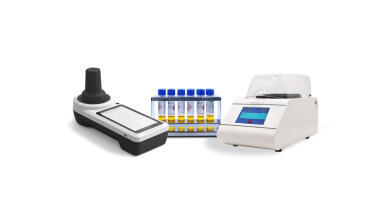
Instead of relying on multiple physical probes or frequent laboratory analysis, the method uses a single inexpensive turbidity meter paired with an artificial neural network (ANN) to estimate a full suite of water quality parameters in seconds.
It’s a deceptively simple concept with potentially transformative implications for India’s wastewater sector and beyond: continuous oversight without the continuous expense.
The system’s foundation is historical operational data from five sewage treatment plants (STPs) across Bangalore.
Engineers collected paired datasets of easily measurable indicators such as turbidity, captured continuously via low-cost meters as well as complex parameters, including biochemical oxygen demand (BOD) and chemical oxygen demand (COD), determined through standard laboratory methods.
By training ANN models to correlate turbidity readings with these lab-measured values, the researchers effectively taught the AI to predict the hard-to-measure metrics from the easy-to-measure one.
Once trained, the ANN operates in real time.
Turbidity readings feed directly into the model, which outputs updated estimates of BOD and COD, etc., every few seconds.
In effect, the turbidity meter becomes a multi-parameter instrument, without adding extra sensors.
Wastewater treatment in India is under constant pressure: rapid urbanisation, infrastructure gaps, and stringent but unevenly enforced effluent regulations all strain plant operators.
For many STPs, continuous monitoring of all compliance parameters is not financially or logistically viable.
Lab analysis requires reagents and turnaround time; multi-parameter sensor arrays are expensive to install and maintain.
As a result, monitoring is often intermittent, sometimes only at the point of mandatory sampling, leaving blind spots in operational control.
AI soft sensors could change that equation.
With a single turbidity meter costing a fraction of a multi-parameter analyser, plants could track compliance parameters continuously, not just at lab-sampling intervals.
Similarly, plants can adjust treatment processes in real time, rather than reacting after results come back.
They can reduce reliance on chemical dosing safety margins, too, by targeting interventions precisely.
Lastly, plants can cut operational costs by optimising aeration and reagent use.
In short, the technology could make continuous process optimisation accessible to plants that have never been able to afford it.
The biggest impact may come when soft sensors are integrated into plant-wide control systems.
If linked to a supervisory control and data acquisition (SCADA) network, the AI model’s outputs could directly trigger automated process adjustments.
For example, a spike in predicted BOD could automatically ramp up aeration before a scheduled compliance sample and a rise in estimated nitrogen levels could activate chemical dosing pumps to maintain removal efficiency.
Further down the line, real-time AI predictions could be streamed directly to state pollution control board portals, providing regulators with a live view of compliance status without waiting for manual sampling.
That could be a game-changer for remote oversight, particularly in regions where plant inspections are sporadic.
As with any AI-driven tool, local calibration is key.
Wastewater characteristics differ not just between cities but between seasons and even weeks, especially where inflows are influenced by industrial discharges, stormwater ingress, or variable household water use.
Models trained on Bangalore data may not immediately perform accurately in Mumbai, Chennai, or smaller towns. Periodic retraining is essential to maintain predictive accuracy.
Another challenge is regulatory acceptance.
At present, most environmental regulators in India (and many other countries) require that compliance data be derived from approved physical or laboratory instruments.
AI-generated estimates, however accurate, may not yet be recognised as official evidence.
Gaining regulatory approval would require validation trials, certification processes, and potentially changes to environmental monitoring standards.
The immediate opportunity is in municipal sewage treatment.
But the concept could scale into industrial effluent treatment plants, where rapid detection of parameter spikes is even more critical to avoid damaging receiving waters.
Industries such as pharmaceuticals, textiles, and food processing where effluent composition can fluctuate sharply might benefit from continuous soft sensor oversight without installing costly multi-parameter rigs.
Looking further ahead, low-cost IoT deployments could bring AI soft sensors to small and rural municipalities, where wastewater treatment oversight is often minimal.
By combining a turbidity meter, a small microprocessor running the ANN model, and a cellular transmitter, operators could view real-time water quality predictions from a smartphone dashboard.
This would democratise access to high-resolution water quality data far beyond India’s megacities.
While turbidity is the current linchpin, researchers are exploring multi-input soft sensors that combine two or three low-cost physical measurements, such as pH, conductivity and turbidity, to further improve predictive accuracy and robustness.
With more diverse input data, AI models could better handle variability in influent quality and adapt to different treatment configurations.
This development sits at the intersection of digital transformation and environmental compliance.
Soft sensors are already used in some advanced industrial process monitoring, but their adaptation to municipal wastewater treatment in India, especially using only a single, simple input, is an important milestone.
If India’s regulators, utilities, and technology providers embrace this model, the country could leapfrog some of the high-cost stages of conventional monitoring infrastructure.
Instead of expanding physical instrumentation networks plant by plant, operators could deploy a data-driven monitoring layer on top of existing hardware.
By embedding intelligence into the most basic of sensors, India’s 2025 AI soft sensor innovation offers a pathway from periodic checks to real-time, responsive wastewater management. .
IET 36.5 Sept/Oct 2026


 Product directory




.jpg)