Air quality monitoring
In August 2024, the Wireless and Autonomous Network for Data‑sharing and Sustainability (WANDS) research group began work.
They have deployed ore than 5,000 wireless sensor nodes across six countries: Singapore, Malaysia, Thailand, Indonesia, the Philippines and Vietnam.
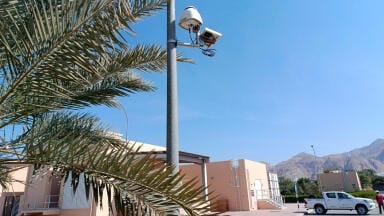
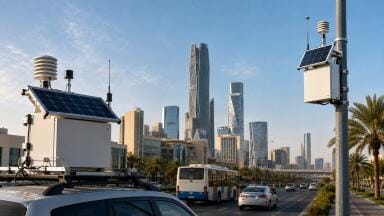
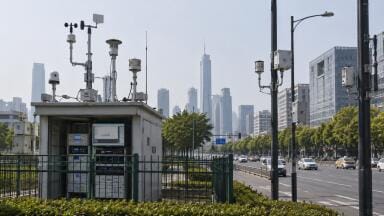
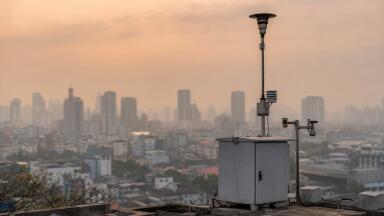
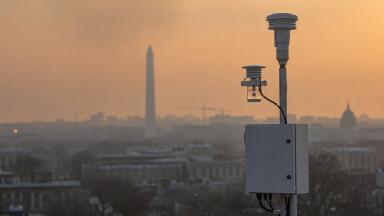
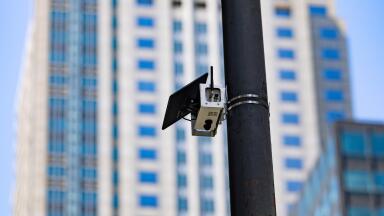
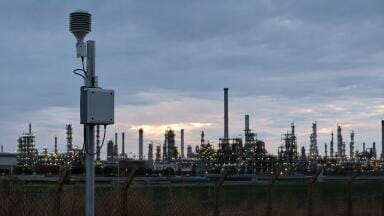
According to project documentation, these nodes will be sited in urban areas, industrial zones, forests, coastlines and agricultural regions, creating a snapshot of environmental conditions across the region.
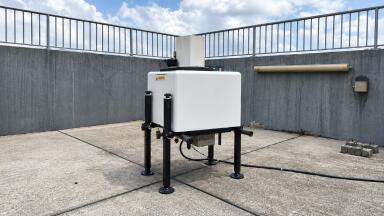
Each node is designed to operate autonomously for up to five years on a single battery charge and incorporates solar panels for energy harvesting (implied by the energy‑efficient design).
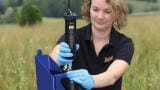
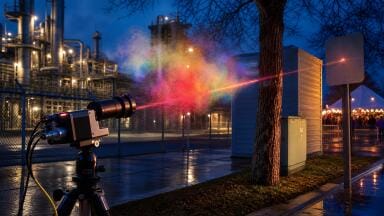
The sensors are multi‑modal: they monitor air pollutants (PM₂.₅, PM₁₀, NO₂, SO₂, CO and ozone), water quality (pH, dissolved oxygen, turbidity), climate variables (temperature, humidity, precipitation and wind), noise pollution and soil conditions.
WANDS emphasizes that integrating multiple sensing modalities into each node reduces infrastructure costs and maximises data-collection efficiency.
The network is expected to generate over one million data points per day.
This volume underscores why WANDS is as much a data‑integration challenge as a hardware project.
Real‑time data transmission is handled through advanced wireless communication protocols with automatic failover and buffering, ensuring continuity even in remote areas.
WANDS distinguishes itself by making data open.
The initiative offers a public web platform and an API so that citizens, researchers and policy‑makers can access real‑time data.
The project also involves NGOs, universities and community groups in deployment and training, fostering local capacity and participatory governance.
Participating governments have signed Memoranda of Understanding to allow joint calibration and data sharing, which is essential for transboundary issues such as haze and river pollution.
Beyond data collection, WANDS aims to enable predictive modelling.
The project employs machine‑learning algorithms to analyse historical and real‑time data, predicting environmental trends, pollution events and climate changes.
The cross‑regional data allows WANDS to evaluate how pollution and climate patterns affect multiple countries and ecosystems, providing evidence for joint policy responses.
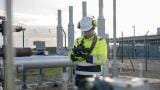
Each node must monitor multiple variables and operate for years without maintenance.
Instrument suppliers should focus on energy‑efficient designs and modular architectures to allow sensor replacement or upgrades.
With multiple countries and diverse regulatory frameworks, WANDS emphasises standards‑based communication protocols and real‑time data transmission with automatic failover.
Edge‑computing capabilities may be needed to pre-process data and reduce bandwidth requirements, especially in remote regions.
The availability of an open API and public dashboards means that instrumentation must feed into interoperable formats.
Suppliers could differentiate by offering data‑management tools and security features that facilitate open sharing while protecting privacy.
WANDS partners with local communities, universities and NGOs to maintain sensors and interpret data.
Vendors should consider training programmes and remote diagnostics to support non‑specialist users, along with service agreements that span multiple jurisdictions.
The initiative is meant as a testbed for commercialization; WANDS mentions licensing agreements and spin‑off companies.
Suppliers can explore partnerships to develop products tailored to regional needs, from rugged coastal sensors to forest‑monitoring kits.
Machine‑learning models trained on WANDS data could help predict smog episodes, algal blooms or flooding before they happen, giving authorities time to warn populations and adjust policies.
Because the network crosses national borders, WANDS also functions as a platform for real‑time environmental diplomacy: data on transboundary haze or river pollution can inform joint action and reduce political friction.
The involvement of UN Environment Programme and ASEAN environmental agencies suggests that WANDS may serve as a model for other regional collaborations.
WANDS offers a glimpse of what region‑wide environmental monitoring can look like.
With 5,000+ sensors across six Southeast Asian countries generating over one million data points per day, the initiative blends long‑life multi‑parameter hardware, open data platforms and participatory governance.
For instrumentation users and suppliers, WANDS is a case study in designing scalable, interoperable systems that support both predictive analytics and collaborative governance.
IET Guide 2026

 Product directory