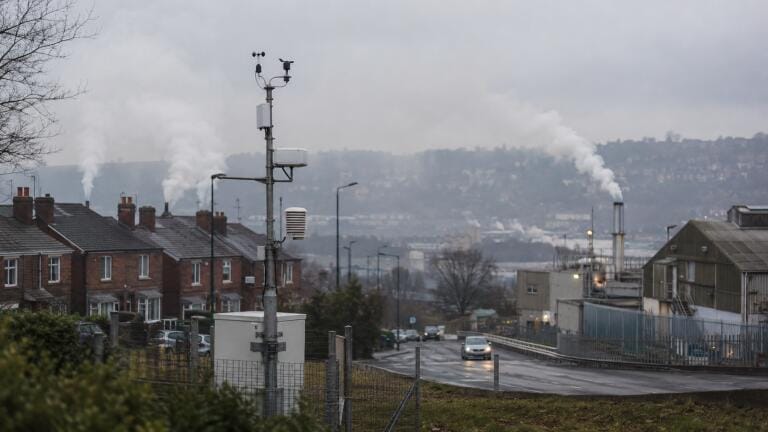
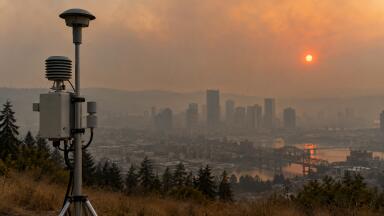
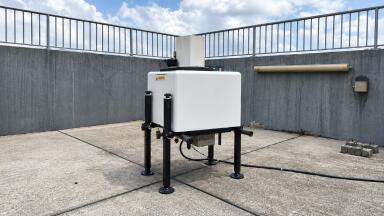
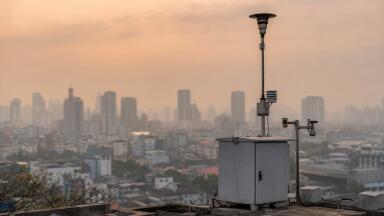
Air quality monitoring
Defra is planning both a public consultation on domestic combustion emissions and an investigation into options for reducing pollution from small industrial combustion plants.
These sources together account for approximately 30% of total UK PM2.5 emissions.
The commitments are set out in Defra's Air Quality Environment Act Target Delivery Plan, published in December 2025.
It accompanies the revised Environmental Improvement Plan and establishes how the UK intends to meet its statutory PM2.5 targets: an annual mean concentration of no more than 10 µg/m³ by 2040, and a reduction in population exposure of at least 35% compared to 2018 levels by the same date.
Interim targets of 10 µg/m³ and 30% population exposure reduction have been set for 2030.

Progress towards those targets has been faster than initially modelled.
Measured PM2.5 concentrations have fallen from a range of 9 to 12 µg/m³ at monitoring sites in 2018 to a range of 6 to 8 µg/m³ by 2024, and population exposure has already been reduced by 25% since the 2018 baseline – exceeding the previous interim target.
The government attributes this to a combination of UK emission reductions and lower transboundary pollution from mainland Europe.
However, Defra acknowledges that meeting the new, more ambitious 2030 interim targets will require additional measures beyond those already in train.
Two significant gaps in current policy coverage have been identified: domestic combustion and small industrial combustion plants below 1 megawatt thermal (1MWth), neither of which is currently subject to direct emissions controls.
Domestic combustion – primarily wood-burning stoves, open fires and solid fuel boilers – accounted for 20% of total UK PM2.5 emissions in 2023, making it the single largest individual contributor to particulate air pollution.
The forthcoming consultation will focus on evidence-based proposals and policy mechanisms to reduce these emissions, while 'minimising the impact on those that need to burn and respecting traditional celebratory festivals such as 5 November and Diwali', according to the plan.
Small industrial combustion plants – typically boilers and generators in the sub-1MWth range used in commercial buildings, smaller manufacturing sites and distributed energy applications – fall below the thresholds covered by the Medium Combustion Plant Directive and existing industrial emissions regulations.
Their aggregate contribution to air quality is nonetheless significant, and the government has indicated it will explore options for addressing them during 2026 as part of a wider industrial emissions reform programme.

The industrial emissions reform programme already under way covers a broader range of sectors and processes: Defra has consulted on reforms to industrial permitting covering combustion, batteries and anaerobic digestion, as well as wider changes to the overall regulatory framework.
Industrial combustion and industrial processes together contributed 26% of UK PM2.5 emissions in 2023.
For environmental monitoring professionals and compliance operators, the prospect of new regulatory requirements covering domestic and sub-1MWth combustion sources will have practical implications for monitoring infrastructure, permitting and compliance reporting, particularly if new obligations are extended to smaller operators who have not previously been subject to emissions limits.
IET 36.5 Sept/Oct 2026



 Product directory

























.jpg)