Air quality monitoring
The Scottish Government's current Cleaner Air for Scotland 2 (CAFS2) strategy reaching the end of its planning cycle and a replacement framework expected to be published before the year is out.
CAFS2, which has provided the policy framework for air quality in Scotland since its launch, sets out actions across ten policy areas and establishes commitments for improving ambient air quality through to 2026.
As the strategy moves into its final phase, the Scottish Government has committed to a formal public consultation in 2026, with the new framework intended to be in place by the end of the year.
The transition has been in preparation since 2025, during which stakeholder engagement has been underway to inform the shape of the replacement policy.
The Scottish Environment Protection Agency (SEPA) has confirmed it will continue to provide technical and regulatory support to the Scottish Government throughout the development and implementation of the new framework, which will replace CAFS2 going forward.
The review process has been prompted not only by the natural end of CAFS2's planning horizon, but also by an investigation from Environmental Standards Scotland, the independent body responsible for scrutinising public authorities' compliance with environmental law.
That investigation identified areas where the Scottish Government's improvement plan needed to be strengthened, and the development of the new framework is expected to address these findings.
Scotland operates a separate air quality policy framework from England, reflecting the devolved nature of environmental governance in the UK, though both frameworks are ultimately shaped by broader UK and retained European legislation on ambient air quality standards.
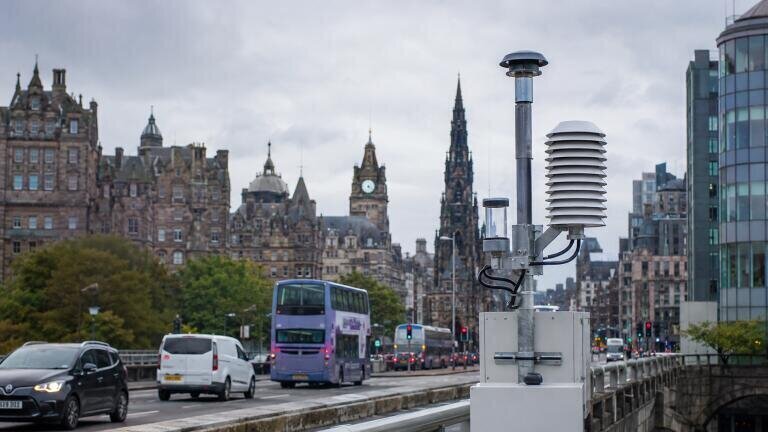
The Scottish framework has historically placed particular emphasis on local authority action plans, public health co-benefits and the relationship between air quality and transport policy in Scotland's urban centres, particularly Glasgow and Edinburgh, where NO2 exceedances have been a persistent challenge.
 The publication of a new framework will be of interest to local authorities, industry operators, environmental consultants and monitoring professionals across Scotland, particularly as policy direction on issues such as transport emissions, agricultural ammonia, domestic burning and industrial permitting continues to evolve at both Scottish and UK level.
IET 36.5 Sept/Oct 2026




 Product directory