Leak detection
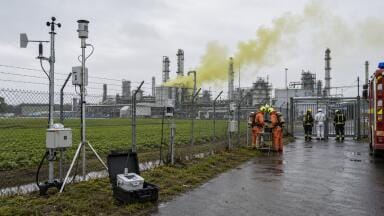
Although authorities said the leak at Primo Chemicals was contained and that there was no continuing threat, the incident has prompted fresh questions about how effectively industrial emissions are monitored beyond the plant boundary.
The release reportedly affected villages surrounding the site, with local residents renewing longstanding concerns about emissions from the industrial area.
Community groups have also alleged that airborne pollution, along with possible impacts on crops and groundwater, has not been adequately monitored over a number of years.
Local officials have since recommended action against factories where elevated chlorine and ammonia concentrations were reportedly detected during inspections.
For environmental monitoring professionals, the incident illustrates the distinction between process safety monitoring inside a facility and environmental monitoring at the site perimeter.

Plant gas detection systems are designed primarily to protect personnel and equipment, but accidental releases can disperse beyond the fence line within minutes depending on weather conditions.
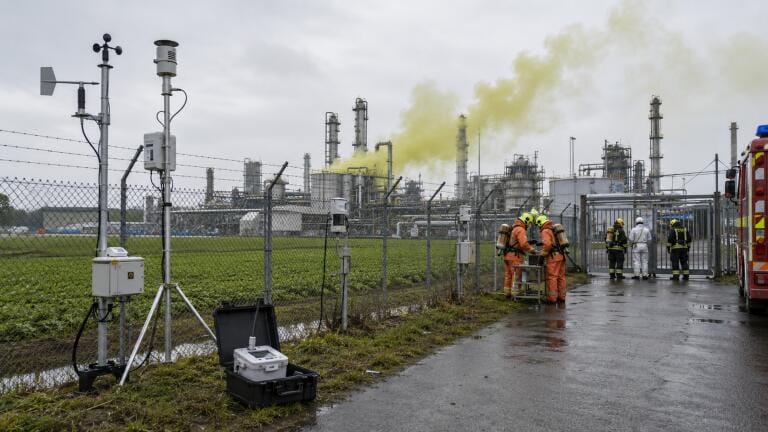
Continuous perimeter monitoring can provide early warning of off-site releases using fixed gas detectors, open-path systems or sensor networks positioned around a facility.
Combined with meteorological measurements and dispersion modelling, these systems can help operators determine the direction of a release, assess potential community exposure and support rapid communication with emergency responders and regulators.
The event also highlights increasing interest in community-facing monitoring networks that complement traditional industrial safety systems.
Advances in telemetry, remote sensing and real-time data transmission now allow continuous measurements to be shared with control rooms and, in some cases, with regulators or the public.

While low-cost sensor technologies have expanded monitoring coverage, regulatory-grade measurements and robust calibration remain essential where data may be used for compliance or incident investigations.
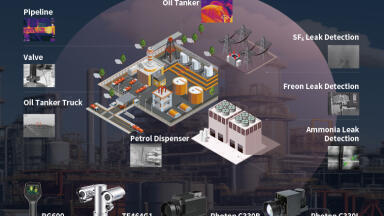
For chemical manufacturers handling hazardous gases such as chlorine, NH₃ and other toxic industrial chemicals, fenceline monitoring is becoming an increasingly important part of environmental risk management alongside conventional leak detection within the plant.
As incidents such as the Nangal leak continue to attract public attention, pressure is likely to grow for monitoring systems that can demonstrate what reaches neighbouring communities, rather than only what occurs inside industrial facilities.
IET 36.5 Sept/Oct 2026



 Product directory