Air quality monitoring
The World Meteorological Organization’s latest Air Quality and Climate Bulletin used four models for the first time and found them broadly consistent.
It also calls for better atmospheric observation of fine particles, ozone, black carbon and microplastics, a reminder that modelled estimates still outpace measurement for several pollutants.
The World Meteorological Organization (WMO) released Bulletin No. 6 of its Air Quality and Climate Bulletin series on Monday, 7 September 2026, to mark the International Day of Clean Air for blue skies.
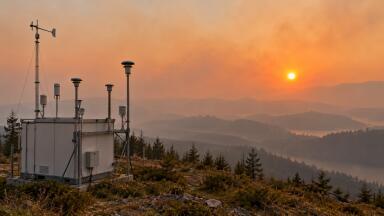
It reviews air quality and climate in 2025 and draws on data from WMO’s Global Atmosphere Watch network.
Its headline message is that pollution from wildfires and heatwaves could undermine international efforts to improve air quality.
Regulation in Europe and North America has reduced fine particulate matter (PM2.5) emissions from industry and transport, the bulletin says. However, exposure to PM2.5 from fires has risen.
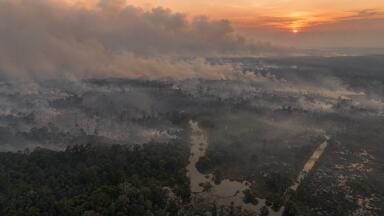
The 2025 picture was uneven. PM2.5 was above the long-term average in northern Canada, parts of the Russian Federation and western-central Africa, mainly because of fire activity.
North-western Spain was a hot spot after exceptional late-summer fires. Burning in Amazonia was lower than in previous years.
PM2.5 in China stayed below its long-term average, reflecting lower human-caused emissions. India remained above average because of biomass burning and other pollution.
For the first time, the bulletin compared output from four modelling systems.
These were the Copernicus Atmosphere Monitoring Service (CAMS), NASA’s GEOS-IT, SILAM from the Finnish Meteorological Institute, and NAAPS.
WMO says that despite differences in the models and their inputs, the results are broadly comparable and consistent.
The health findings rest on studies the WMO release does not name.
One study cited by the bulletin indicates that extreme fire-smoke events have tripled globally since the 1990s.
It estimates nearly 100,000 additional deaths a year between 2010 and 2018, which the bulletin says is likely an underestimate.
An epidemiological study found that conventional risk models based on total PM2.5 may underestimate wildfire-attributable mortality by up to 93 per cent, because fire-derived particles are more toxic.
On ozone, the bulletin points to studies of heatwaves in the south-eastern US, Europe and China. These show that heat, stagnant air and strong sunlight promote ground-level ozone formation.
It says increased exposure could cause tens of thousands of additional premature deaths.
Microplastics are the most striking case of estimate outrunning observation.
One Earth system model simulation cited in the bulletin puts microplastics at 51 million tonnes on land and 22 million tonnes in the ocean. Both act as sources of microplastics in the atmosphere.
WMO says estimates vary widely, partly because of insufficient sustained monitoring.
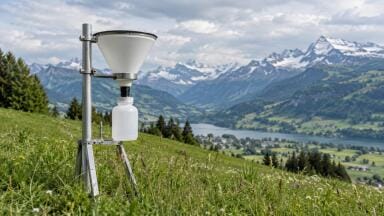
That is the thread running through the bulletin. WMO says the report highlights the need for improved atmospheric observations of PM2.5 and ground-level ozone.
It adds black carbon and microplastics, which it describes as “not sufficiently monitored even though they are widespread”.
On microplastics, it says monitoring the atmospheric pathways by which they are deposited in remote environments will be crucial.
First, agreement between models is not the same as agreement with measurements.
Four systems producing broadly consistent PM2.5 fields is useful. But it does not show how well any of them matches ground observations where stations are sparse.
Second, the toxicity finding matters for how exposure is measured.
If fire-derived particles are more harmful per unit mass than other PM2.5, a network that reports mass concentration alone may understate the health risk of a smoke episode.
That raises questions about composition measurement and source apportionment alongside routine PM2.5 monitoring.
Third, for black carbon and atmospheric microplastics, the gap is more basic.
Without sustained, comparable observations, model estimates cannot be properly tested, and the wide range in microplastic estimates reflects that.
The WMO release does not set out which observations should be added, where, or by whom.
That is the practical question for national networks, research infrastructures and instrument suppliers: which of these pollutants can be measured routinely, to what quality, and at what cost?
IET 36.5 Sept/Oct 2026

 Product directory