River water monitoring
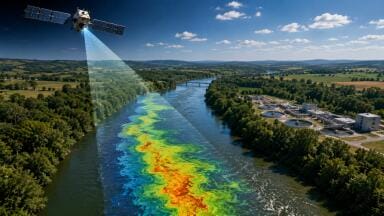
A diffusion-based model trained on data from 516 US river basins predicts hourly streamflow and can take in new gauge readings without retraining.
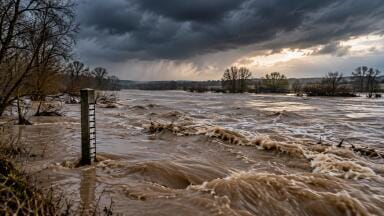
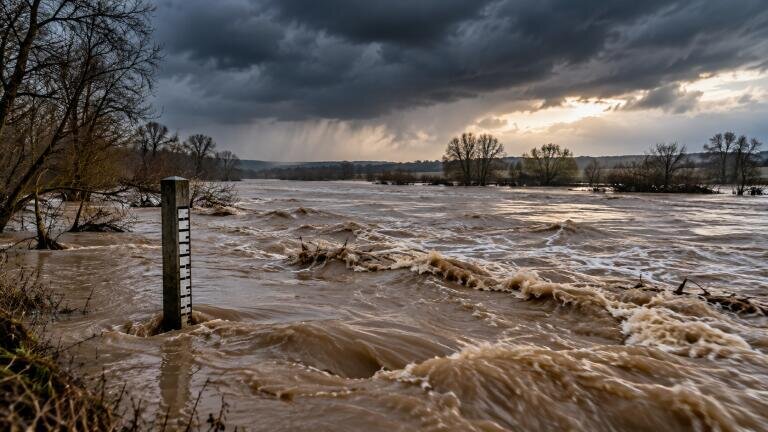
A forecasting model trained using the diffusion technique behind AI image generators can predict streamflow hour by hour – the timescale at which flash flood peaks occur.
The work, led by researchers at Penn State with a contributor from Scripps Institution of Oceanography at the University of California, San Diego, is published in Water Resources Research.
Professor Chaopeng Shen’s group has previously developed national-scale daily flood forecasting models based on historical rainfall and streamflow. Daily models, however, can miss the short-lived peaks behind flash floods, which may rise and recede within hours.
Shen said: “We’ve previously delivered a daily flood forecasting model, but it’s widely understood that the peaks of flash floods occur at an hourly scale. By calibrating the model for an hourly scale, we can more reliably capture the extraordinary peaks that can wreak havoc.”
In diffusion training, the model is given complete data, noise is then added, and the model learns to remove it and reconstruct the original. Shen said this approach suits hourly rainfall data, which is highly variable. The model quantifies the uncertainty in its predictions and can assimilate recent gauge observations without retraining, a process known as inpainting.
The team trained the model on hourly streamflow records from 516 river basins across the US between 1990 and 2003. It was then tested on data from 2009–2014, a period it had not seen during training.
According to Shen, the diffusion model generally outperformed the best existing hourly deep-learning models, including during high-flow periods, which are particularly hard to predict. It can also run in reverse, estimating the hourly rainfall most likely to have produced a given gauge record.
The researchers plan to investigate hybrid training approaches and models incorporating more physical variables. Shen said: “At the end of the day, our ultimate goal is to deliver a system that is robust, reliable and can help save people’s lives, and I think we are making progress in that realm.”
The work was supported by the Cooperative Institute for Research to Operations in Hydrology (CIROH), the National Oceanic and Atmospheric Administration (NOAA) and the California Department of Water Resources.
Read more: http://dx.doi.org/10.1029/2025WR042720
IET 36.5 Sept/Oct 2026

 Product directory