River water monitoring
The response, confirming decisions on proposals first put out for consultation in October 2025, extends variable monetary penalties (VMPs) – assessed to the civil standard of proof, on the balance of probabilities, rather than the criminal standard – to a wider range of breaches, including environmental permits, water abstraction licences, impounding licences and drought permits.

For monitoring and compliance teams, the practical change is speed. Civil-standard VMPs allow the EA to act on the balance of probabilities rather than assembling a case that would survive criminal scrutiny.
That lowers the evidential bar for enforcement and, combined with a new tier of automatic fixed penalties for specific, clearly evidenced breaches, points to considerably more enforcement volume reaching a formal sanction rather than being resolved informally.
The reforms have two distinct tiers. Civil-standard VMPs are capped at £500,000 and apply to a defined set of minor-to-moderate offences around permitting, abstraction, impounding and drought management.
Sitting alongside these, new automatic fixed penalties will apply to specific, clearly defined breaches – described by the EA as operating "like a speeding ticket" – set at £10,000 for very large organisations, rising to £20,000 if unpaid within 28 days.
Criminal prosecution and unlimited penalties remain available for the most serious offences, and the EA has said penalty size will scale with company size so that fines cannot simply be absorbed as a cost of doing business.
The scale of what this could touch is significant.
The EA's own figures show that in the last financial year, 95.7 per cent of permit breaches fell into category 3 (minor) or category 4 (no impact) – precisely the tier the new civil-standard powers are designed to address faster.
Examples cited by the EA include minor equipment maintenance failures, not emptying storm tanks, minor pollution incidents and failure to return data.
Under the previous framework, many of these would have required a resource-intensive criminal case to result in a formal penalty at all; a large share may instead have gone unsanctioned in practice.
The reforms are aimed specifically at water companies rather than industrial operators generally, and the Government has said it intends to implement them through secondary legislation, so a precise commencement date is not yet fixed.

The wider context is a summer of acute pressure on abstraction and drought licensing.
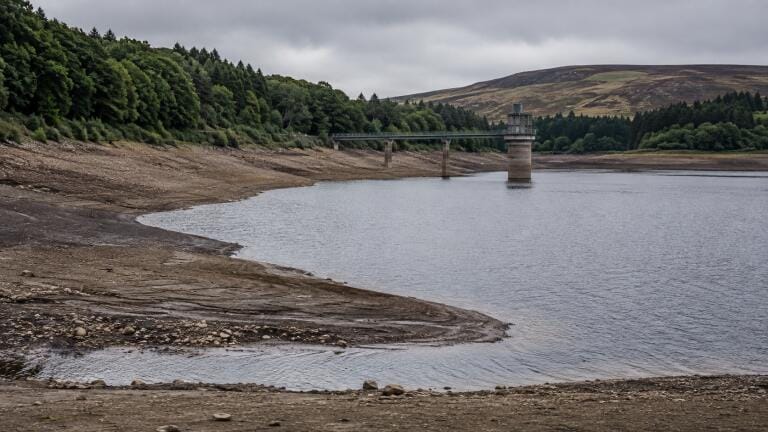
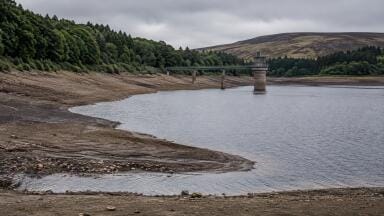
The EA has described 2026 as having brought the driest July in 190 years, with just 5 per cent of expected rainfall in some areas, placing significant strain on abstraction for irrigation and depleting agricultural reservoir stocks rapidly.
Bringing drought and abstraction breaches within the civil-standard VMP regime at the same time as this pressure is building gives the EA a faster enforcement route precisely when abstraction compliance is likely to be tested hardest.
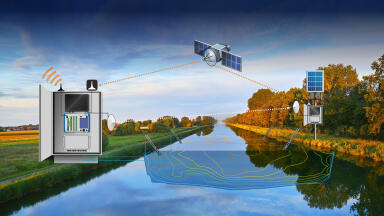
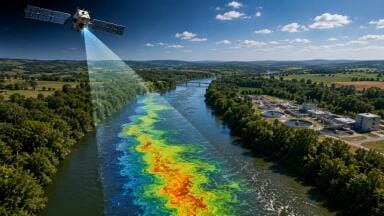
For operators and technology suppliers working in this space, that combination – tighter conditions on the ground and a lower bar for sanctioning non-compliance – raises the practical value of continuous, verifiable abstraction and flow data over periodic or estimated reporting.
IET 36.5 Sept/Oct 2026


 Product directory
















.jpg)