Air quality monitoring
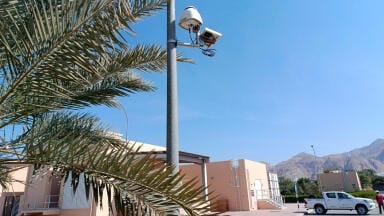
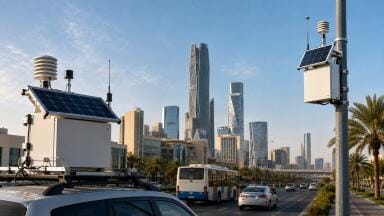
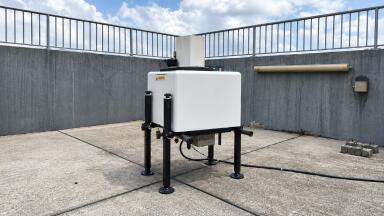
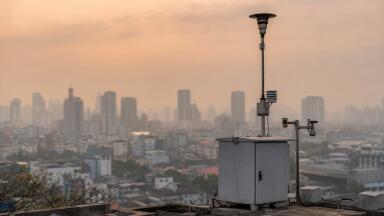
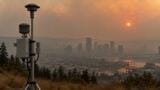
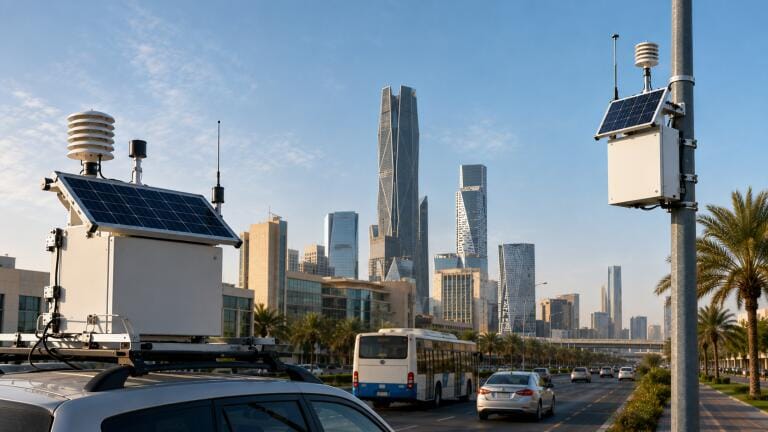
Researchers at King Abdullah University of Science and Technology (KAUST) in Saudi Arabia have developed a hybrid air-quality monitoring system that combines mobile and stationary sensor units to provide more detailed information on urban pollution. Called AirGo, the system uses modular, solar-powered units that can be mounted on vehicles such as cars and buses or installed at fixed locations, including streetlights. The units measure particulate matter, gases, temperature, humidity, and atmospheric pressure, with GPS and cellular connectivity enabling real-time transmission of measurements to a cloud-based platform.
AirGo can monitor a range of pollutants, including carbon dioxide, carbon monoxide, sulphur dioxide, ozone, hydrogen sulphide, ammonia and nitrogen dioxide, as well as coarse, fine and ultrafine particles. Its modular design allows sensors to be selected according to the pollutants and environmental conditions of interest, potentially providing greater flexibility than conventional fixed monitoring stations.
The technology has been tested extensively on the KAUST campus, where it demonstrated the ability to detect environmental events including dust storms and rainfall. The resulting data can be incorporated into weather and pollution models, supporting local-scale forecasting and real-time alerts. KAUST currently places the technology at Technology Readiness Level 6, meaning that it has been demonstrated in a relevant environment, and says it is working with manufacturers towards larger-scale production.
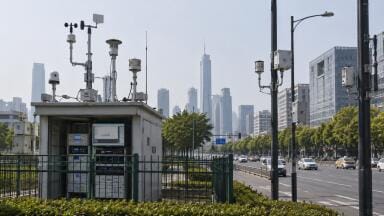
The work forms part of broader research at KAUST into air-quality monitoring and environmental science. In a separate collaboration with Saudi Arabia's National Center for Environmental Compliance, the university is also contributing to the development of a national air-quality forecasting system using its Shaheen III supercomputer. The NCEC operates a network of 240 air-quality monitoring stations across Saudi Arabia, with KAUST researchers contributing expertise in modelling, data analysis and environmental monitoring.
IET 36.5 Sept/Oct 2026



 Product directory