Air quality monitoring
For monitoring professionals, the project is a rare public case study in grid design, funding structure and data delivery at city scale.
Chicago has switched on what its public health department calls the largest community air quality monitoring network in the US, and the second-largest in the world after London’s Breathe London scheme.
The Chicago Department of Public Health (CDPH) and the University of Illinois Chicago (UIC) School of Public Health publicly released data from the network, named Open Air Chicago, on 4 February 2026.
The deployment offers a detailed reference case for anyone specifying, siting or funding a dense low-cost sensor grid, from network design methodology through to data delivery and the hybrid funding model behind it.

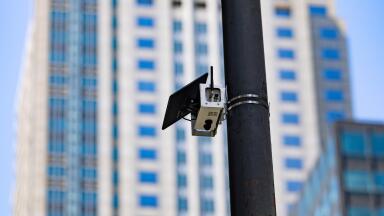
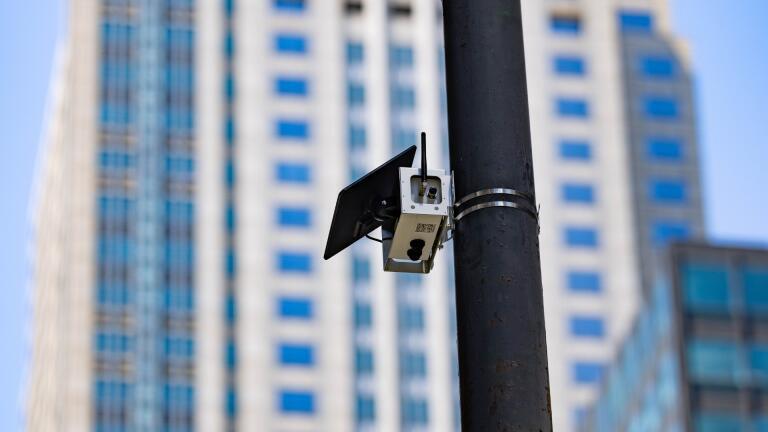
Over six weeks in summer 2025, crews from the Chicago Department of Transportation (CDOT) installed 277 solar-powered Clarity Node-S sensors on light poles across roughly 60 ZIP codes.
Each sensor measures fine particulate matter (PM2.5) and nitrogen dioxide (NO2).
Siting followed the US Environmental Protection Agency (EPA) Clean Air Act network design criteria for ambient air monitoring, set out in 40 CFR Part 58, Appendix D.
Planners layered this against the Chicago Environmental Justice (EJ) Index, an EPA-EJ-style cumulative impact assessment the city published in September 2023, plus CDOT light-pole engineering criteria and input from a 13-organisation community advisory board.
The result is a variable grid rather than a uniform one.
Sensors sit 0.87 miles apart in areas with higher EJ Index scores and 0.93 miles apart elsewhere, according to slides presented by project lead Serap Erdal, a UIC School of Public Health professor, at a Health Effects Institute meeting in April 2026. Some 64% of sensors sit within EJ-designated areas, with the remaining 36% elsewhere.
That density is a marked step up from Chicago’s existing federal reference network, which Erdal’s slides put at four EPA-grade stations for PM2.5 and two for NO2.
Open Air Chicago is designed to supplement, not replace, the federal-grade monitoring already reported on AirNow.gov.
The Clarity Node-S is a self-powered, cellular-connected monitor built around optical PM sensing, with an internal battery that Clarity says can sustain operation for up to 30 days without sunlight.
Housings carry FCC and CE certification, an MCERTS certification for solar-powered use, and an ingress protection rating of IPX3 for the assembled unit, with componentry (other than the sensor module) rated IP67. Clarity specifies a minimum two-year field life.
The unit is not a federal reference method (FRM) or federal equivalent method (FEM) instrument.
Clarity’s own product literature is explicit that Node-S is “not a regulatory-grade monitor”, though it says the sensor has undergone collocation testing against reference instruments in California, Oregon and Europe.
Chicago’s sensors were also collocated at a CDPH facility before deployment, per Erdal’s slides, as part of quality assurance and quality control preparation.
Beyond the core 277-unit PM2.5/NO2 layer, the network includes six Clarity Black Carbon Modules, all owned by UIC, extending the deployment’s pollutant coverage on a subset of sites.
Sensor ownership is split: 60% of the PM2.5/NO2 units belong to UIC and 40% to CDPH, according to Erdal’s slides, reflecting where the underlying grant money originated.
The core funding is a US$2m grant that Erdal secured in 2023 from the National Institute of Standards and Technology (NIST), part of the US Department of Commerce, via a congressional earmark backed by US Senator Tammy Duckworth. NIST’s award runs from 1 October 2023 to 30 September 2026.
A second, separate grant came from ComEd, the regional electricity utility, running from 16 January 2025 to 31 January 2026 and administered alongside risk-management partner RHP.
Measurements reach the public through two channels.
The Clarity Open Map lets residents locate their nearest sensor, check current readings and 24-hour trends, view health guidance, download 30 days of data per sensor and sign up for alerts when air quality is rated unhealthy.
The Chicago Open Data Portal hosts the underlying dataset, “Open Air Chicago Individual Measurements”, offering raw and weighted readings plus hourly and daily aggregations for anyone wanting to run their own analysis.
CDPH describes the aim as helping residents “understand the air they breathe and make informed choices”.
For network operators and instrumentation suppliers, Open Air Chicago is one of the clearest published templates yet for scaling a low-cost sensor deployment inside a regulatory and equity framework, rather than as a standalone research pilot.
Several points stand out for procurement teams.
EJ-weighted grid spacing is now a documented, repeatable method. Rather than a uniform grid, Chicago varied sensor density using a published equity index, giving other agencies a citable precedent for weighting network design towards disadvantaged areas without abandoning EPA design criteria.
Infrastructure siting matters as much as sensor choice. The Sun-Times has reported that an earlier Chicago pilot using bus-shelter-mounted units, from a Microsoft-backed effort, ran into accuracy concerns tied to placement. CDOT light poles were chosen partly to avoid similar siting problems.
Multi-party ownership is workable but needs clear accounting. The 60/40 UIC-CDPH ownership split, funded from separate federal and utility grants with different end dates, illustrates how city-university-utility partnerships can co-fund infrastructure, provided asset ownership and maintenance responsibility are defined early.
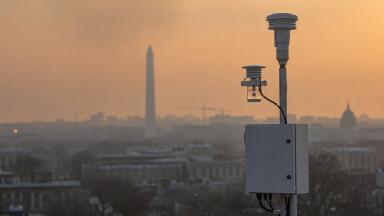
The model is already replicating. Clarity has run comparable low-cost networks with Philadelphia’s Breathe Philly (76 Node-S units, following a 2016-launched, non-real-time 50-monitor pilot) and Washington DC’s Department of Energy and Environment. Philadelphia reported 97 to 99% correlation with reference monitors during collocation testing, according to Clarity’s own webinar recap of the three cities’ experience.
Regulatory boundaries remain firm. None of these networks is being used for enforcement. Chicago’s sensors, like Philadelphia’s and Washington’s, are explicitly positioned as supplementary to FRM/FEM monitoring, informing planning, zoning and public health messaging rather than compliance decisions.
For vendors, the durability of the funding model, spanning a multi-year federal grant, a utility grant and municipal in-kind support, offers a more resilient commercial pattern than single-source grant funding, provided maintenance and data-hosting costs are planned for beyond the initial installation, a point Clarity itself has flagged as a common failure mode in comparable city deployments.

Open Air Chicago is scheduled to keep collecting data for around five years, into 2030, according to city and university reporting, well beyond the typical life of a research grant.
Its value to the wider monitoring sector lies less in the pollutant readings themselves and more in the fact that a full network design, funding and governance model has been documented and made publicly citable, at a scale (277 sensors, roughly 60 ZIP codes) that few community networks have reached.
As more US cities, including Philadelphia and Washington DC, adopt similar hybrid-funded, light-pole-mounted, low-cost sensor grids, Chicago’s published design criteria and ownership structure look set to become a reference point for procurement teams weighing up their own hyperlocal expansion plans.
IET Guide 2026

 Product directory