Air quality monitoring
Electrolysis has moved from emerging technology to a central part of the transition towards a lower-carbon energy system. As hydrogen takes on a wider role—not only as an energy carrier but also in industrial applications such as direct reduced iron for steelmaking—the focus is shifting. It is no longer just about how efficiently hydrogen is produced, but about how reliably its purity can be maintained and verified all the way through to end use.
Standards such as ISO 14687 define the required quality levels for hydrogen, but in practice achieving and demonstrating compliance depends heavily on what happens upstream of the analyser. Sampling and gas conditioning systems sit quietly in the background, yet they determine whether the data being generated can be trusted.
Moisture management is one of the most practical examples of this challenge. When gas streams are cooled during conditioning, water vapour inevitably condenses. If that liquid is not removed effectively, it can be carried into analytical equipment, distort results, or contribute to longer-term issues such as corrosion or blockages. In older systems this often required manual draining, but that approach is no longer suitable for modern unattended operation.
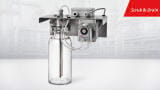
This is where automatic condensate drains have become an important part of system design. By removing collected liquid continuously and in a controlled way, they help maintain stable sample conditions without interrupting gas flow or introducing unnecessary losses. It is a small function, but it plays a key role in keeping analytical systems reliable over long operating periods.
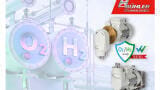
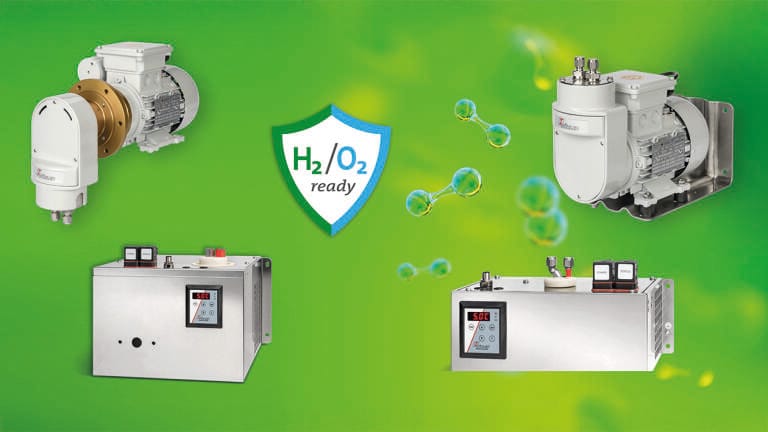
These kinds of challenges are exactly what Bühler Technologies has been addressing in its development of gas conditioning equipment for hydrogen and oxygen applications. The company’s sample gas coolers, pumps and condensate management systems are designed specifically for these conditions, where cleanliness, material compatibility and continuous operation all have to be considered together rather than in isolation. The focus is on ensuring that the conditioning stage does not become the weak link in the measurement chain.
Hydrogen itself adds another layer of complexity. Its very small molecular size allows it to diffuse into metals, which can gradually affect material properties or, in welded assemblies, contribute to internal defects. Managing this requires careful material selection and, in some cases, post-fabrication treatment to release absorbed hydrogen. Even then, sealing integrity and leak testing remain essential because hydrogen will exploit any weakness in a system.
Oxygen presents a different set of concerns. As a highly reactive gas, it can accelerate corrosion in the presence of moisture if materials are not suitable. It also lowers ignition thresholds for contaminants such as oils, greases and fine particulates, making cleanliness a critical design and manufacturing consideration.
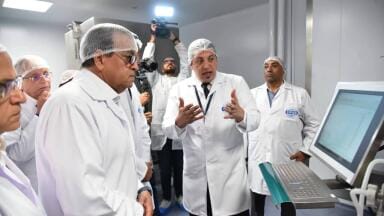
As a result, production and assembly processes are increasingly carried out under tightly controlled conditions. Cleanroom practices, sealed handling, and validated cleaning procedures are now standard in many cases, with final preparation often aligned with recognised guidelines such as EIGA DOC 33/18 and VDA Volume 19. The goal is to ensure that systems enter service free from contamination that could compromise safety or measurement integrity.
As hydrogen and oxygen technologies continue to expand, the supporting infrastructure around them is becoming more visible and more important. Sampling, conditioning and analysis are no longer peripheral tasks—they are what ensure that the numbers being measured genuinely reflect reality. And in that chain, Bühler’s gas conditioning systems sit in a critical position: bridging the gap between process gas and trustworthy data.
IET 36.5 Sept/Oct 2026



 Product directory