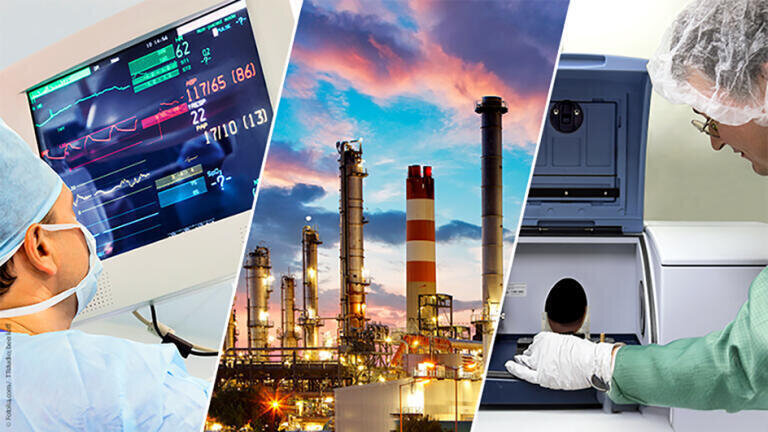
Air quality monitoring
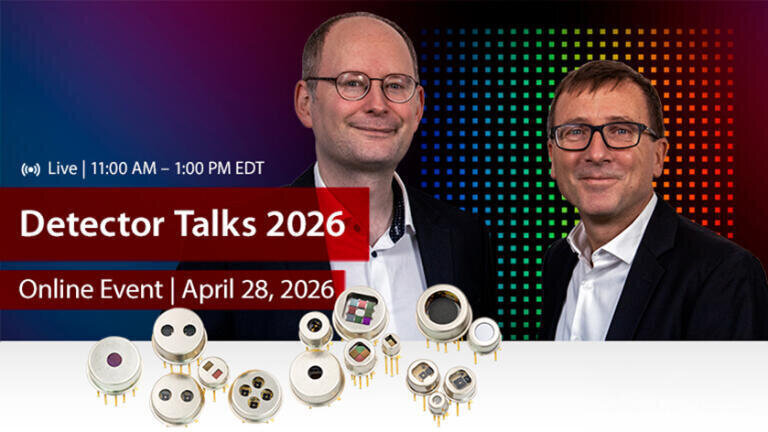
Infrared detection is quietly proving itself to be one of the most versatile and reliable technologies available for measurement and monitoring technology. From gas analysis to flame detection and spectroscopy, its applications continue to grow, but so too does the complexity of getting the best performance from it. That’s exactly why InfraTec is hosting its upcoming online event, “Detector Talks 2026 – Your Questions About Infrared Detectors,” on April 28th
What makes this event stand out is its tone. Rather than feeling like a formal webinar or a sales presentation, it’s designed to be a genuine conversation. Anyone who has worked with infrared detectors will know that the theory is only half the story. The real challenges tend to appear when systems are up and running, yet signals don’t behave quite as expected, when environmental conditions interfere, or when a specification that looked perfect on paper turns out to need fine-tuning. This event leans into those realities by giving participants the chance to ask questions and get straight answers from people who deal with these issues daily.
There will, of course, be a solid grounding in the fundamentals, particularly around pyroelectric infrared detectors. These devices have been around for some time, but they remain central to many modern sensing solutions because of their robustness and flexibility. Understanding how they behave in practice—how factors like modulation, temperature changes or noise affect performance—can make a significant difference when it comes to achieving reliable results.
Where things get particularly interesting is in the selection and configuration process. Choosing a detector is no longer a simple tick-box exercise. With so many variables in play, from spectral response to response time, the right choice often depends on subtle application details. In gas analysis, for example, matching the detector to the absorption characteristics of a specific gas can be the difference between a system that works well and one that struggles. In flame detection, avoiding false alarms while maintaining fast response times is a constant balancing act.
Customisation is another area that continues to evolve. The ability to tailor detectors with specific IR filters, window materials or modular designs opens up a huge range of possibilities. It allows engineers to adapt solutions to challenging environments or highly specific measurement tasks. At the same time, it introduces more decisions, and not all of them are straightforward. Having access to expert insight at that stage can save a great deal of time—and frustration.
Ultimately, what InfraTec is offering here is something refreshingly practical. It’s not just about presenting information, but about creating a space where real questions can be discussed openly. For engineers and technical specialists working with infrared systems, that kind of direct exchange is often far more valuable than any slide deck.
As the demands on sensing technologies continue to increase, so does the need for a deeper, more nuanced understanding of how they perform in the real world. Events like Detector Talks 2026 are a reminder that sometimes the most useful insights come not from theory alone, but from shared experience and honest conversation.
IET Guide 2026

 Product directory