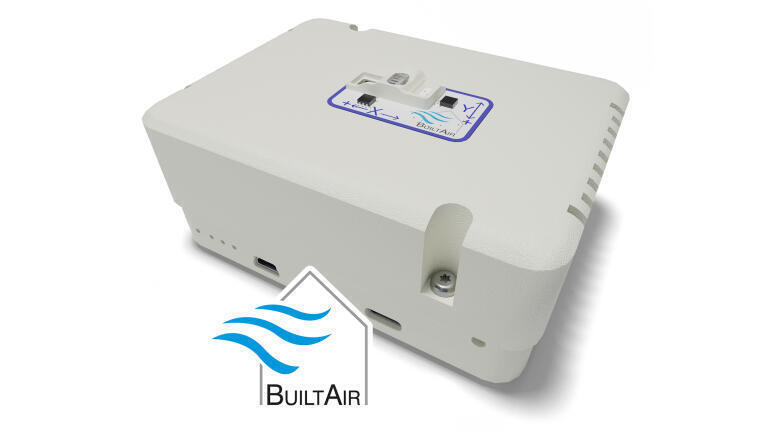
Indoor air quality monitoring (IAQ)
We spend more than 80% of our time indoors and these built environments are one of the most important users of our global energy, but they also keep us comfortable and healthy; the three requirements are thermal comfort, good air quality and efficient ventilation.
Two standards define comfort and good ventilation for good air quality: ASHRAE Standards 55 and 62.
The built environment is complex, where good indoor air quality (IAQ), efficient ventilation, thermal comfort and energy efficiency all compete, demanding intelligent compromises. Data must be collected by a network of devices, monitoring multiple zones together, giving a full picture of the building. And the measurements must be accurate.
Indoor air quality (IAQ) requires measurements of temperature, humidity, CO2, NO2, PM10,2.5,1 and TVOC.
Indoor environmental quality (IEQ) requires measurement of both ambient and radiant temperature, humidity, barometric pressure, plus airspeed, noise and light.
From these measurements IEQ indices such as Heat Index (HI) and Wet Bulb Globe Temperature (WBGT) are calculated automatically by the IEQ Monitor.
Simple CO2-temperature-humidity monitors do not provide the required multi-parameter information to make informed decisions and solve occupants’ problems, and networked IEQ/IAQ monitors are simply not available.
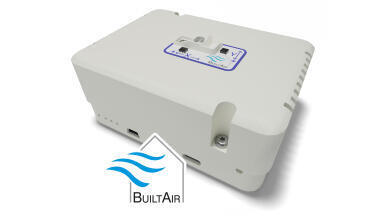
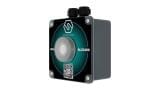
BuiltAir IEQ Monitor is a platinum standard indoor air quality monitoring system designed to deliver very accurate realtime air quality data, and alerts from office buildings, schools, commercial spaces and residential and social housing.
It uniquely monitors critical parameters including: airflow, noise (dBA + dBC), light, CO2, NO2, PM10,2.5,1, TVOC, both ambient and radiant temperature, barometric pressure and relative humidity.
The IEQ Monitor integrates with building management systems (BMS) to afford more precise ventilation control.
The IEQ Monitor has two formats – the integrated monitor has a high quality internal particulate matter (PM) monitor, while the standard device has a separate PM unit.
Developing an advanced IEQ Monitor required a team capable of advanced electronics, wireless and cloud competence and a deep understanding of both physical and chemical sensors.
The NosmoTech team have been developing, patenting and manufacturing air quality and water quality instruments since 1979, and developing, patenting and manufacturing low-cost gas and particle sensors (LCS) since 2005.
Founded in 2021, NosmoTech has focused on better air quality monitors for the built environment, integrating physical and chemical sensors as a sensor network. The design requirements were rigorous: lowest power consumption, best available sensors for data quality, easy calibration, flexible configuration, simple data visualisation, easy setup and standalone as well as network capability. Four years later, we now introduce the BuiltAir IEQ Monitor, along with the BuiltAir Cloud.
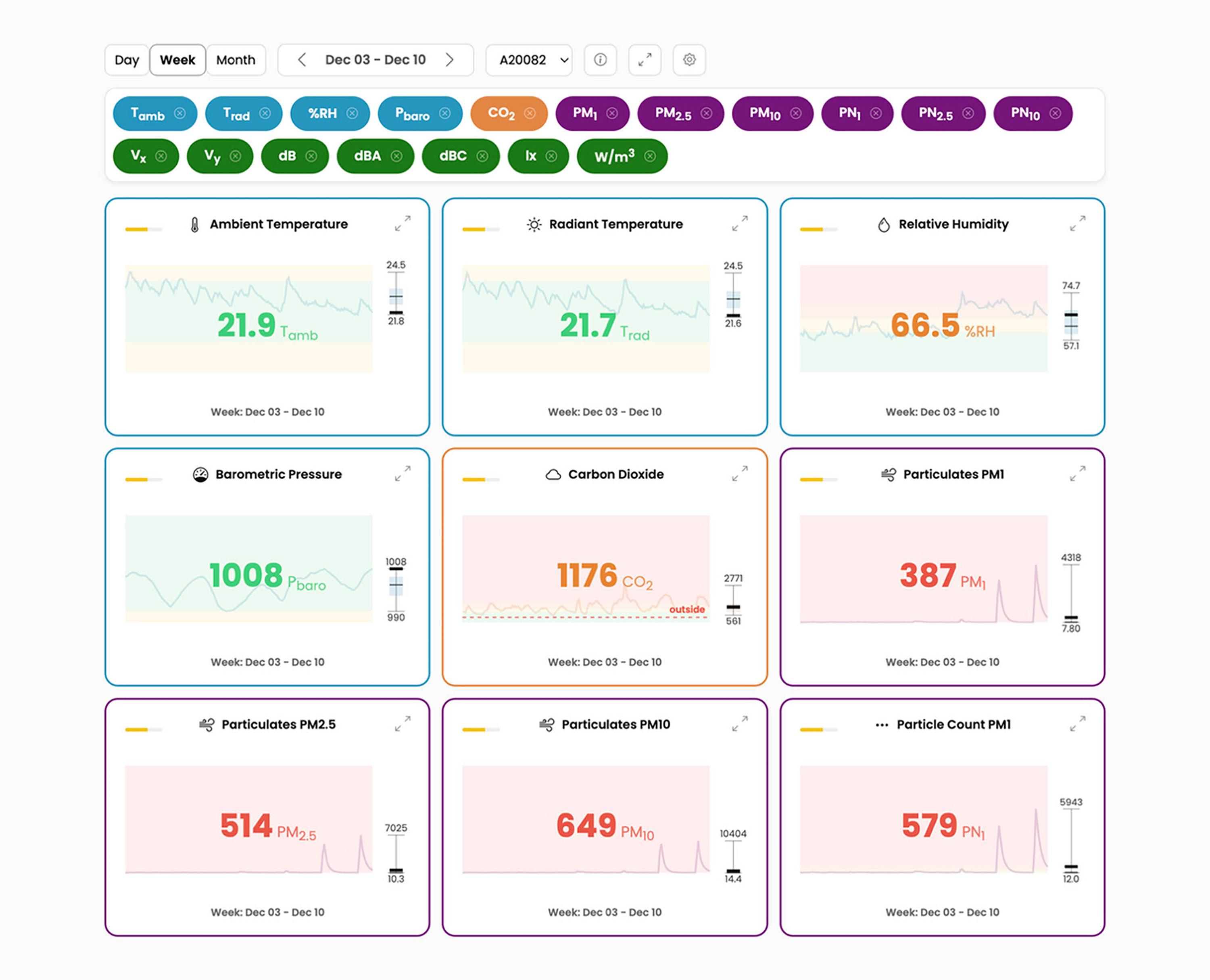
Whilst there are products that will monitor temperature, CO2 and relative humidity for use in the workplace and home environments, the market was missing affordable instrumentation that records all the necessary measurements.
Where other IAQ or IEQ monitors let you down with inadequate data quality, the BuiltAir IEQ Monitor includes 12 accurate, reliable sensors delivering the data quality you need. Airflow is critical to understanding the formation of mould and to provide information about the distribution of pollutants around the building. Also needed when calculating thermal comfort are indices such as Heat Index (HI) and Wet Bulb Globe Temperature (WBGT).
Barometric pressure is usually a low resolution optional extra in competitor products. The BuiltAir IEQ Monitor resolves 1 Pa for monitoring small pressure differences between zones, mapping air infiltration and exfiltration between zones and outdoor. Absolute pressure and the calculated pressure differences can be mapped within an entire building, using multiple BuiltAir IEQ Monitors.
Noise and light measurements inform us of occupancy and activity. Noise is recorded as both dBA and dBC, useful when diagnosing irritating background noises.
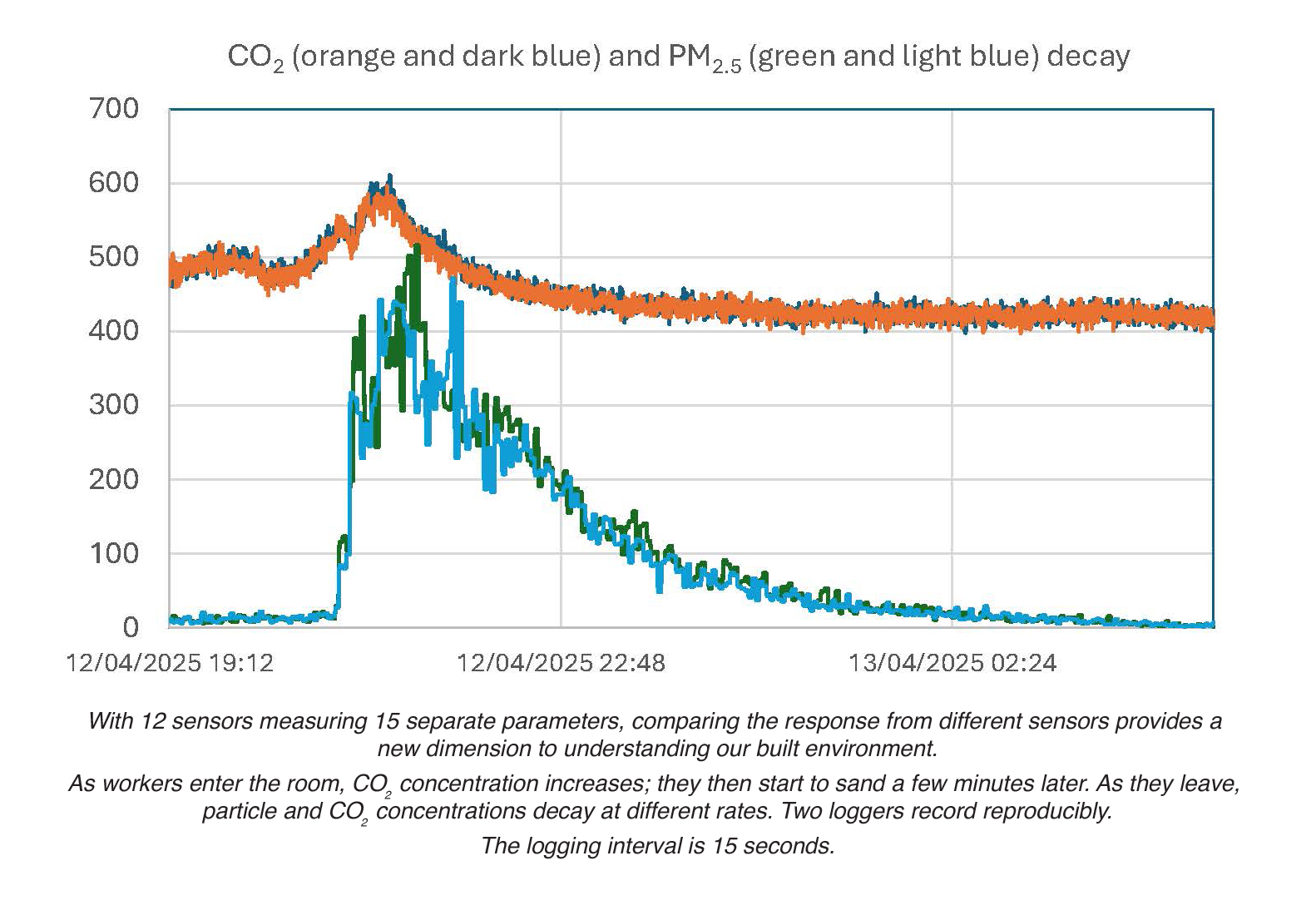
Gas, light, sound, particles- comparing different responses
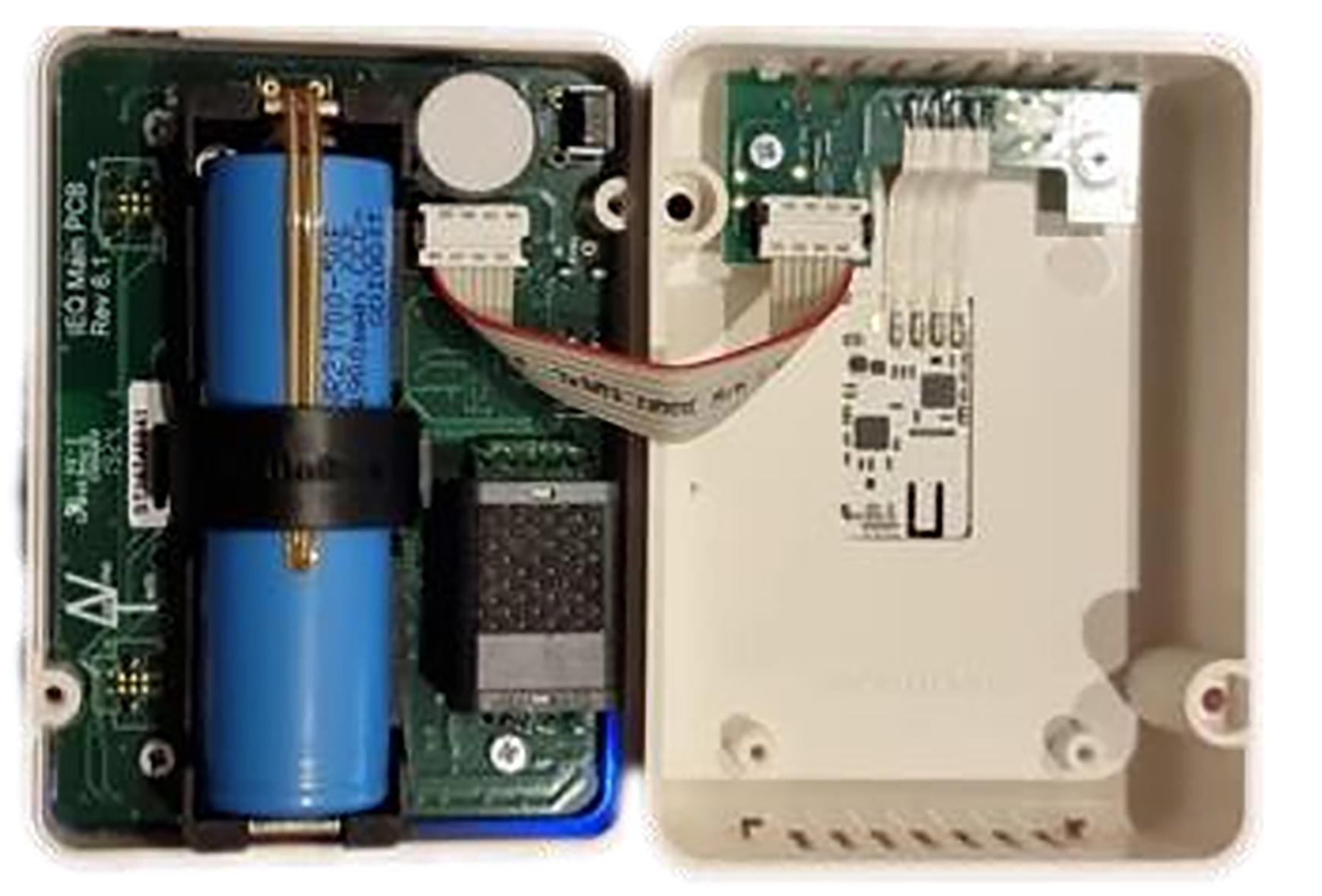
The BuiltAir monitor is affordable. Designed and manufactured in the UK by a team that understands instrument design, it achieves massive and accurate data at a cost that is not obtained by others.
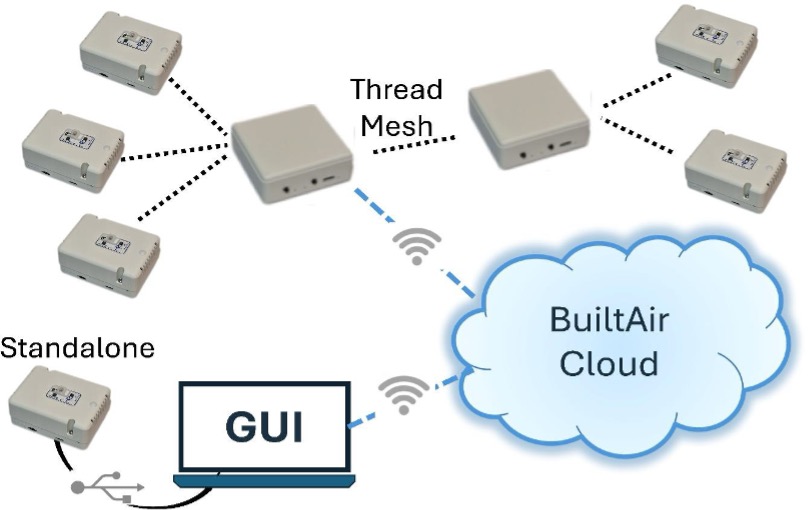
The diagram below shows how our IEQ Monitors operate as a network.
Using thread network technology (as used by Amazon Alexa and Google), each monitor communicates with the router, which the wi-fi links to the BuiltAir Cloud for data compensation, analysis, vaulting and downloading.
IET 36.5 Sept/Oct 2026



 Product directory























.jpg)