Gas analyser
Rhizo PTX, a UK technology start-up, has developed a modular electrolysis stack that can manufacture clean ammonia from just water, air and renewable energy. The effectivity of the technology has been proven with continuous measurements by an advanced ammonia analyser from Signal Group.
Ammonia has traditionally been viewed primarily as an industrial feedstock. However, its potential as an energy carrier and hydrogen transport medium is now attracting significant attention as governments and organisations around the world seek opportunities in the transition to a lower-carbon economy.
Non-captive ammonia – ammonia that is produced and sold into wider markets rather than consumed at the point of manufacture – is particularly important. It is increasingly being recognised as a key enabler for decarbonisation across sectors such as maritime shipping, industrial chemicals and energy storage. Despite its importance, few countries manufacture significant quantities of ammonia. The UK for example, no longer manufactures ammonia, creating a strategic dependency on imports for industries that rely on it.
Against this backdrop, two electrochemical engineers, Ash Stott and Ben Kyffin, the Rhizo PTX founders, decided to leave secure, well-paid careers to tackle one of the most significant challenges in sustainable chemistry: developing a cleaner and more efficient way to manufacture ammonia.
Electrolyzers running on renewable energy can generate ‘green hydrogen’ from water, which can be an ideal clean energy source at the point of production. However, hydrogen is difficult to transport. As a gas, the volume is too great, and cryogenic conditions are necessary to convert hydrogen to a liquid (-253°C). One solution is to convert hydrogen to ammonia using high temperature and pressure (Haber-Bosch process). Ammonia has the significant advantage that it can be converted under a small pressure to a liquid at room temperature. As a liquid, ammonia can then be transported to the point of need and utilised as an industrial feedstock or as an energy source.
The founders of Rhizo PTX were motivated by a simple but powerful question: would it be possible to manufacture ammonia directly from water and air using clean electricity, rather than relying on methods that require an additional intermediate hydrogen step?
The answer to that question has led to the development of an innovative new technology that has the potential to transform ammonia production.
Conventional ammonia production is dominated by the Haber-Bosch process. While highly effective, the process is energy intensive and typically relies on hydrogen produced from fossil fuels, resulting in substantial carbon dioxide emissions.
By developing a process that generates ammonia directly from water and air using renewable electricity, Rhizo PTX aims to eliminate process complexity, improve overall efficiency and simplify integration with renewable energy sources.
At the heart of this innovation is Rhizo PTX’s proprietary electrolyser technology, which combines nitrogen from the atmosphere with water in an electrochemical process powered by renewable electricity. Rather than generating hydrogen as an intermediate product, the system produces ammonia directly in a single step. This approach has the potential to reduce energy consumption, lower costs, reduce emissions, simplify plant design and enable ammonia production in locations where traditional manufacturing infrastructure would be impractical.
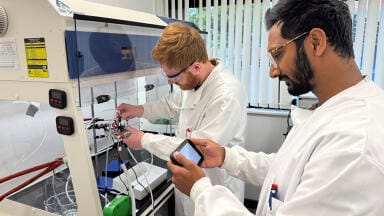
Accurate and reliable ammonia measurements have performed a critically important role in the development of the Rhizo PTX electrolyser. Continuous measurements with a fast response time and across a wide concentration range are essential; providing real-time process insights.
During the research and development phase, the workers continually evaluate different materials, equipment configurations and experimental conditions (pressure, temperature and flow for example), making accurate measurement essential for determining which variables influence performance. In addition, a major challenge is to avoid false positives and to continuously quantify ammonia produced by the system.
The Rhizo PTX team evaluated a wide range of analytical techniques before selecting a Signal Group ammonia analyser. Initially, colorimetric methods were considered, but these were non-continuous and slow. Other technologies including Fourier Transform Infrared Spectroscopy (FTIR), Ion Chromatography, Gas Chromatography-Mass Spectrometry (GC-MS) and Gas Chromatography-Thermal Conductivity Detection (GC-TCD) were also assessed. However, these methods were generally considered either too expensive, too complex, or too prone to operator error for the intended application.
Additional guidance became available in 2025 when the Ammonia Energy Association published a White Paper on Ammonia Gas Detection. The paper reviewed available technologies and their suitability for different applications. Methods identified as suitable for industrial ammonia monitoring included FTIR, Electrochemical (EC) sensing and Tunable Diode Laser Spectroscopy (TDLS).
While electrochemical sensors offer the lowest capital cost, they are vulnerable to interference, and poisoning when exposed to elevated ammonia concentrations. They also tend to have relatively short operating lifetimes.
Both FTIR and TDLS could deliver continuous and accurate ammonia measurements. However, Rhizo PTX concluded that TDLS offered the best combination of sensitivity, reliability and cost-effectiveness.
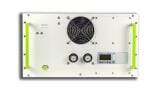
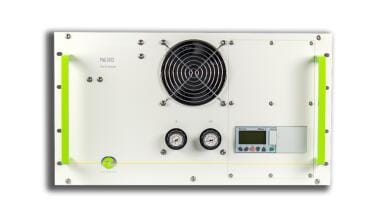
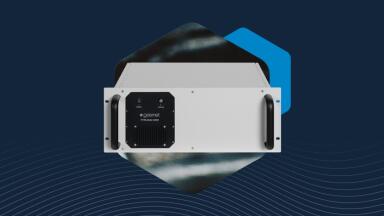
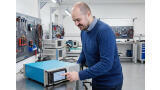
After searching online for suppliers of TDLS ammonia analysers, the team was pleased to discover a specialist manufacturer located just fifteen minutes away - Signal Group. Following initial discussions, the Rhizo PTX team visited the Signal factory to review the functionality of the S4 NEBULA heated TDLS ammonia analyser.
Following a successful demonstration, Signal supplied the S4 NEBULA in December 2025, and Rhizo PTX has been successfully using the analyser ever since. The instrument is typically operated during experimental runs lasting several hours at a time.
Commenting on the analyser’s performance, Ben Kyffin says: “We have been delighted with the NEBULA and with the support that we have received from Signal, particularly because we have been running the analyser in very high moisture conditions and with very low flow rates – both of which are, strictly speaking, outside of its specification.”
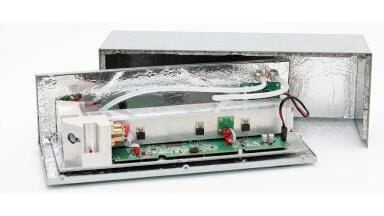
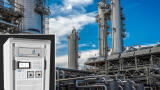
James Clements of Signal Group explains why the analyser has proven so effective for this application: “It is essential for most gas analysis applications that moisture does not condense at any point between the sampling point and the detector. For this reason, the S4 NEBULA is fully heated throughout the sampling and measurement system. In addition, largely because of our work with engine emissions, our analysers have a large surface area particulate filter to improve measurement accuracy and reliability, and to protect the instrument’s optics.”
Measurement stability is further enhanced through secondary filtering of the detector signal to remove electrical noise while maintaining a fast response time of less than three seconds.
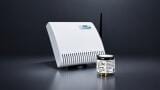
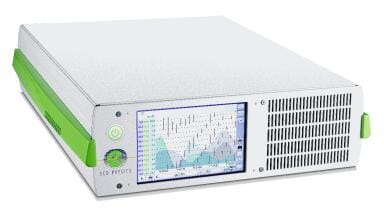
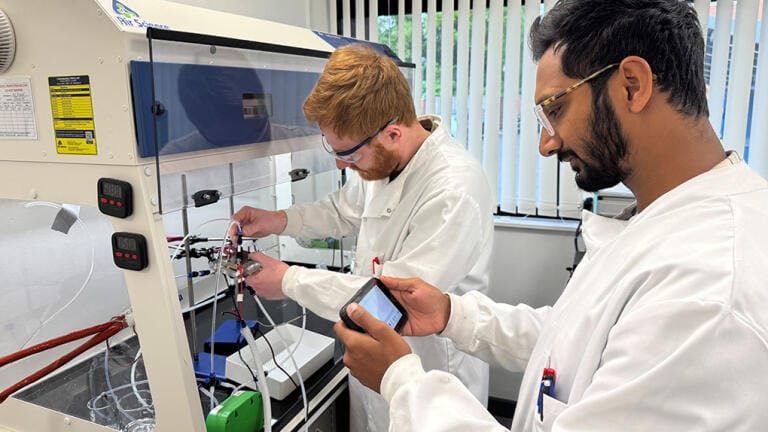
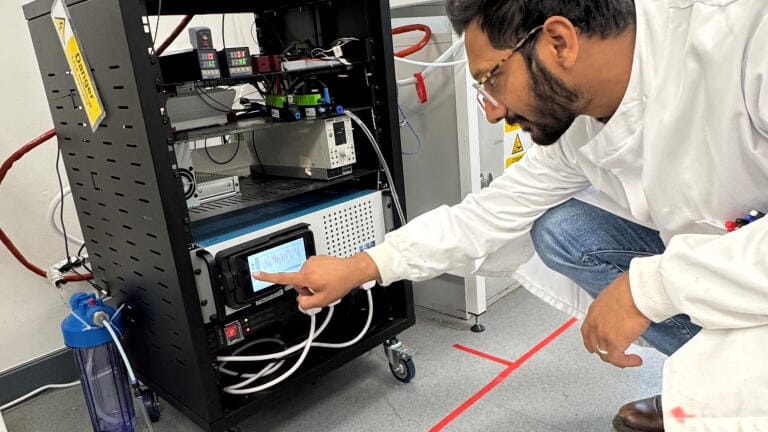
Another distinguishing feature of the S4 NEBULA is its removable tablet interface. Rather than incorporating a fixed display, S4 analysers use a wireless tablet that can connect via Wi-Fi at distances of up to 50 metres. This design is particularly useful when analysers are installed in locations with difficult access, such as vehicle exhaust gas test cells, ATEX enclosures or elevated chimney gantries. At Rhizo PTX, the system is installed at floor-level, so the tablet enables researchers to monitor live data from the comfort of an office chair, while also managing datalogging, alarms and calibration functions.
Having successfully demonstrated proof of concept, the Rhizo PTX team is now focused on scaling up the technology. The company is currently designing a larger electrolyser capable of generating up to 1 kg of ammonia per day. Producing larger quantities of ammonia will help reduce the significance of experimental uncertainty while providing valuable data on process efficiency and scalability.
As the development stages progress, the role of the NEBULA analyser will evolve. Rather than serving primarily as a research tool, it will increasingly function as an emissions and process monitoring instrument, helping to quantify production efficiency and thereby support commercialisation activities.
The S4 NEBULA has enabled the Rhizo PTX team to refine and develop the performance of their innovative patent-protected ammonia generation technology. The company’s one-step ammonia production process eliminates the need for separate hydrogen generation and integrates naturally with renewable energy sources. By developing a larger electrolyser with greater capacity, the team will be able to use the gas analyser to measure ammonia production and thereby compare efficiency and sustainability characteristics with hydrogen-based alternatives.
Rhizo PTX’s long-term goal is to develop a sustainable solution for non-captive ammonia production. Key markets include industrial chemicals, maritime shipping, and ammonia-based hydrogen transport and cracking systems. Beyond energy applications, ammonia remains an essential industrial feedstock used in the manufacture of fertilisers, explosives, plastics and synthetic fibres.
“This technology is really exciting,” says Rhizo PTX CEO Ash Stott. “Not only will this become a fast-growing, highly profitable business, but once we have demonstrated scalability, our technology will contribute greatly to the decarbonisation of hard-to-abate industries.”
IET 36.5 Sept/Oct 2026


 Product directory