Gas analyser
As part of the energy transition, hydrogen as an energy carrier is gaining importance, ideally produced via electrolysis using electricity from renewable sources. To continue utilising the installed infrastructure for gas distribution and usage, hydrogen can be used as a fuel gas in addition to other applications. In the near future, hydrogen blending with natural gas in the range of 10% to 30% is foreseeable. Additionally, the use of up to 100 Vol% hydrogen is being investigated in various combustion processes. The effects of these blends on infrastructure and, in particular, combustion itself are currently the subject of numerous studies.
Even when using conventional fossil fuels, flue gas from combustion can contain hydrogen concentrations up to several hundred ppm. It is expected that the range of possible hydrogen concentrations in exhaust gases will significantly increase when hydrogen is blended with fuel gas or when it consists entirely of hydrogen. Unburned portions of the fuel gas can lead to hydrogen slip, which can reach levels of several tens of thousands of ppm H2. To fully analyse combustion processes, flue gas measurement must account for this potential increase in hydrogen content.
Challenge: Hydrogen. Many gas analysers for flue gas analysis use electrochemical sensors to measure the concentration of multiple gas types. However, the presence of high hydrogen concentrations limits the accuracy of these solutions. Significant signal drifts and cross-sensitivities occur, which can only be partially compensated. As a result, the measurement accuracy decreases when high hydrogen concentrations are present, affecting not only gas components such as nitrogen oxides (NOx) but also the hydrogen measurement itself.
Innovative Measurement Technology. The solution to this challenge is to determine the relevant flue gas components using measurement technology that is insensitive to hydrogen influences. The MGAprime H2 includes an NDIR measurement bench for up to 8 gas components, ranking among the most precise in the market. MRU’s proprietary infrared measurement technology is certified in the MGAprime Q model according to the stringent EN15267 QAL1 standards. In the MGAprime H2 model, this technology is supplemented by electrochemical H2 sensors, covering a large measurement range from 0 to 20,000 ppm. A paramagnetic O2 sensor covers the range from 0 to 25.00%. This unique combination of high-quality NDIR and reference measurement technology allows precise determination of all key flue gas components while compensating for cross-sensitivities.
Successful Field Deployment. Various independent test measurements have already confirmed that the MGAprime H2, equipped for hydrogen measurement, is a compact, precise, and reliable solution for determining the hydrogen slip in flue gases.
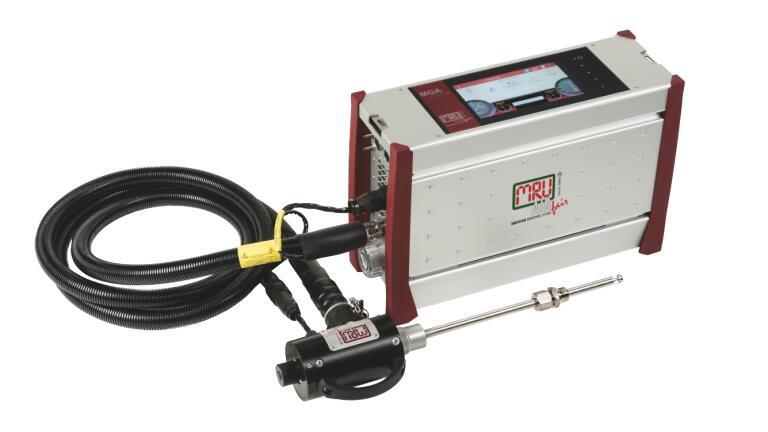
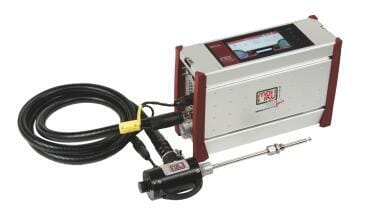
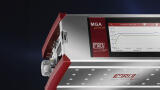
The MGAprime H2 exhaust gas analyser from MRU was introduced in 2022 as a portable automatic measuring system (P-AMS), making it one of the earlier purpose-built solutions of its kind. It brings together everything needed for field-based flue gas measurement in a single, integrated setup, including a newly developed MRU sampling probe with a heated filter, a heated gas extraction line, and the analyser unit itself.
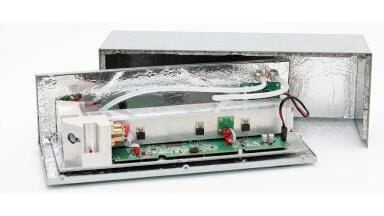
Inside the system, gas conditioning and analysis are fully integrated, combining drying, filtration, and measurement in one streamlined unit. Both the gas drying system and the non-dispersive infrared (NDIR) measurement technology have been developed in-house by MRU, allowing the overall design to remain compact while still delivering reliable performance in demanding flue gas environments.
This analyser can measure ten gas components (H2, O2, CO, CO2, NO, NO2, N2O, SO2, CH4, C3H8) simultaneously, in part through the implementation of a standard reference method. It is therefore suitable for numerous emissions measurements from stationary sources. These include long-term emissions monitoring for industrial furnaces, large boiler systems, gas engines, and even small-scale combustion systems.
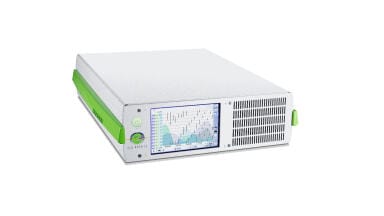
The large touch display enables easy operation and offers a variety of display options in both text and graphical formats.
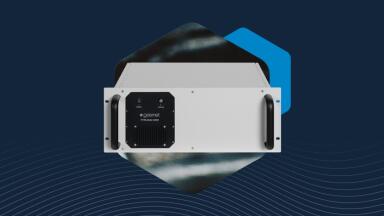
In addition to innovative measurement technology and user-friendly operation, the modern all-metal housing design provides a significant advantage. The MGAprime H2 is designed as a compact all-in-one device, integrating gas sampling, gas processing, gas cooling, and measurement cells. This eliminates the common challenge of transporting extensive measuring equipment to difficult-to-access measurement points. The compact and portable all-in-one solution ensures a simple, quick, and efficient test setup.
IET 36.5 Sept/Oct 2026


 Product directory




.jpg)











.jpg)