Gas analyser
While columns, detectors and pre-concentrators have steadily shrunk, fluid handling has remained stubbornly off-chip, adding bulk, power demand and mechanical complexity.
A newly reported microscale system shows that this constraint may finally be giving way.
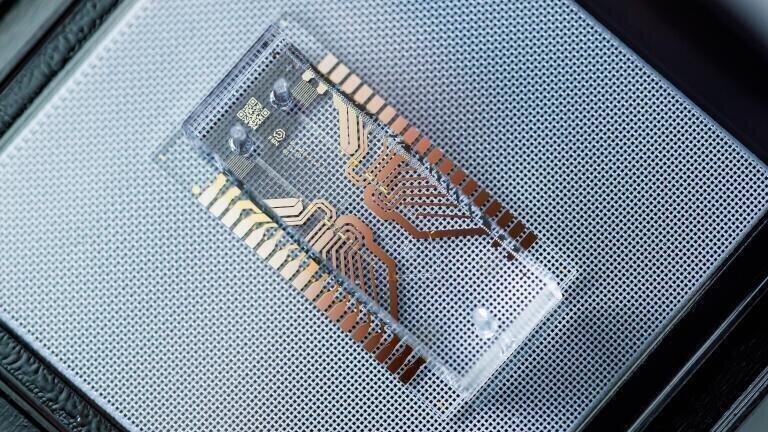
Researchers at the University of Michigan have demonstrated a fully self-contained gas chromatography platform in which every essential function is integrated onto a single microfluidic chip.
The work, published in Microsystems & Nanoengineering, describes a device that combines gas pumping, sample preconcentration, chemical separation and detection without relying on any external fluidic hardware.
Gas chromatography remains a cornerstone technique for analysing volatile compounds in industrial processes, environmental monitoring and chemical research. Conventional instruments, however, are large, energy intensive and ill-suited to distributed or continuous monitoring.
Microscale gas chromatography has long promised faster analysis and lower power consumption, but most designs still depend on hybrid assemblies, where pumps and valves are fabricated separately and connected to the analytical chip.
These external components introduce several problems. Mechanical micropumps and valves increase fabrication complexity, limit scalability and create potential failure points through moving parts.
They also constrain further miniaturisation, making truly portable or embedded gas analysis difficult to achieve. The Michigan team set out to eliminate these dependencies entirely.
At the heart of the new system is the use of Knudsen pumps, a form of motionless gas pump based on thermal transpiration.
When a temperature gradient is applied across a narrow channel, gas flows from the cold side to the hot side without any moving components. By carefully designing the channel geometry and thermal profile, this effect can be harnessed to generate stable, directional gas flow at very low rates.
The reported device integrates three unidirectional Knudsen pumps directly onto the chip.
Working together, they control sampling and separation flows across the system without the need for mechanical valves. This valve-free architecture simplifies both operation and fabrication, while also improving long-term reliability.
All fluid handling and analytical elements are monolithically integrated into a 15 × 15 mm² footprint. Alongside the pumps, the chip incorporates a polymer-coated pre-concentrator to capture trace analytes, a serpentine microcolumn for chromatographic separation, and a capacitive detector for signal readout.
One of the technical challenges of such dense integration is thermal management. Preconcentration and desorption typically require elevated temperatures, while stable separation and detection benefit from thermal uniformity.
To address this, the researchers introduced thermal isolation structures and heat-dissipation features that limit unwanted heat transfer between functional regions of the chip.
This design allowed high-temperature desorption in the pre-concentrator without degrading chromatographic performance downstream.
In testing, the system operated reliably at flow rates below 0.01 sccm, covering analytes with a wide range of volatilities.
Experimental evaluations showed that the chip can perform quantitative analysis of multicomponent gas mixtures with strong repeatability.
Concentration measurements were typically within ±6.5–8.5% of reference values, and both retention times and signal amplitudes remained stable across repeated runs.
Notably, performance was maintained across relative humidity levels from 15% to 100%, with no measurable interference from water vapour.
The platform also supports passive and low-power sampling modes, reinforcing its suitability for long-term, energy-efficient deployment.
By demonstrating that every core element of gas chromatography can be integrated onto a single chip, this work marks an important shift for compact chemical analysis.
The absence of moving parts, combined with low power requirements and small form factor, makes the approach well suited to continuous, real-time monitoring applications.
Potential use cases include industrial process control, reaction and catalyst monitoring, safety systems, and distributed sensing of volatile compounds in energy and environmental contexts.
From an instrumentation perspective, the design also lends itself to scalable manufacturing, opening the possibility of dense sensor networks rather than isolated analytical instruments.
Beyond its immediate performance metrics, the platform provides a foundation for further optimisation, including expanded chemical selectivity, improved sensitivity and faster response times.
As gas analysis increasingly moves out of the laboratory and into the field, fully autonomous, chip-scale systems such as this are likely to play a growing role.
IET Guide 2026

 Product directory