Industrial emissions
Published in Scientific Data, the dataset represents the latest version of the Vulcan emissions system and arrives at a moment of growing uncertainty over the future of federal greenhouse gas reporting in the United States.
For environmental monitoring professionals, the release is significant not only for its scope, but for what it implies about the shifting balance between federal reporting programmes, academic data infrastructures and independent verification of emissions claims.
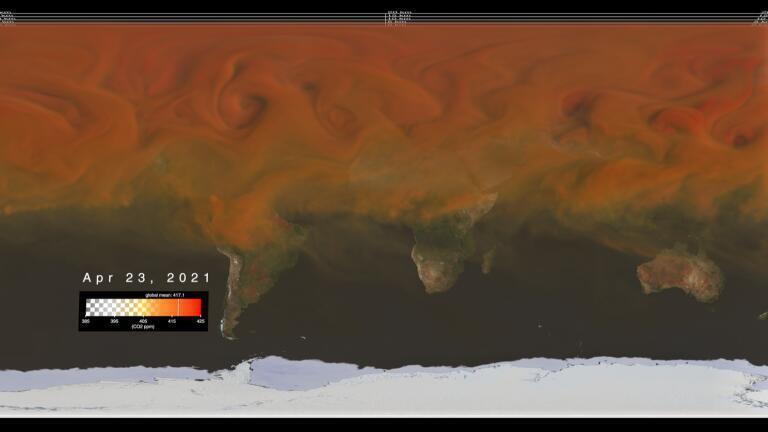
The Vulcan system quantifies CO₂ emissions from the combustion of coal, oil and natural gas across the entire United States, allocating emissions to the precise time and location where fuel is burned.
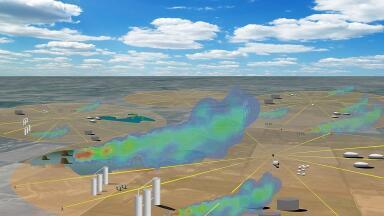
The newly released dataset spans more than a decade and captures emissions at resolutions ranging from national and state scales down to individual city blocks to industrial facilities.
According to the research team, the system integrates emissions from power generation, industry, transport and other fossil fuel uses into a single spatially and temporally explicit framework.
The result is a dataset measured in terabytes, generated using high-performance computing and designed to support detailed analysis rather than headline totals.
Future releases are expected to extend this granularity further, including neighbourhood-level emissions and facility-specific industrial data.
The timing of the data release is not incidental. The authors explicitly reference threats to federal science funding and proposals to end the US Environmental Protection Agency’s greenhouse gas reporting programme.
In that context, Vulcan functions as both a scientific dataset and a parallel accounting system.
For emissions monitoring professionals, this highlights a growing structural issue.
As regulatory reporting requirements weaken or fragment, independently produced datasets may increasingly serve as reference points for policy analysis, litigation, market mechanisms and public scrutiny.
The researchers frame the data as a public good, arguing that businesses, cities and communities require access to credible, high-resolution emissions information to make defensible decisions.
In practice, it also provides a means of cross-checking self-reported inventories and assessing the plausibility of net-zero claims at multiple scales.
Unlike conventional national greenhouse gas inventories, which are typically aggregated annually and reported by sector, Vulcan is designed as a decision support system.
By resolving emissions to specific locations and activities, it allows users to identify where mitigation efforts are likely to be most effective.
This level of detail has direct relevance for urban planners, transport authorities, utilities and industrial operators.
It also aligns with the needs of atmospheric monitoring professionals, as Vulcan estimates have been shown to perform well when compared with independent atmospheric concentration measurements.
That comparison is important.
As satellite-based CO₂ monitoring expands and urban sensor networks proliferate, high-resolution bottom-up inventories provide a necessary counterpart to top-down observations.
Discrepancies between the two are often where policy-relevant insights emerge.
The scale of the Vulcan dataset introduces its own challenges.
The output runs to many terabytes and requires substantial computing resources to process, limiting direct use to organisations with appropriate infrastructure.
This raises questions about accessibility and intermediaries: who will translate this data into actionable intelligence for smaller cities, regulators or community groups?
Nevertheless, the release reflects a broader trend toward treating emissions data as infrastructure rather than reporting artefacts.
As climate policy shifts toward implementation, enforcement and market design, demand is growing for datasets that can support auditing, verification and spatially targeted interventions.
For those working in emissions monitoring, modelling and verification, the Vulcan release reinforces several trends.
First, spatial resolution is becoming as important as total emissions.
Second, independent datasets are likely to play a larger role as confidence in self-reported figures erodes.
Third, integration between inventories, atmospheric measurements and remote sensing is moving from research to operational relevance.
The dataset also underscores the increasing overlap between environmental monitoring and data science.
High-resolution emissions accounting now depends as much on computing capacity and data integration as on traditional measurement techniques.
The NAU release does not replace federal reporting, but it does demonstrate what is technically possible and what may be expected in a future where emissions claims are scrutinised at the level of cities, neighbourhoods and individual facilities.
Whether such systems become embedded in regulation or remain external reference points will depend on political choices.
Either way, for environmental monitoring professionals, the direction of travel is clear: emissions data is becoming more detailed, more contested and more central to decision-making.
IET Guide 2026

 Product directory




















.jpg)




.jpg)