CEMS
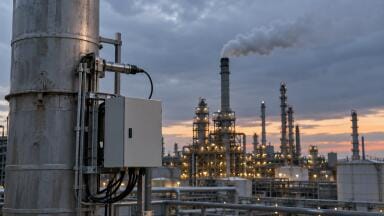
Chief among these is whether existing Continuous Emissions Monitoring Systems (CEMS) are capable of accurately tracking emissions from hydrogen combustion.
The short answer? Not without adaptation.
Hydrogen changes everything, from flame dynamics to pollutant profiles, and CEM setups originally designed for natural gas or heavy hydrocarbons may not be up to the task.
Hydrogen combustion produces no CO₂, negligible CO, and — in dry air — no carbon-based particulates.
But it does generate thermal NOx, often at higher concentrations than methane, especially under high-temperature, lean conditions.
That’s due to hydrogen’s higher adiabatic flame temperature and smaller quenching distance.
These characteristics increase the formation of NOx via the Zeldovich mechanism, particularly when combusted in air with excess oxygen.
For emissions monitoring professionals, this poses two challenges.
The first is a recalibration of NOx monitors for a narrower pollutant range, at potentially higher concentrations than previous baselines.
The second is the validation of CEMs in low-CO₂ flue gas streams, which disrupts some reference methods reliant on CO₂-normalisation (e.g. SO₂/CO₂ ratio analysis in scrubber-equipped systems).
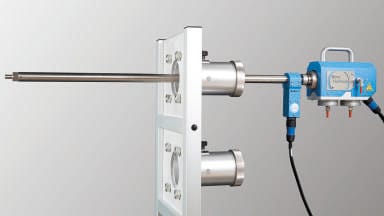
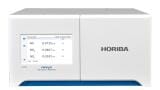
Most modern CEMS are modular, comprising extractive or in-situ sensors for NOx, SO₂, CO, O₂, THC, and particulates, along with flow monitoring and data reporting systems.
But many configurations are built and certified around specific fuels or combustion regimes.
Potential weak points are numerous.
Chemiluminescence detection (CLD) is widely used and hydrogen-compatible, but sample quenching and interference from elevated water vapour must be managed carefully.
UV-based techniques may struggle with low absorbance from water-dominated flue gas.
Paramagnetic sensors can be influenced by trace H₂ slip, while zirconia cells may require recalibration due to shifts in flue gas composition and excess air levels.
Hydrogen combustion produces large volumes of water vapour, which can challenge extractive systems with dilution probes or dryers, unless adequately upgraded.
Moreover, many CEM systems are certified under EN 15267 or US EPA 40 CFR Part 60/75 for specific fuel types.
Adding hydrogen to the fuel mix, even as a co-fire, can require requalification or performance revalidation of the system under new combustion conditions.
Co-firing hydrogen with natural gas is often seen as a stepping stone.
But even at 20–30% blend ratios, changes to combustion characteristics are noticeable.
Emissions variability increases, calling for tighter sampling frequency and more dynamic CEMS configurations.
For pure hydrogen combustion, as seen in several European refinery pilot boilers, emissions monitoring has had to be customised.
In some cases, high-frequency NOx sampling (e.g. 1 Hz) was introduced to capture transient spikes.
New dilution calibration routines were developed to manage elevated moisture loads. Data reporting frameworks were revised to exclude CO₂ or redefine reference conditions.
Forward-looking operators are now building hydrogen-ready CEM stacks that incorporate all sorts of new hydrogen-ready tech.
Dual-range NOx analysers with automated switching, humidity-compensated extractive probes and fast-response dryers, configurable dilution ratios for extractive sampling and data analytics modules capable of recognising combustion mode (natural gas vs. H₂-rich).
Some are also integrating TDLAS (tunable diode laser absorption spectroscopy) systems, particularly for O₂ and H₂O measurement, due to their speed, selectivity, and tolerance to high moisture environments.
Others are exploring sensor fusion approaches, combining optical, electrochemical, and thermal detection to build redundancy into emission tracking, especially during fuel switching or flame instability events.
One complication is that most national regulations haven’t caught up with hydrogen’s peculiarities.
Permitting frameworks still assume fossil-based combustion and legacy pollutant ratios.
This leaves plant operators guessing what limits will apply for H₂-fired boilers? Will CO₂-normalised emissions be required? How will emissions baselines be established?
The EU’s upcoming Industrial Emissions Directive update and the US DOE’s hydrogen programme may clarify some of this.
But in the meantime, CEM strategy must be proactively engineered to demonstrate best available techniques, regardless of regulatory lag.
Hydrogen combustion demands a new logic for emissions monitoring.
The pollutant profile shifts, the moisture loads rise, and the instrumentation must adapt.
IET 36.5 Sept/Oct 2026



 Product directory




















.jpg)