Industrial emissions
China’s carbon dioxide (CO₂) emissions fell by 1% year-on-year in the first half of 2025, marking the second consecutive year of decline.
New analysis by Carbon Brief shows that record-breaking solar additions combined with falling demand from construction-heavy industries are reshaping the trajectory of the country’s energy system.
Yet the story is not one of unambiguous success.
Alongside record solar installations and falling coal burn in the power sector, China is simultaneously approving record new coal-fired capacity and fuelling a surge in the coal-to-chemicals industry.
This dual track exposes a tension at the heart of China’s energy transition: the drive for rapid clean-energy growth colliding with entrenched dependence on coal.
For the first time in history, clean-energy growth excluding hydropower outpaced national electricity demand.
In the first half of 2025, solar, wind, nuclear and biomass generation rose by 270 terawatt hours (TWh), compared to demand growth of just 170TWh.
Strikingly, solar power alone supplied all of that increase, with output rising 170TWh – the equivalent of Mexico’s entire power generation.
Behind this surge lies an unprecedented expansion of capacity.
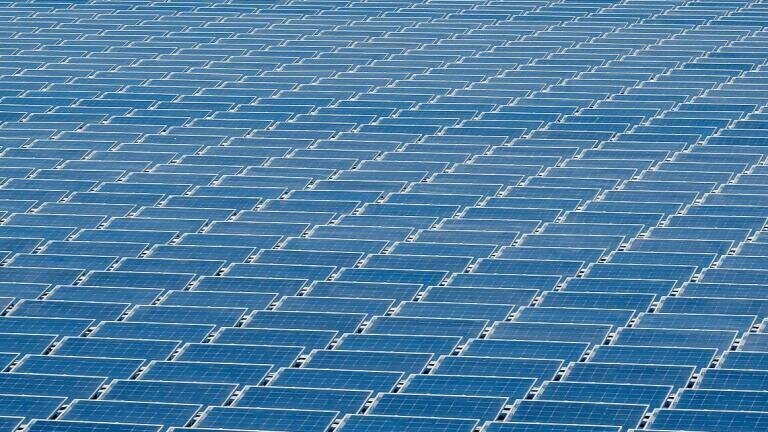
Some 212 gigawatts (GW) of new solar came online in just six months, which is more than the US’s entire installed base.
In May alone, 93GW was added, equal to roughly 100 solar panels installed every second.
The rush was spurred by a June shift in tariff rules that ended guaranteed benchmark coal-linked prices for new renewables.
Wind also expanded strongly, adding 51GW in the first half, while nuclear output rose by 20TWh.
The combined effect was to lift low-carbon generation’s share to 40% of China’s electricity mix, up from 36% a year earlier.
For the first time, solar and wind together generated more electricity than hydropower, signalling a new phase in the country’s energy transition.
The power sector, responsible for most of China’s CO₂, saw emissions drop 3% in the first half of 2025.
Coal use declined by 3.4%, even as gas generation rose by 6%.
Weakness in construction also pushed down industrial emissions.
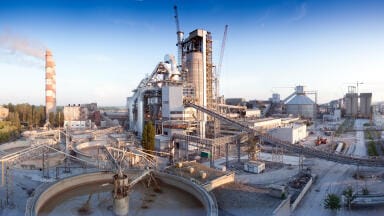
Cement output fell 4%, steel by 3%, and overall building materials by 3%.
This decline was tied to a sharp fall in real estate investment (down 11%) and a 20% collapse in new housing starts.
But within steel, a critical warning sign emerged.
The share of cleaner electric-arc furnace (EAF) production slipped from 10.2% to 9.8%, missing the government’s 15% target.
Because EAF plants are more flexible and costly to run, they were the first to cut output, leaving coal-based steel mills untouched.
According to the Centre for Research on Energy and Clean Air, a structural shift towards EAF represents one of China’s largest untapped emissions-reduction opportunities over the next decade.
If solar was the star performer, the coal-to-chemicals industry was the spoiler.
Emissions from this sector rose 20% year-on-year, adding to an already steep trajectory of growth. Since 2020, coal-chemicals have added around 3% to China’s national CO₂ output.
Projections suggest a further 2% increase by 2029, complicating Beijing’s pledge to peak emissions before 2030.
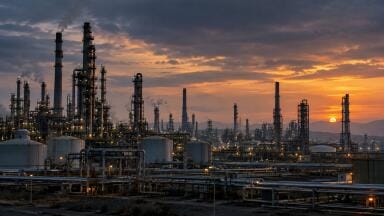
The industry, concentrated in Xinjiang and other coal-rich western provinces, converts coal into synthetic fuels and petrochemicals.
While it reduces dependence on imported oil and gas, the process is vastly more carbon-intensive than its petroleum-based equivalents.
Profitability is heavily tied to oil prices, but investment plans suggest capacity could grow by 40% over the next five years, adding over 250Mt of CO₂ annually.
Adding to the contradictions, coal power capacity could surge by 80–100GW in 2025, potentially setting a new annual record.
This comes even as coal-fired generation falls and utilisation rates decline.
Industry insiders suggest the expansion is driven less by market appetite and more by central government pressure to meet politically defined targets for energy security.
Such overcapacity risks undercutting clean-energy growth.
An oversupplied coal fleet can crowd out renewables in power contracts, even as actual generation from coal continues to decline.
Policymakers are seeking to counterbalance this with new quotas: as of July, energy-intensive sectors including steel, cement and polysilicon must procure a share of their power from renewables.
China’s emissions drop is significant for two reasons.
First, it is driven by structural clean-energy growth rather than temporary economic shocks such as the 2009 financial crisis or the Covid-19 lockdowns.
Second, it suggests that China may already have passed its emissions peak – years ahead of its “before 2030” target.
But the decline is shallow: just 1% overall.
Given the continued buildout of coal power and the boom in coal-chemicals, the risk of rebound is high.
Moreover, China is set to miss several of its own 2021–25 climate targets, including a mandated cut in carbon intensity and limits on new coal power.
The crucial test will come in the months ahead.
China’s next nationally determined contribution (NDC) for 2035 and its 15th Five-Year Plan (2026–30) are both due to be finalised soon.
If emissions continue to fall through 2025, policymakers may feel emboldened to set more ambitious near-term targets.
For now, the lesson is clear: as long as clean power expands faster than demand, emissions from coal will fall, even in the face of record new coal capacity.
IET 36.5 Sept/Oct 2026



 Product directory






















.jpg)





.jpg)