River water monitoring
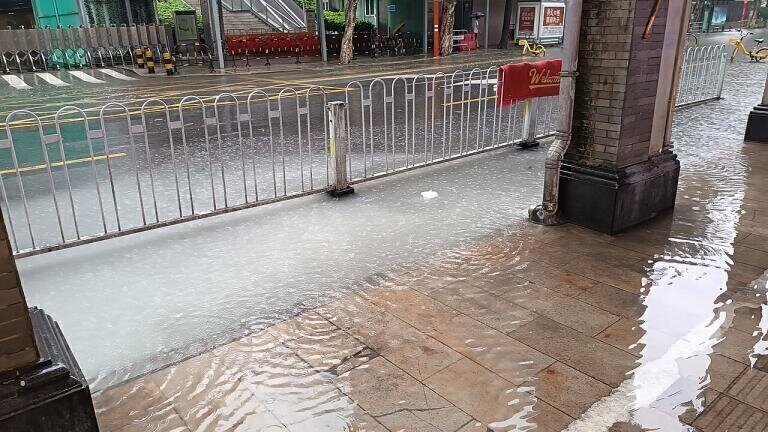
Bridges collapsed and power grids failed but beneath the visible destruction lay a quieter, more insidious threat.
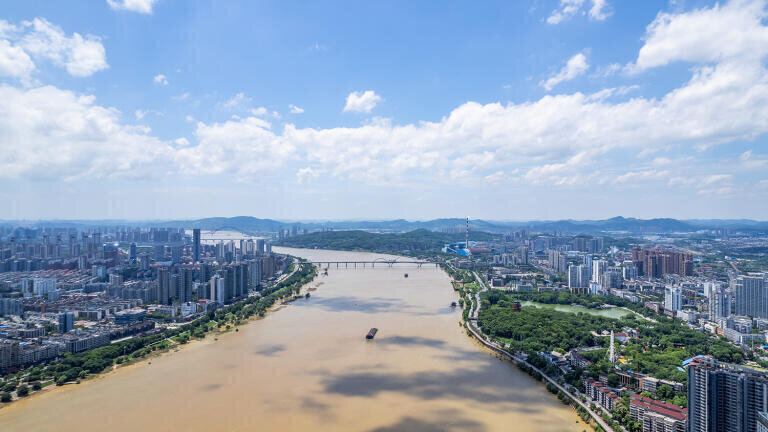
Floodwaters sweeping unmonitored contaminants into China’s rivers and reservoirs.
Floods mobilise pollutants from every corner of the landscape.
Cities, farms and industrial zones each shed their own chemical signatures, leaching all sorts of contaminants that would not usually come into contact with the waterways.
These are not just short-term hazards: many accumulate in sediments or water supplies, with long-term implications for human and ecological health.
In the wake of the floods, researchers and monitoring professionals identified several classes of likely contaminants.
Farmlands inundated during peak growing season released nitrogen, phosphates, pesticides and livestock waste.
These can cause eutrophication, oxygen depletion and fish kills downstream.
Flooded factories, mines and storage yards spilled heavy metals, solvents and petroleum products.
Legacy pollutants, like mercury and arsenic in soil, may also have been re-mobilised.
In cities like Zunyi and Guilin, stormwater systems were overwhelmed.
Sewage mixed with surface runoff to carry pathogens, microplastics, oil and detergents into rivers.
Perhaps most overlooked, floods of this intensity will pervade warehouses and shops, picking up novel substances like hormone-replacement medicines, flea treatments and e-waste, many of which are not routinely monitored in waterways.
In past floods, these have proven deadly. In 2007, the Huai River flood resulted in massive drinking water contamination and solid waste dispersal across several provinces.
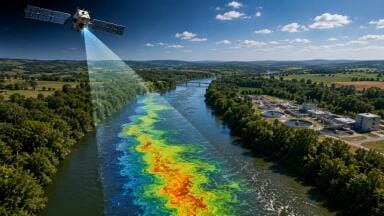
China’s river-monitoring network is vast: even in 2008, it comprised over 2,300 stations tracking major basins like the Yangtze, Yellow and Pearl Rivers.
These stations measure standard parameters such as COD, ammonia, turbidity, pH and selected heavy metals . In theory, this offers impressive oversight of water quality.
In practice, the system showed its limits during the 2025 floods.
Many rural or mountainous tributaries, where flooding was often worst, lack real-time sensors.
As Prof. Chen Xiaoguang (SWUFE) notes, “rural areas face significant challenges due to limited infrastructure and resources”.
Prof. Meng Gao (HKBU) adds that “insufficient coverage of monitoring stations” persists in remote regions.
The system wasn’t built to detect pharmaceuticals, plasticisers, PFAS or most industrial chemicals.
These emerging pollutants still fall outside the regulatory scope.
Monitoring stations often report data at daily or weekly intervals, not fast enough to flag sudden flood-related spikes.
Sensor outages or turbidity interference are common during storms.
Water quality data, while extensively collected, is difficult to access or share.
A Nature Water commentary points out that local governments may restrict access, preventing timely intervention.
A telling example comes from Hunan province.
In spring 2025, automatic sensors detected spikes in thallium, an extremely toxic heavy metal, in the Leishui River.
Yet the local government only publicly acknowledged the emergency days later, after bottled water was already being distributed.
The network functioned, but slowly and with minimal public warning.
China’s monitoring system caught some contaminants.
But it likely missed others and remains poorly equipped for flood-era pollution.
If floods are the new normal in our warmed world, the monitoring system must evolve in three directions,
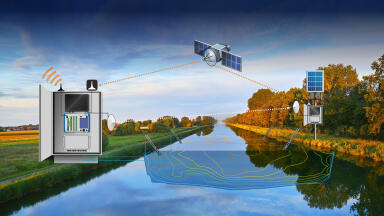
Real-time, in situ technologies for nitrate, heavy metals, PFAS, pharmaceuticals and turbidity are becoming more affordable.
Biosensors, spectrometers and remote diagnostics can flag anomalies before they become crises.
Publishing real-time water quality readings, especially during disasters, would allow public health officials, researchers, and communities to respond faster.
Some cities already share this data; national policy could scale it.
The River Chief system introduced under China’s 2018 Water Law aimed to clarify local accountability.
But enforcement remains patchy.
A UN report stresses the importance of community involvement and independent oversight, particularly when disasters strike.
The 2025 floods were a stress test for China’s river monitoring capabilities.
They showed that the backbone exists but the nervous system needs upgrading.
Untraced contaminants likely swept through rivers undetected.
Residents in flood-hit areas still lack clarity about what, exactly, entered their water.
As climate change accelerates, floods like these will come more often, and with greater force.
IET 36.5 Sept/Oct 2026



 Product directory
















.jpg)



.jpg)