River water monitoring
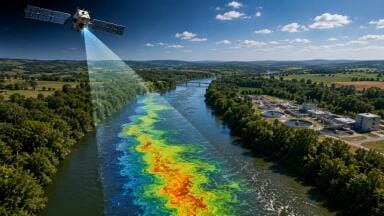
A recent study from Tokyo University of Science has reinforced a central point for environmental monitoring professionals: river plastic pollution is not transported evenly throughout the year.
It is concentrated in short, high-flow events.
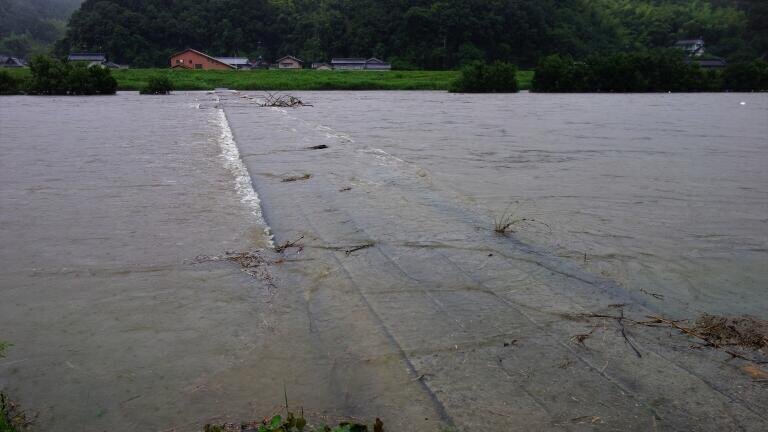
During monitored flood episodes, microplastic and mesoplastic concentrations increased by one to four orders of magnitude compared with low-flow conditions. In one case, 90% of the annual mesoplastic load was exported in just 43 days.
These findings point to a structural weakness in many monitoring programmes. If sampling is conducted primarily during routine, low-flow conditions, annual plastic loads will be systematically underestimated.
Rivers do not move plastics at a constant rate. Plastic debris accumulates across urban surfaces, agricultural land, and riverbanks during dry periods.
When intense rainfall occurs, this material is mobilised through stormwater systems and surface runoff, entering rivers in concentrated pulses.
High discharge increases the river’s transport capacity, lifting and carrying larger particles downstream.
The result is a nonlinear relationship between flow and plastic load.
Monitoring strategies that do not capture these discharge peaks miss the dominant transport window.
The Japanese study quantified a load–discharge (L–Q) relationship for plastics, linking pollutant load directly to river discharge.
This approach is well established in sediment and nutrient monitoring but has rarely been applied rigorously to microplastics and mesoplastics.
The results show that plastic load increases disproportionately with discharge. If the upper range of discharge is not sampled, the L–Q curve will be poorly constrained, leading to significant underestimation of annual export to the ocean.
For regulators developing marine litter inventories or reporting under international plastic reduction frameworks, this introduces quantification risk.
One practical implication is the need to integrate plastic sampling into existing flood and sediment monitoring systems.
The study identified strong correlations between turbidity, or suspended sediment, and plastic concentrations.
Many river basins already operate real-time turbidity sensors and discharge gauges. These systems provide the backbone for event-triggered sampling.
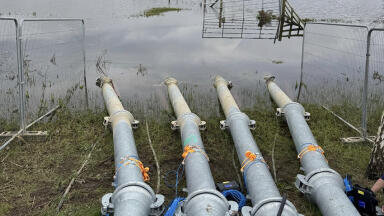
By linking automated water samplers to discharge thresholds, monitoring authorities can capture high-flow windows systematically rather than opportunistically.
Event-based design aligns plastic monitoring with the physical processes governing transport.
Annual river-to-ocean plastic estimates underpin policy, funding allocation, and mitigation strategy. If high-flow events are excluded from datasets, national plastic budgets will appear artificially low.
This affects risk assessment for coastal ecosystems, prioritisation of catchment interventions, and evaluation of upstream waste management effectiveness.
Event-specific sampling does not replace baseline monitoring. It complements it by capturing the episodic pulses that dominate total export.
The broader shift is methodological. River plastic pollution must be treated as a process-driven phenomenon governed by hydrodynamics, not as a constant background contaminant.
Event-specific river quality sampling recognises that floods are the primary transport engine. Designing monitoring frameworks around these events will be essential for producing accurate load estimates, validating models, and supporting effective mitigation.
Without event-based sampling, plastic pollution tracking will remain incomplete, and management strategies will be built on underestimated fluxes.
Read the full paper here.
IET Guide 2026

 Product directory























.jpg)