Sewage monitoring
A peer-reviewed study published in Biochar describes a monitoring approach that reframes this problem by turning sewage treatment waste itself into a sensing material for detecting antibiotic contamination.
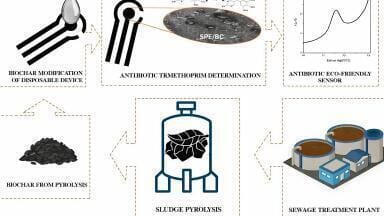
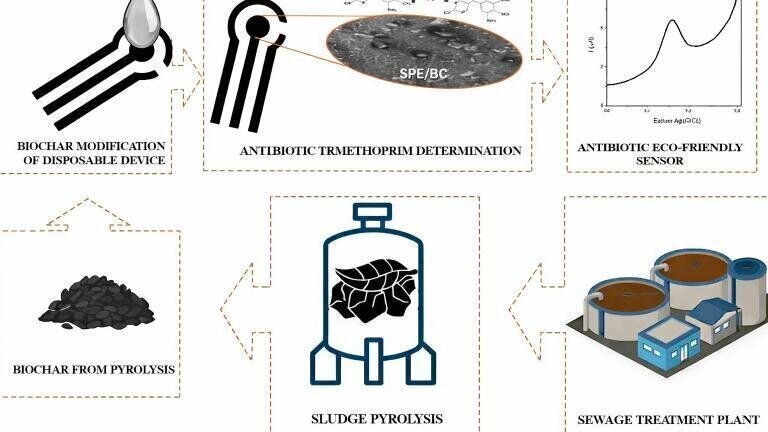
The research reports a disposable electrochemical sensor fabricated using biochar derived from sewage treatment plant sludge.
The device is designed to detect trimethoprim, a widely prescribed antibiotic commonly found in wastewater effluents, surface waters, and soils downstream of treatment works.
From a monitoring perspective, the work is notable not only for its analytical performance, but for its implications for low-cost, decentralised surveillance of pharmaceutical pollution.
Trimethoprim is frequently used to treat urinary, intestinal, and respiratory infections.
Following use, a proportion of the compound passes through conventional wastewater treatment unchanged.
Even at nanomolar concentrations, its presence in aquatic environments is associated with ecological toxicity and the selection of antibiotic-resistant bacteria, making reliable detection a priority for regulators and water authorities.
The sensor is based on biochar produced via controlled pyrolysis of sewage sludge collected from a treatment plant in Rio de Janeiro.
After processing, the biochar is applied as a nanostructured coating on screen-printed carbon electrodes.
This approach exploits the high surface area, porosity, and surface functional groups of biochar to enhance electrochemical response.
Laboratory evaluation showed that the device could detect trimethoprim at concentrations down to 71 nanomoles per litre, with a broad linear response range and strong selectivity.
Interference tests indicated reliable performance even in the presence of chemically similar compounds and common matrix components, including other antibiotics and urea.
For monitoring professionals, this level of selectivity is critical in complex wastewater and environmental samples.
The researchers also tested the sensor in tap water, synthetic urine, and pharmaceutical formulations without any sample pre-treatment.
Recovery rates between 92-99% suggest that the technology could support rapid, on-site measurements rather than laboratory-bound analysis.
Because the electrodes are screen-printed and intended for single use, the platform avoids issues associated with fouling, cleaning, and recalibration.
From an instrumentation and deployment standpoint, the work points toward a class of disposable, application-specific sensors suitable for field screening, compliance checks, or hotspot identification upstream and downstream of wastewater discharges.
While not a replacement for confirmatory laboratory methods, such tools could help close current gaps in temporal and spatial coverage.
The sustainability dimension is also central. Sewage sludge is produced globally in large volumes and is typically landfilled, incinerated, or applied to land, all of which carry environmental and regulatory costs.
Converting this material into functional sensing components aligns with circular economy principles and links waste management directly to environmental surveillance.
More broadly, the study suggests that biochar-based electrochemical platforms could be adapted to detect other pharmaceuticals and emerging contaminants of concern.
For environmental monitoring professionals, this raises a strategic question: whether future monitoring networks will increasingly rely on low-cost, waste-derived materials to extend detection beyond the laboratory and into routine, distributed measurement.
IET 36.5 Sept/Oct 2026



 Product directory