Wastewater analysis
It will expand wastewater epidemiology beyond Covid-era emergency use into a broader system designed to detect emerging infectious threats early.
The UK Health Security Agency (UKHSA) is now developing methods to track 11 high-risk pathogens in sewage at treatment works across England, including Crimean-Congo haemorrhagic fever, Lassa fever and hypervirulent Klebsiella pneumoniae.
This transition has implications for sample design, analytical sensitivity, data integration and the future role of near-source monitoring.
Wastewater surveillance rose to prominence during the Covid-19 pandemic, when it proved capable of tracking infection levels and viral variants at the community scale by detecting fragments of SARS-CoV-2 genetic material excreted into sewer systems.
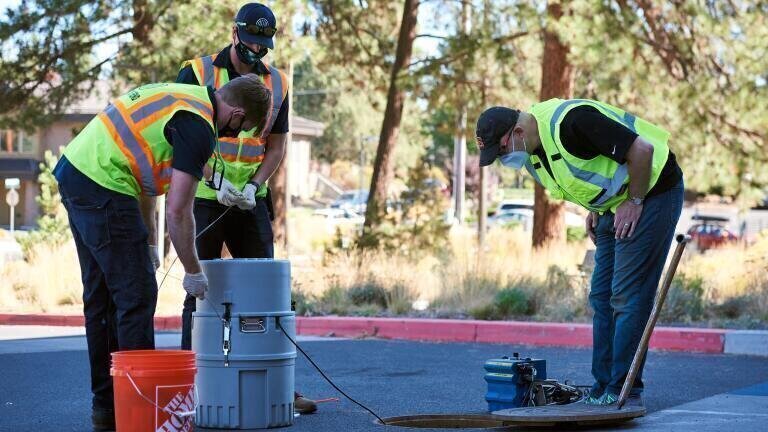
At its peak, UKHSA was processing around 2,000 wastewater samples per week, drawn not only from treatment works but also from manholes and targeted locations.
After mass Covid testing wound down in 2022, routine wastewater monitoring in England narrowed largely to polio.
Vaccine-derived poliovirus detections at several sewage plants triggered local public health interventions, reinforcing the method’s value as an early-warning system even in the absence of reported clinical cases.
The new expansion builds directly on that experience.
Funded under the UK’s biological security strategy, it extends the existing polio surveillance network of 28 sampling sites into a broader research and development programme targeting pathogens judged by UKHSA to pose the greatest public health risk.
The 11 pathogens selected span viruses, bacteria and fungi, reflecting concern not only about acute outbreaks but also about antimicrobial resistance and hospital-associated infections.
Detection relies on identifying small quantities of pathogen DNA or RNA in complex wastewater samples, often at concentrations far below those encountered in clinical diagnostics.
To support this, UKHSA and academic partners are investing in high-throughput gene sequencing, including portable platforms from Oxford Nanopore.
These instruments allow rapid characterisation of genetic material and, crucially, the identification of variants that may alter transmissibility or severity.
At the same time, artificial intelligence is becoming central to data processing. UKHSA is already applying machine learning techniques to genomic analysis, aiming to extract actionable signals from large volumes of noisy environmental data.
Similar approaches are being trialled internationally, with AI-driven systems demonstrating the ability to identify multiple pathogens and variants using relatively small numbers of samples.
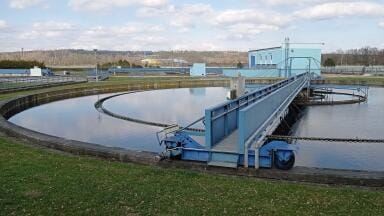
While national surveillance has so far focused on municipal-scale sewage treatment plants, researchers increasingly argue that this is only part of the picture.
The University of Bath’s Centre for Excellence in Water-Based Early Warning Systems for Health Protection is testing wastewater not only for priority pathogens but also for antibiotics and antimicrobial resistance genes in both sewage and rivers.
According to Bath researchers, the UK does not yet have a fully fledged national wastewater surveillance network, but the foundations are in place.
They also stress that finer-grained monitoring may be essential.
Sampling at individual buildings or facilities, like hospitals, care homes, prisons or airports, can reveal localised trends that national systems may miss.
This has been demonstrated in recent studies where daily wastewater monitoring at individual premises correlated closely with staff sickness, infection events and changes in cleaning regimes.
Such near-source surveillance opens up a different operational model, one that prioritises rapid local response over aggregated national indicators.
For the environmental monitoring sector, this points toward growing demand for flexible sampling systems, decentralised analytical capability and robust data pipelines capable of supporting both local decision-making and national oversight.
The UK’s expansion is part of a broader global shift.
The EU launched a Global Consortium for Wastewater and Environmental Surveillance for Public Health last year, and local projects in the US, Australia and Asia are demonstrating how wastewater signals can precede clinical reporting by days or even weeks.
In Texas, wastewater monitoring detected measles virus in Houston sewage samples ten days before the first local cases were officially reported, despite almost three years of prior negative results.
Researchers concluded that the detections likely originated from just two infected individuals, underlining the sensitivity of modern methods.
These examples highlight wastewater’s value as an upstream signal, one that can operate independently of healthcare access, testing behaviour or reporting delays.
As pathogen panels expand and analytical sensitivity improves, a new challenge comes into focus: how to respond when surveillance detects something genuinely new.
Researchers involved in the UK programme acknowledge that the detection of an unknown Disease X would raise difficult questions about confidence.
From a monitoring perspective, this places a premium on data quality and cross-validation between sites and methods.
False positives, or poorly contextualised signals, could carry real social and economic consequences.
What is now emerging is a reframing of wastewater systems themselves.
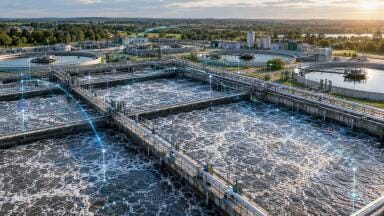
No longer viewed solely as sanitation infrastructure, sewers are becoming continuous sampling networks for population-scale health and environmental intelligence.
For environmental monitoring professionals, this shift brings wastewater surveillance firmly into the same strategic category as air quality networks, river monitoring and emissions reporting: long-term, policy-relevant infrastructure rather than temporary project work.
As costs fall, analytical tools mature and AI-driven interpretation becomes routine, wastewater monitoring is likely to move from innovation to expectation.
The question is no longer whether it works, but how comprehensively, and how responsibly, it will be deployed.
IET 36.5 Sept/Oct 2026


 Product directory



.jpg)