Wastewater analysis
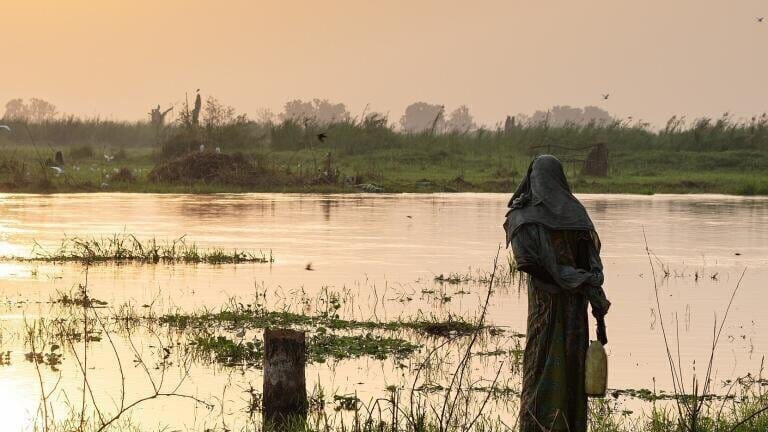
In Sudan, where more than ten million people are displaced after two years of conflict, the country’s wastewater epidemiology infrastructure has collapsed.
The World Health Organization has logged over 16,500 suspected cholera cases between January and May 2025, but the real number is likely far higher.
This crisis is the result of a failure of surveillance systems that once could have warned about and contained waterborne disease.
Cholera thrives in the gaps between infrastructure and oversight.
Vibrio cholerae proliferates in untreated water, spreading rapidly where sanitation is poor and data are scarce.
Before the conflict, Sudan’s water quality monitoring relied on a patchwork of laboratory sampling, international NGO programmes and local health departments.
Now, many of those laboratories are inaccessible, their equipment looted or destroyed.
Data flows that once connected provincial health offices to central authorities have gone dark.
For environmental monitoring professionals, Sudan’s crisis underscores how fragile surveillance networks can be when they depend on centralised, manual systems.
Without continuous testing of drinking water sources, environmental data on pathogens and water chemistry cannot feed into early-warning models.
In refugee camps and temporary settlements, that data vacuum becomes deadly.
Even where humanitarian agencies are drilling boreholes and trucking water, testing capacity is minimal, i.e. a few rapid diagnostic kits at best.
When traditional monitoring collapses, secondary indicators become crucial.
Satellite-based flood detection, for example, can help predict cholera risk by flagging stagnant surface water near dense populations.
Earth observation systems like NASA’s MODIS or ESA’s Sentinel-2 can identify areas where heavy rainfall and poor drainage might combine to create bacterial hotspots.
Yet these signals are only useful if they are coupled with on-the-ground sampling, which is a partnership between remote sensing and field microbiology that conflict zones rarely sustain.
There’s also the promise of portable, low-resource technologies.
Miniaturised PCR systems, field-deployable biosensors and electrochemical assays capable of detecting Vibrio cholerae DNA or toxins directly in water samples could provide point-of-use surveillance in refugee camps.
But while prototypes exist, operational deployment in humanitarian settings remains limited.
Reagent stability and data connectivity still constrain the frontier between lab and field.
The current cholera outbreak is not isolated to Sudan.
The World Health Organization reports concurrent epidemics across the Eastern Mediterranean, from Afghanistan to Somalia.
Yet across these regions, national environmental surveillance remains inconsistent.
Some countries rely on weekly health bulletins; others have no regular water quality monitoring at all.
The result is a blind spot spanning thousands of kilometres, a vast area where disease ecology interacts with climate variability but remains unmapped.
Conflict magnifies these weaknesses.
Displacement concentrates populations in unsanitary conditions, while the destruction of environmental agencies and laboratories halts baseline data collection.
Without these baselines, it becomes impossible to model outbreaks or quantify interventions.
In effect, environmental degradation and disease surveillance failure become mutually reinforcing.
International agencies face a dilemma: how to restore environmental monitoring in places where governance itself has broken down.
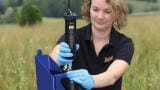
One strategy is to train local communities to collect water samples using low-cost field kits, a model already tested in cholera-prone parts of Yemen and Haiti.
Mobile data collection platforms can allow even minimal testing to feed into global datasets, creating a distributed early-warning network.
This kind of citizen–scientist hybrid model may be the only feasible form of monitoring during protracted crises.
The use of environmental DNA (eDNA) sampling also offers promise.
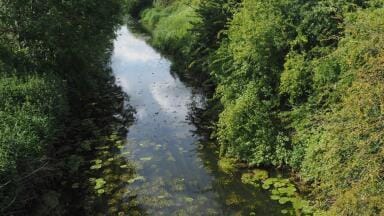
Because Vibrio cholerae can persist in association with plankton and sediments, periodic sampling of rivers and wells could reveal emerging hotspots before outbreaks occur.
But again, success depends on continuity: the ability to keep sampling and analysis running despite insecurity, displacement, and logistical breakdowns.
The urgency of rebuilding such systems will only grow.
Climate change is amplifying cholera risk across Africa through altered warming water bodies that favour bacterial survival.
Without robust environmental monitoring networks, public health agencies will always be reacting to outbreaks rather than anticipating them.
Sudan’s experience is a warning that the collapse of environmental data infrastructure can cascade into regional epidemics.
For environmental professionals, Sudan’s cholera emergency offers both a cautionary tale and a technical challenge: how to maintain monitoring continuity in extreme conditions.
The future lies in integration, linking microbiological and satellite-derived datasets to provide continuous risk assessment, even in fragile states.
That will require coordination across humanitarian agencies and environmental data providers.
It also requires rethinking how monitoring technology is designed.
Instruments that depend on stable grids or laboratory calibration are ill-suited to the world’s next cholera zones.
What’s needed are resilient, self-sufficient systems: offline-capable data platforms and reagent-free detection methods that can survive months of disruption.
The collapse of Sudan’s monitoring network reminds us that environmental surveillance is part of a nation’s resilience architecture.
Rebuilding that capacity will be as essential to Sudan’s recovery as restoring its hospitals or schools.
IET Guide 2026

 Product directory