Water testing
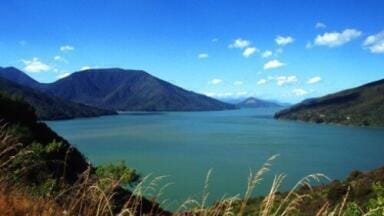
They provide drinking water, irrigation, food production, flood control, and even hydropower, making them indispensable infrastructure for both ecosystems and economies.
Yet according to a sweeping new review by researchers at Northeast Agricultural University and international collaborators, these crucial lifelines are becoming long-term sinks for toxic heavy metals.
The review, published in Agricultural Ecology and Environment, is the most comprehensive assessment to date of heavy metal pollution in reservoirs.
It warns that mercury, cadmium, arsenic and other metals are accumulating at dangerous levels in both waters and sediments, persisting for decades and moving up food chains.
For many reservoir fisheries, the review notes, contamination already exceeds World Health Organization safety limits.
For communities that depend on these fish, the risks are far from abstract.
“Reservoirs are not only water storage systems, but also living ecosystems,” explains lead author Dr. Song Cui.
“Once heavy metals enter, they don’t just stay in the water—they accumulate in sediments and organisms, creating long-term risks for both ecosystems and people.”
The study identifies three dominant contamination pathways: direct industrial and mining discharges; diffuse runoff from agriculture and other land uses; and internal release from sediments, often triggered by shifts in oxygen, pH, or temperature.
Once inside a reservoir, metals interact with complex physical and chemical processes, making them difficult to predict or remove.
Climate change, which is altering water stratification and sediment dynamics, is set to intensify this problem.
The review is bullish on the potential of intelligent monitoring technologies.
Reservoir managers are beginning to deploy Internet of Things (IoT) sensor networks that provide continuous readings of metal concentrations and water chemistry.
Layered with machine learning algorithms, these systems can detect anomalies and forecast pollution events.
Such innovations could be transformative, replacing the patchy, labour-intensive sampling regimes that dominate today.
For environmental monitoring professionals, the prospect of reservoirs equipped with intelligent, adaptive monitoring systems represents a shift toward early warning rather than crisis response.
With over 58,000 large dams worldwide, many located in water-stressed regions, the stakes are high.
The review argues for stronger international cooperation and the creation of global risk management frameworks, pointing out that reservoirs often cross political or administrative boundaries.
Coordinated governance, the authors stress, must go hand in hand with technological innovation.
“Our study shows that we need integrated strategies that combine advanced monitoring, innovative remediation, and coordinated governance,” Dr. Cui concludes.
“Reservoirs are too important to fail—protecting them means protecting our future water security.”
For environmental monitoring specialists, the implications are clear. Reservoirs represent both a monitoring frontier and a testbed for green remediation.
Demand will grow for instrumentation that can detect trace metals with precision and withstand variable field conditions.
The review’s roadmap offers a challenge to policymakers and engineers alike: to rethink reservoirs not just as hydraulic infrastructure, but as living systems that require proactive protection.
If heavy metals continue to accumulate unchecked, reservoirs risk shifting from assets to liabilities.
IET Guide 2026

 Product directory




















.jpg)