Wastewater analysis
Vietnam’s new industrial wastewater standard did not arrive with the international attention often given to European or Chinese regulation. Yet for anyone involved in industrial water monitoring in Southeast Asia, QCVN 40:2025/BTNMT is a major development.
The regulation came into force on 1 September 2025, replacing QCVN 40:2011/BTNMT and a series of older sector-specific wastewater standards. It marks one of the most significant updates to Vietnam’s industrial effluent framework in more than a decade, expanding the number of controlled pollution parameters, tightening expectations around wastewater discharge, and reinforcing the role of automatic and continuous monitoring in environmental compliance.
For environmental monitoring professionals, the importance of the regulation is not simply that another country has updated another list of discharge limits. The more important point is that Vietnam’s industrial wastewater system is becoming more data-driven, more chemically specific, and more closely connected to permitting, enforcement and remote regulatory oversight.
That matters for operators. It matters for laboratories. It matters for instrument suppliers, system integrators and environmental consultants. And it matters because Vietnam’s manufacturing base has become too large, too diverse and too internationally connected for wastewater regulation to remain relatively basic.
The most immediate change is the scale of the analytical expansion. QCVN 40:2011 covered a narrower set of conventional industrial wastewater parameters. QCVN 40:2025 extends the framework to 61 parameters, bringing a wider range of hazardous substances into view. Alongside familiar indicators such as pH, BOD, COD, TSS, ammonium, coliforms, colour, cyanide, sulphide and mineral oil, the standard includes heavy metals, pesticides, PCBs, dioxins and furans, adsorbable organic halogens, surfactants, chlorinated solvents, benzene, formaldehyde, acrylonitrile, perchlorate, acrylamide and other industrial chemicals.
That breadth is significant. It reflects a regulatory system that is no longer focused only on visible pollution, oxygen demand or general effluent quality. Vietnam is now asking more detailed questions about what is actually present in industrial wastewater, how toxic it is, where it originates, and whether it can persist in the aquatic environment.
For a country with major electronics, textiles, food processing, paper, petrochemical, metal finishing, rubber, plastics and chemical manufacturing sectors, that is a practical shift. Different industries generate very different wastewater risks. A textile facility, a battery manufacturer, a pulp and paper mill, a petrochemical plant and an industrial park treating mixed effluent cannot be meaningfully understood through the same small set of basic indicators. The new framework recognises that complexity.
For laboratories, this means a heavier analytical burden. More parameters mean more validated methods, more sample preparation, more QA/QC work, more calibration, and more pressure on reporting turnaround times. Some facilities will be able to meet many requirements through routine wet chemistry, spectrophotometry, electrochemical probes and standard laboratory methods. Others will need access to more specialised analytical capacity for trace organics, persistent pollutants and compounds requiring advanced chromatographic or mass spectrometric techniques.
For monitoring service providers, this creates both a compliance challenge and a market opportunity. Facilities will need help identifying which parameters apply to their operations, how their wastewater profile compares with the new limits, and whether existing treatment systems are capable of meeting the revised standard. In many cases, the first stage will not be equipment procurement. It will be gap analysis.
That gap analysis should be treated as a serious technical exercise. A facility that has historically monitored COD, TSS, pH and ammonia may discover that its risk profile now extends into solvents, metals, halogenated compounds or industry-specific pollutants. A plant may appear compliant under older monitoring expectations while still having vulnerabilities under the new framework. For operators, the danger is not only non-compliance; it is finding out too late that existing sampling, treatment or analytical arrangements are not adequate.
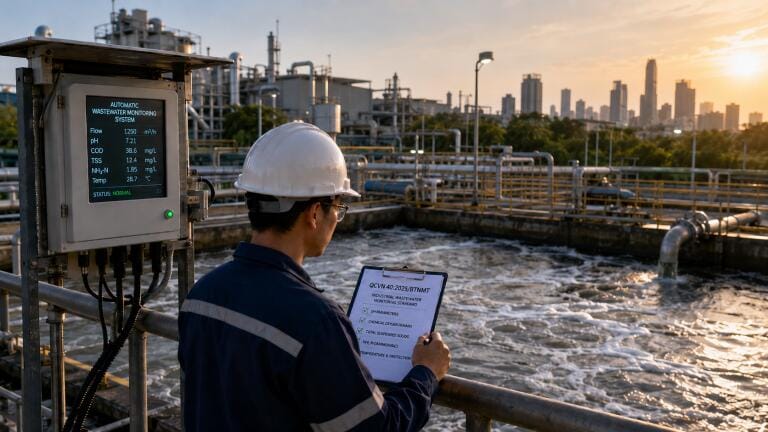
The continuous monitoring requirements are just as important. Vietnam has already been moving towards automatic wastewater monitoring for higher-risk and higher-volume dischargers, and the 2025 framework reinforces that direction. According to regional regulatory materials, automatic and continuous monitoring applies from 200 m³/day for industrial wastewater from higher-risk sectors listed in Appendix II, and from 500 m³/day for industrial wastewater from sectors outside that list. Monitoring frequency may include automatic, continuous and periodic monitoring, depending on the facility and permit conditions.
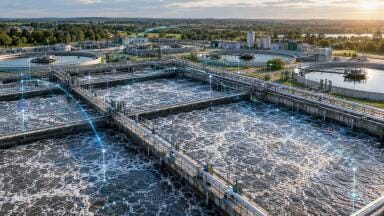
In practical terms, this pushes wastewater compliance out of the world of occasional sampling and into the world of live operational evidence. Key parameters such as flow, temperature, pH, TSS, COD and ammonia are no longer simply laboratory results recorded after the fact. They become operational signals that can reveal process instability, treatment failure, shock loads, dilution practices, sensor drift, maintenance failures or abnormal discharge events.
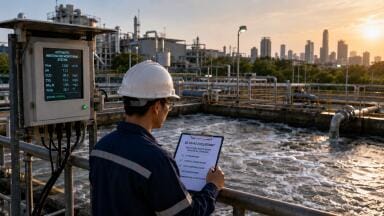
For plant managers, that changes how wastewater systems are managed. A treatment plant that only needs to pass a periodic sample can be treated as a back-end compliance asset. A treatment plant feeding continuous data to regulators has to be treated as part of the live production environment. It needs maintenance, calibration, data validation, alarm management, redundancy and trained personnel who understand both the instrumentation and the treatment process.
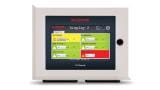
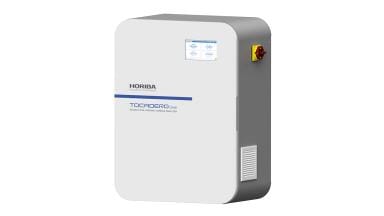
This is where the regulation becomes especially relevant to instrument manufacturers and system integrators. The demand is not just for individual probes or analysers. Facilities will need complete monitoring architectures: sensors, sample conditioning, analysers, flow measurement, automatic samplers, cabinets, telemetry, data loggers, software platforms, remote access, cybersecurity, maintenance contracts and documented quality procedures.
The data requirement is particularly important. Once monitoring data is expected to be available to regulators, a wastewater monitoring station is no longer just a measurement point. It becomes a compliance communication system. That places greater emphasis on data integrity, uptime, audit trails, calibration records and the ability to distinguish between genuine pollution events and instrument faults.
This will also affect procurement behaviour. Buyers are likely to look beyond headline analyser specifications and ask more operational questions. How often does the system need cleaning? How stable is it in high-solids wastewater? What happens during power interruptions? Can it operate in humid, hot or chemically aggressive environments? How are reagents managed? How is data transmitted? How is calibration documented? What local service support is available?
For international suppliers, Vietnam’s regulatory shift creates a clear commercial opening, but not a simple one. Imported technology will need to be matched with local installation capacity, Vietnamese regulatory knowledge, service infrastructure and realistic training. A sophisticated analyser that cannot be maintained locally will be a weak compliance tool. A cheaper system with poor data reliability may be even riskier. The market will reward suppliers that can provide not only equipment, but confidence.
The transition period gives existing facilities time to adapt. Operators with approved environmental impact assessments or environmental permits before 1 September 2025 may continue applying older relevant effluent standards during the transitional phase, with full compliance required from 1 January 2032. New projects and major expansions are expected to apply QCVN 40:2025 from the outset.
That timeline may appear generous, but for large facilities it is not long. Wastewater treatment upgrades, laboratory capability building, monitoring station design, procurement, installation, regulator connection, commissioning and staff training can take years. The facilities that wait until the end of the transition period may find themselves competing for the same engineering, analytical and instrumentation capacity as everyone else.
The wider signal is also worth noting. Vietnam is not acting in isolation. Across Asia, environmental regulators are moving towards more automated, traceable and digitally reported monitoring systems. China has strengthened its own ecological and environmental monitoring framework. Thailand has tightened parts of its air monitoring regime. Vietnam’s new wastewater standard fits within a broader regional pattern: regulators want more data, more often, with fewer opportunities for selective reporting.
For environmental monitoring professionals, QCVN 40:2025 should therefore be read as both a Vietnamese regulation and a sign of where industrial compliance is heading. Conventional wastewater parameters are still important, but they are no longer enough. Periodic sampling is still needed, but it is increasingly being supplemented by continuous monitoring. Laboratory analysis remains central, but it now sits alongside telemetry, data systems and real-time regulatory access.
The result is a more demanding compliance environment, but also a more mature one. Better monitoring should make it easier to detect failing treatment systems before they cause major harm. It should give regulators a clearer view of high-risk discharges. It should help responsible operators prove compliance. And it should create a stronger market for reliable instrumentation, accredited analysis, robust data platforms and competent environmental services.
Vietnam’s industrial expansion has been one of the defining economic stories of Southeast Asia over the past decade. QCVN 40:2025 suggests that the country’s environmental monitoring framework is now trying to catch up with that industrial reality. For the monitoring sector, the message is clear: wastewater compliance in Vietnam is becoming more analytical, more continuous and more connected.
IET 36.5 Sept/Oct 2026


 Product directory




.jpg)















.jpg)