Water monitoring
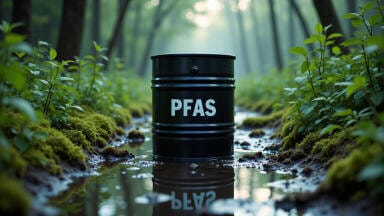
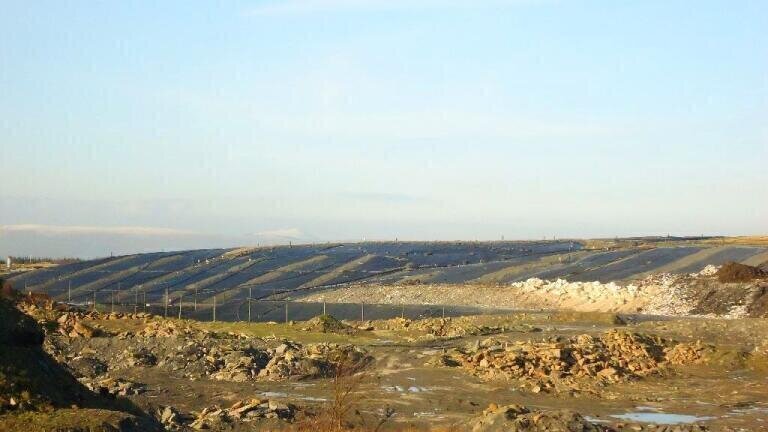
The liquid that drains through our rubbish known as leachate collects contaminants such as heavy metals, solvents, flame retardants, pharmaceuticals and per‑ and poly‑fluoroalkyl substances (PFAS).
In England, investigative journalists recently discovered that roughly 3.5 million tonnes of leachate are produced each year, over 750,000 tonnes of which are tankered to sewage works, mixed with domestic sewage and industrial effluent and then sold back to farmers as fertiliser.
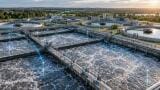
The treatment plants handling these loads were never designed to remove PFAS or microplastics; they are geared towards biological treatment of human waste.
Consequently, contaminants slip through to rivers and soils, leaving regulators, instrument vendors and farmers facing an uncomfortable truth: we’re laundering toxic waste through our food chain.
Landfill and wastewater operators do not operate in a vacuum.
Environmental permits require monthly monitoring of leachate levels within each landfill cell and quarterly sampling of chemical composition.
Operators must characterise leachate for pH, total organic carbon, ammonia, phenols and seven heavy metals and report annual volumes.
Yet these requirements date from the late 1980s, when PFAS and endocrine disruptors were barely understood.
As the Guardian and Watershed Investigations have shown, sludge is still tested only for heavy metals, allowing PFAS, pharmaceuticals and microplastics to accumulate on farmland.
In short, regulators know how much leachate is moving, but they don’t know what’s in it.
Because proper on‑site treatment is expensive, operators frequently opt to truck leachate to municipal wastewater treatment works (WWTWs).
There, the leachate is diluted with sewage, and the resulting biosolids are marketed as nutrient‑rich fertiliser.
Volumes vary regionally—Severn Trent accepted 447,000 tonnes, United Utilities 156,000 tonnes and Wessex Water 103,203 tonnes in 2023—but in each case the treatment process does little more than settle solids and remove biodegradable material.
The emerging chemicals flow out with the effluent or become concentrated in the sludge.
Scientists analysing UK leachate have found that treatment can actually increase PFOS and PFOA concentrations, and the chemicals are discharged under permits that do not account for their presence.
It’s a perverse outcome: the very process designed to protect us instead recycles persistent toxins back into our waterways and soils.
If heavy metals were once the primary hazard, today they are just the tip of the iceberg.
The Chemicals Investigation Programme (CIP) recently tested sludge from 11 treatment works and detected nonylphenols, phthalates, PFOS, antibiotics and anti‑microbial agents in every sample.
Researchers estimate that between 31,000 and 42,000 tonnes of microplastics are spread on European farmland annually, with the UK among the worst affected.
Meanwhile, PFAS are seldom measured in UK waterways, and early results from a government‑funded study suggest they may be much higher than previously.
This monitoring gap is not just academic; PFAS are linked to cancer, immune suppression and developmental problems.
Without real-time data, policymakers and farmers are flying blind.
Environmental monitoring professionals are uniquely positioned to fill this gap.
Traditional grab sampling and lab analysis will not suffice in a world where PFAS can pass straight through treatment works.
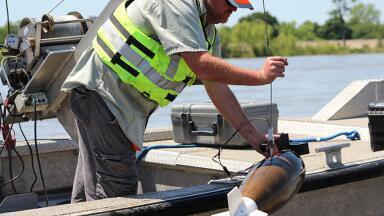
Instead, there is growing demand for in‑situ sensors capable of detecting low concentrations of PFAS, endocrine disruptors and microplastics in leachate and sludge.
Novel techniques—such as high‑resolution mass spectrometry, optical sensors for microplastics and immunoassays for PFAS—could be adapted for continuous monitoring at landfill sumps and treatment works.
Instrument vendors should also anticipate increased demand for flow meters, telemetry units and data management systems, given that each landfill cell must have at least two level monitoring points.
The looming digital waste tracking system will only heighten this demand: regulators and site operators will expect integrated solutions that log leachate volumes and composition automatically.
The UK’s Digital Waste Tracking (DWT) service has been billed as a game changer.
From October 2026 all waste receiving sites must record waste movements digitally, and by April 2027 the system will expand to carriers and brokers.
DWT will replace paper consignment notes with a central database containing waste codes, origin, destination and treatment outcomes.
For leachate, this means regulators will know when and where a tanker load leaves a landfill and which WWTW receives it.
But digital tracking addresses only the who and where; it does not tell us what' is being moved.
Without accompanying chemical monitoring, DWT could merely streamline the laundering of toxic effluent through our sewage works.
Environmental professionals should therefore view DWT as a data backbone rather than a panacea—useful for auditing volumes and identifying unauthorised transfers, but insufficient on its own to prevent contamination.
Regulators are slowly waking up to the challenge.
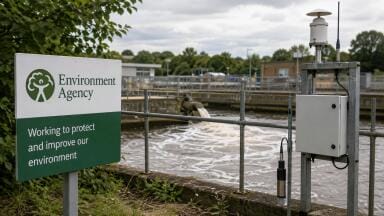
The Environment Agency (EA) is drafting a standard rules permit for tankered liquid wastes (Regulatory Position Statement 277), and Defra is investing in a £0.5 billion upgrade of sludge infrastructure.
Moreover, the CIP’s next phase (CIP4) will include more PFAS and microplastics in its monitoring.
But reforms have stalled; EA proposals to tighten sludge rules were ignored by ministers, and insiders liken sludge spreading to fly tipping.
Europe is moving faster. The EU has proposed PFAS restrictions under REACH, and some countries ban sludge spreading altogether.
If the UK follows suit, instrumentation demand could surge, as WWTWs would need to upgrade treatment and monitoring systems rapidly.
Consider Thames Water’s Cassington works near Oxford. According to its permit, the plant was designed to process wastewater and local industrial effluent.
Yet in 2024 it accepted hundreds of tanker loads of landfill leachate from across southern England.
In a single day, according to an internal report, the plant received more than 200 tonnes of leachate—enough to disrupt biological processes and trigger odour complaints in nearby villages.
Plant operators lacked real-time sensors for PFAS or microplastics; they relied on occasional lab tests that returned results weeks later.
Without continuous monitoring, operators could not know when to adjust processes or divert loads to avoid discharges.
Cassington is not unique; similar stories have emerged at sites run by Severn Trent and United Utilities.
The lesson is clear: WWTWs are being used as hazardous waste treatment plants without the necessary instrumentation or permits.
Sludge spreading exposes a broader issue of monitoring justice.
Rural communities and small farmers often receive sludge as a cheap alternative to fertiliser, yet they lack the resources to test their soils for PFAS or microplastics.
Meanwhile, people living near landfills or WWTWs suffer from odours and potential contamination without access to monitoring data.
Indigenous and community groups, especially in Scotland and Wales, have long campaigned for better oversight of waste sites on their land.
For instrumentation providers, this represents a social responsibility as well as a commercial opportunity: offering affordable testing kits and citizen science platforms could empower under-served communities and democratise environmental data.
Environmental monitoring professionals should prepare for a period of rapid change.
As DWT rolls out and PFAS regulation tightens, landfill operators will need to demonstrate that leachate is properly characterised, treated and recorded.
WWTWs will be expected to install continuous monitoring for emerging contaminants.
Researchers will probe the complex chemistry of leachate transformation processes, perhaps finding ways to break down PFAS rather than simply transferring them.
And as climate change brings heavier rainfall, leachate volumes will increase, straining existing infrastructure.
Monitoring equipment that integrates flow data and digital record‑keeping will be essential.
Leachate management is no longer a niche concern for waste engineers; it is a litmus test of our commitment to a clean, circular economy.
The figures are sobering: millions of tonnes of toxic liquid are coursing through our sewage works and onto farmland, while regulators still check only for heavy metals.
But within this crisis lies opportunity.
By pushing beyond antiquated regulations and embracing cutting‑edge instrumentation, the UK can transform leachate from an environmental liability into a source of data-driven insight.
We need to measure what matters, retire what we no longer need, and ask the hard questions about what technology enables.
Only then can we break the hidden pipeline of contamination that runs from our landfills to our plates.
IET 36.5 Sept/Oct 2026


 Product directory




.jpg)