Water quality monitoring
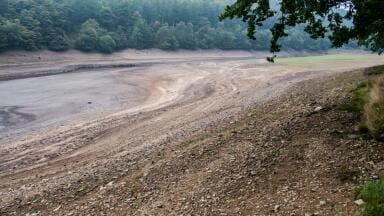
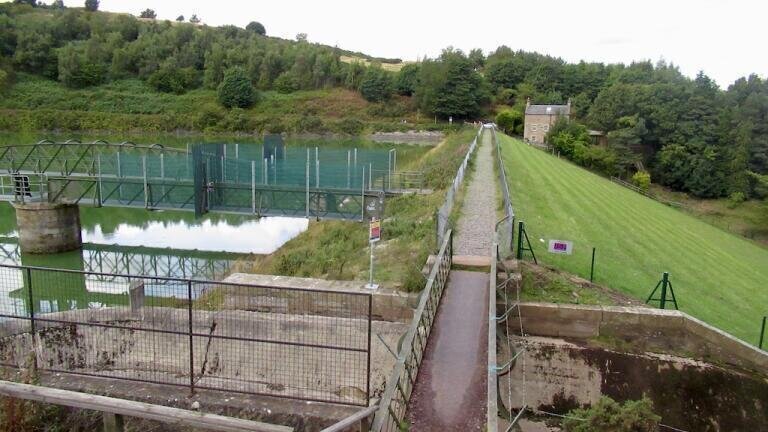
Chancellor Rachel Reeves has approved plans for no fewer than nine new reservoirs across the country.
One of the developments in Abingdon, Oxfordshire is expected to supply up to 270 million litres of water per day to 15 million people in the Southeast.
These projects, slated for Somerset, Cambridgeshire, Hampshire, Kent, Lincolnshire, Suffolk, the West Midlands, and Oxfordshire, are part of Labour's response to rising water demand.
Nearly the size of Gatwick airport, the Abingdon reservoir has faced significant local opposition, but government and water companies are pressing ahead.
As these new reservoirs move from proposal to construction, pushing for advanced, integrated environmental monitoring becomes more urgent.
Ensuring that these developments are built in line with the most modern standards means strongly advocating for only the most up-to-date monitoring structures.
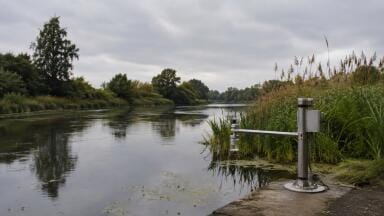
Water quality monitoring has seen a dramatic shift from sporadic manual sampling to continuous, high-frequency data collection.
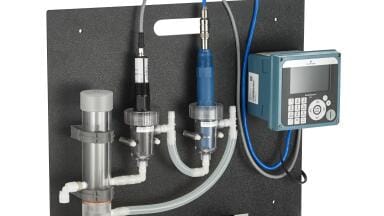
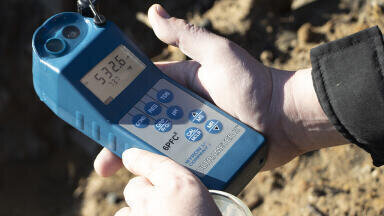
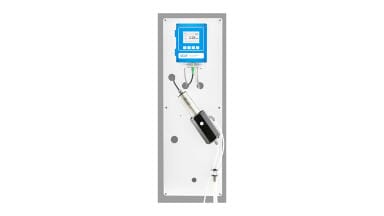
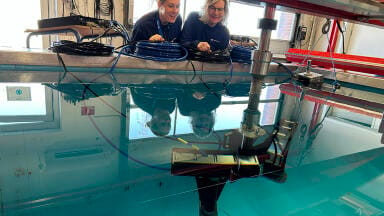
Multi-parameter sondes and UV-VIS spectrometers, often deployed on solar-powered buoy systems, are now standard in new reservoirs.
These instruments track temperature, pH, turbidity, dissolved oxygen, and chlorophyll a at multiple depths in near real time.
Event-triggered monitoring, where parameters like turbidity or nitrate trigger increased sampling during storms or upstream discharges, adds responsiveness.
Autonomous uncrewed surface vessels (USVs) are also coming into play, conducting automated transects and collecting spatially distributed data on nutrients and bathymetry.
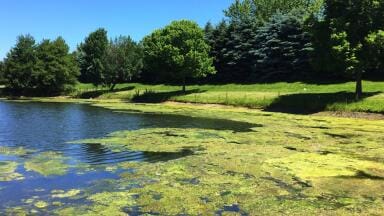
Aerial drones equipped with multispectral or thermal cameras provide high-resolution snapshots of surface temperature and algal bloom distribution.
Together, these platforms deliver spatial and temporal granularity that was previously unimaginable.
Reservoir monitoring in 2025 is not limited to on-site instrumentation.
Remote sensing via satellites such as Sentinel-2 or Landsat-9 allows full-reservoir chlorophyll-a and turbidity mapping, integrated into machine learning models that predict harmful algal bloom risks.
Programs like the Mekong Dam Monitor exemplify how cloud-based dashboards can provide stakeholders with near-real-time views of reservoir levels and operations using satellite data alone.
The sampling of environmental DNA (eDNA) has also entered routine use.
Monthly eDNA samples from various reservoir locations can now identify fish, invertebrates, and invasive species with far greater accuracy and lower effort than netting or electrofishing.
Paired with passive acoustic monitoring and AI-based image recognition from underwater drones, these techniques enable a non-invasive, holistic view of reservoir biodiversity.
Recognising that reservoirs can be significant methane emitters, new projects are implementing continuous GHG monitoring platforms.
Floating chambers connected to IR gas analysers measure diffusive CO2 and CH4 emissions hourly, while bubble traps capture methane ebullition from sediment layers.
Solar-powered sensor nodes now allow long-term unattended deployment, turning reservoirs into year-round climate observation platforms.
Dam safety instrumentation has followed suit.
Vibrating wire piezometers, fibreoptic strain sensors, joint meters, and uplift pressure cells now form the backbone of dam health monitoring.
In seismic zones, embedded accelerometers feed early warning systems.
Fibreoptic cables installed along embankments or galleries enable millimetre-scale tracking of strain and seepage.
These systems are often supplemented by InSAR satellite monitoring, which detects subtle ground movement around dams and abutments.
Drones conduct high-resolution visual inspections, while AI models flag cracks or erosion automatically.
Submersible and wheeled inspection robots can enter confined spaces like intake tunnels and drainage galleries, increasing inspection frequency while reducing human risk.
With sensor density and sampling frequency on the rise, modern reservoir monitoring depends on cloud-based telemetry platforms.
These integrate inputs from ground sensors, USVs, satellites, and drones into unified dashboards.
Systems like India’s Proqio or the U.S. Army Corps’ Dam Safety Action Classification dashboards enable engineers to visualise trends, receive alerts, and even run predictive simulations.
AI is doing more than detecting anomalies, it’s now forecasting risks.
Machine learning models predict inflows, GHG emission peaks, fish migration timing, and even mechanical failures based on data trends.
These predictive insights allow proactive management decisions, whether it's pre-releasing water before a flood or adjusting operations to protect spawning fish.
What makes all of this possible is a shift toward open data and integrated stewardship.
Many monitoring systems now publish environmental data online, allowing communities and researchers to track water quality, emissions, or biodiversity in near real time.
This transparency improves trust and aligns dam operations with wider environmental goals.
In 2025, monitoring isn’t just about compliance, it’s about responsiveness, precision, and collaboration.
Reservoir professionals are now environmental sentinels, empowered by technology to balance utility, safety, and sustainability.
As water management challenges mount, smart monitoring is no longer optional, it’s foundational.
By Jed Thomas
IET 36.5 Sept/Oct 2026


 Product directory




.jpg)











.jpg)
.jpg)